The Lacandón Jungle: Visiting Lacanjá Chansayab
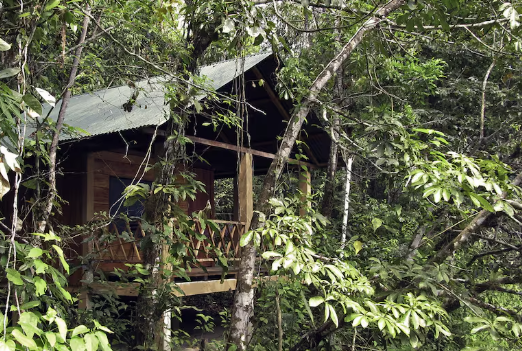
Lacanjá Chansayab is a Lacandón Maya community in the Lacandón jungle (the Selva Lacandona), on the edge of the Montes Azules biosphere reserve. It's roughly 2.5 to 3 hours southeast of Palenque along the Carretera Fronteriza. It's also the most accessible base for community ecotourism in the rainforest: guided jungle hikes to swimmable waterfalls, the small Lacanhá ruins hidden in the trees, rafting on the clear green Río Lacanjá, and nights in family-run palapa cabañas. It sits about 25 minutes from Bonampak, and most people pair the two.
This isn't the Yaxchilán and Bonampak day trip, though it overlaps with it. Lacanjá is the version where you slow down, stay a night or two, and let a Lacandón guide walk you through jungle that has no marked trails. It's rustic in the real sense: limited power, no cell signal in the village, no ATM, cash only, and enough mosquitoes to matter.
Key Takeaways
Lacanjá Chansayab is a Lacandón Maya village deep in the Selva Lacandona, about 2.5–3 hours from Palenque on the Carretera Fronteriza.
DIY access: a colectivo van from Palenque toward Benemérito de las Américas, off at the San Javier crossroads (around km 122), then a short shared taxi or a ~4 km walk into the village.
You hike with a Lacandón guide, not alone. No marked trails, and guiding is how the community earns from tourism. Budget roughly 200–500 MXN per walk, cash.
Lodging is family-run cabañas and campsites (Campamento Lacandones, Campamento Río Lacanjá, Topche and other household camps), roughly $15–40 USD a night for the room, and nicer than "campsite" implies. Meals are usually ordered separately. No ATM, no cell signal, patchy power.
It pairs with Bonampak (about 25 minutes away). Dry season, November through April, is the time to go.
This is a remote border region: the US State Department has Chiapas at Level 3, "Reconsider Travel," and the UK FCDO advises against all but essential travel here. Tourism was "drastically disrupted" by cartel violence in early 2024, and access can pause during flare-ups. Check current status and go with a community operator.
What Is Lacanjá Chansayab?
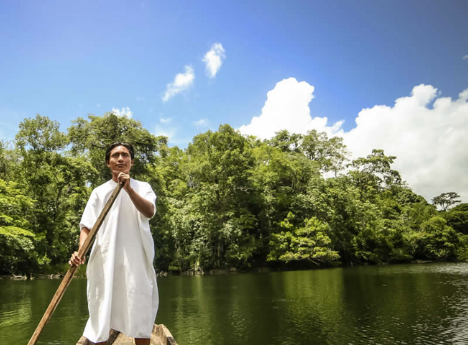
Lacanjá Chansayab is one of three main Lacandón Maya settlements in Chiapas, along with Nahá and Metzabok. The Lacandón (Hach Winik, "the true people") are a small group, on the order of 600 to 1,000 people across about a dozen communities (Wikipedia: Lacandon Jungle). Some elders still wear the traditional undyed white tunic; you'll see it, though everyday clothing is now common.
The village sits inside what's left of the Selva Lacandona, one of the largest remaining rainforests in Mesoamerica. Its core is protected as the Montes Azules Biosphere Reserve, established in 1978 as Mexico's first biosphere reserve and covering 331,200 hectares, roughly a fifth of Chiapas's original rainforest (Wikipedia: Lacandon Jungle). Forest outside the reserve has shrunk by about 70% in half a century, mostly to cattle pasture, which is part of why the Lacandón lean on tourism as an alternative income.
For a visitor, that means this is a working indigenous community, not a resort. The cabañas, guides, rafting, and food are run by Lacandón families directly. For where it fits in a longer trip, see the Chiapas itinerary guide and the full list of things to do in Chiapas.
How to Get to Lacanjá Chansayab from Palenque
By colectivo (DIY). Shared vans run from Palenque down the Carretera Fronteriza toward Benemérito de las Américas, leaving from near the Maya head monument on the edge of town (the Transportes Lacandones / Chamoán line). The ride to the San Javier crossroads (around km 122) takes about 3 hours and costs roughly 150–200 MXN. Tell the driver you want San Javier for Lacanjá. From the junction it's about 4 km into the village; shared taxis wait there, or you walk it. Leave Palenque early, because vans thin out by mid-afternoon.
By car or motorcycle. About 140 km, 2 to 2.5 hours, southeast on the Fronteriza; turn off at San Javier and follow the road in. If you're overlanding, this is the easy version, and you keep your transport for the waterfalls and Bonampak. Drive this highway in daylight only. The independent guide to Chiapas covers overland logistics for the region.
By tour. Operators in Palenque and El Panchán run one- and two-day jungle trips, usually with a 5:00–5:30am pickup. Two-day versions include an overnight in a Lacanjá cabaña, a guided walk, and Bonampak, sometimes with the Yaxchilán boat. If you don't have a vehicle, this is the path of least resistance.
Where to Stay in Lacanjá Chansayab
Lodging is a scattering of family-run campamentos along the river and the access road, and they're nicer than "campsite" suggests: usually a comfortable bed under a mosquito net, a small porch with a hammock to sit out on, a decent bathroom, and a palapa roof. The food at the campsite comedores is good and genuinely local. Almost everyone running these places is Lacandón, so the money you spend here goes more or less straight back to the community — which, for me, is a big part of the point. Aggregator listings show places starting around $21 USD a night, with rustic cabañas generally $15–40 USD depending on the family and season.
Options:
- Campamento Lacandones — one of the first camps you reach, right on the river, and the popular default. I haven't stayed here myself but consistently hear good things.
- Campamento Río Lacanjá (Reserva Selva Lacandona) — the nicer end, and the one I'd book: around 13 cabins (riverside units with shared baths, sturdier cabins with private bathrooms), a restaurant, and hot water. Meals are ordered separately (breakfast runs about 150 MXN), though on my stay breakfast came bundled into what I paid — confirm when you book. Reported room rates run roughly 850–1,300 MXN a night by occupancy and season (EcoChiapas: Campamento Río Lacanjá).
- Centro Ecoturístico Topche — private cabins with meals, on the village side.
- Camping Margarito and other household camps — the most basic and cheapest, often a palapa and a hammock or tent pad, arranged on arrival or by WhatsApp.
Book ahead in dry season and over Semana Santa; otherwise you can usually turn up. Bring more cash than you expect to spend.
Guided Hikes, Waterfalls, and the Lacanhá Ruins
You hike with a Lacandón guide. That's both practical and a community rule: there are no marked trails, the paths change, and guiding is central to how families earn from tourism. Expect to pay in the range of 200–500 MXN per walk, depending on route and group size, paid to the guide in cash and arranged the evening before through your campsite.
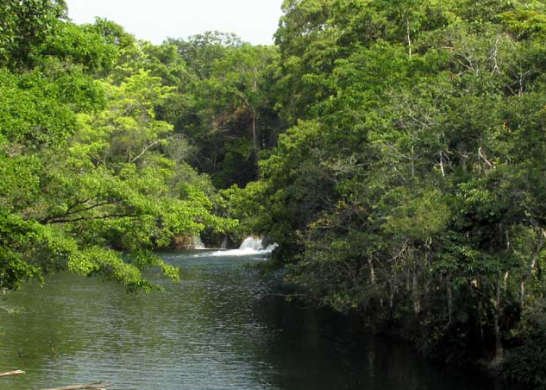
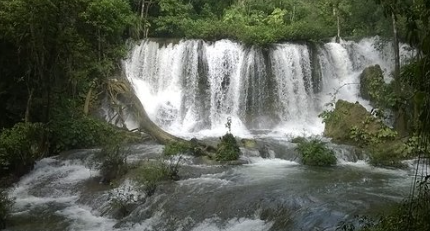
- Cascada Ya Toch Kusam — a jungle waterfall with clear swimming pools, about 2.5 km from the village, roughly an hour each way. The short version can sometimes be done without a guide; the deeper loops past it cannot. (This is not Cascadas Las Golondrinas near Nueva Palestina, further up the Carretera Fronteriza — a different waterfall that some sources confuse with this one.)
- Cascada Moctuniha — a quieter second waterfall, usually on a longer circuit.
- The Lacanhá ruins — a small, unrestored Classic Maya site swallowed by forest, part of the same river polity as Bonampak and Yaxchilán. Modest next to Palenque, but you'll likely have it to yourself.
Go in knowing what this is. The trails run through essentially untouched jungle: it's hot, rough underfoot, there are bugs, and nothing about it is climate-controlled or smoothed over for visitors. Some of it will be uncomfortable. That's the entry price for a place with no resorts, no chains, no industry — and walking primary rainforest with a guide whose family has read these trees for generations, it feels much the way it must have hundreds of years ago. For me that trade is worth making every time. Treat the walk itself as the attraction and the waterfall as the turnaround point.
Rafting the Río Lacanjá
The Río Lacanjá is a clear green jungle river, and the community runs guided rafting on it: scenic floats through small rapids, cascades, and calm pools rather than technical whitewater, typically 2 to 4 hours, with helmet, vest, paddle, and guide included. Reported pricing is around 1,000 MXN per person locally, or $100–155 USD through an outside operator.
It's the best half-day activity here if the water's up — and more than that, if you get the chance to raft the Lacanjá, take it. It's not cheap, and it'll sting a tight backpacker budget, but very few people ever get to float a jungle river like this one, and it's the kind of thing that stays with you.
What to Expect
- No cell signal in the village and no ATM — everything is cash, so draw pesos in Palenque.
- Limited power. Some camps run solar or a generator part of the day; assume no overnight charging.
- Mosquitoes and heat. Long sleeves, strong repellent, a light rain layer even in dry season.
- Food is simple and mostly at your campsite's comedor: eggs, beans, tortillas, chicken, fish, fruit.
- Etiquette. Ask before photographing people. This is someone's home.
Combining Lacanjá with Bonampak
The San Javier crossroads where you turn off for Lacanjá is also the checkpoint for Bonampak, about 25 minutes away. Outside vehicles can't drive to the ruins; you pay at the checkpoint and take a mandatory Lacandón-run shuttle for the last stretch (around 150–200 MXN per person), plus the INAH entrance (about 180 MXN for foreign visitors, 90 for Mexican nationals) and a Lacandón community fee (about 90 MXN) — roughly 450–500 MXN per foreigner all in. Many of the drivers are from Lacanjá. Do Bonampak as a half-day from the village. For Yaxchilán (a boat from Frontera Corozal), see the Yaxchilán and Bonampak guide; onward border travel is in the Frontera Corozal crossing guide.
Best Time to Visit
Dry season, November through April. Trails are passable, the river runs clear, the access road isn't a mud pit, and the rafting is more reliable. May through October brings heavy afternoon rain; trips still run, but expect wet walks. Plan a night here rather than a rushed day trip. If you're basing in Palenque first, see where to stay in Palenque and the Palenque guide.
Is It Safe to Visit the Lacandón Jungle?
A straight answer: this corridor sits near the Guatemala border in a region affected by cartel conflict over trafficking routes, and it has seen real disruption. In October 2023 the nearby border archaeological sites closed, and Chiapas tour operators described tourism across parts of the state as "drastically disrupted" by the violence in early 2024 (Mexico News Daily). Sites reopened in March 2024 after border communities organized their own patrols. The US State Department places Chiapas at Level 3, "Reconsider Travel," and the UK Foreign Office advises against all but essential travel on Highway 199 and within 40 km of the Guatemala border.
As of 2026, Lacanjá Chansayab is receiving visitors and tours are running, but access can pause on short notice. Before you commit to a long drive or a booking: check the current situation, ask your Palenque accommodation what's actually operating that week, go with a community operator or Lacandón guide, and travel the Carretera Fronteriza in daylight on the main road only. The is Chiapas safe in 2026 guide is kept current.
The Takeaway
Lacanjá Chansayab is the slow version of the Lacandón jungle: a night or two in a family cabaña, a guided walk to a waterfall you can swim in, a float down the Río Lacanjá, and Bonampak on the side. Get there by colectivo to the San Javier crossroads and a short taxi in, or drive it, or take a two-day tour from Palenque. Carry cash, expect no signal, go in dry season, hire a Lacandón guide, and confirm the region is calm before you set out.
Frequently Asked Questions
How do you get to Lacanjá Chansayab from Palenque?
Take a colectivo van from Palenque toward Benemérito de las Américas (the Transportes Lacandones / Chamoán line, from near the Maya head monument), about 3 hours and 150–200 MXN. Get off at the San Javier crossroads around km 122, then take a shared taxi or walk the last ~4 km. By car it's about 140 km and 2 to 2.5 hours. Two-day tours from Palenque are the no-logistics option.
Do you need a guide in the Lacandón jungle?
Effectively yes. There are no marked trails, the paths shift, and guiding is how the Lacandón community earns from tourism, so you hike with a local guide. Budget roughly 200–500 MXN per walk, cash, arranged the evening before. The short walk to the Ya Toch Kusam waterfall can sometimes be done alone, but the longer routes and the Lacanhá ruins cannot.
Where do you stay in Lacanjá Chansayab?
In family-run cabañas and campsites, most nicer than "campsite" suggests — a comfortable bed, a hammock porch, a decent bathroom. Campamento Lacandones is the popular riverside default; Campamento Río Lacanjá is the larger, more comfortable option, with a restaurant and hot water, roughly 850–1,300 MXN a night for the room (meals ordered separately). Others include Centro Ecoturístico Topche and Camping Margarito. Rustic options run about $15–40 USD a night. There's no ATM in the village, so bring cash from Palenque.
Is it safe to visit the Lacandón jungle?
It sits in a remote border region affected by cartel conflict, and tourism across parts of Chiapas was "drastically disrupted" by violence in early 2024, with border sites closed from October 2023 to March 2024. As of 2026 Lacanjá is receiving visitors and tours run, but access can pause during flare-ups; the US State Department has Chiapas at Level 3, "Reconsider Travel." Check current status, go with a community operator, and travel the highway only in daylight.
Can you visit Lacanjá and Bonampak together?
Yes, and most people do. Bonampak is about 25 minutes from Lacanjá Chansayab, off the same San Javier crossroads. Outside vehicles can't drive to the ruins, so you pay at the checkpoint and take a mandatory Lacandón shuttle the last stretch (about 150–200 MXN per person) plus entrance and community fees. Do Bonampak as a half-day from the village or on your way in or out.