Frontera Corozal: Crossing from Palenque to Guatemala (Flores & Tikal)
Frontera Corozal is a river border. No bridge, no immigration hall, no line of trucks. You get stamped out of Mexico in a small office in town, walk down to the Usumacinta, and a boatman runs you across to Guatemala in ten minutes. On the far bank you pick up a bus that grinds four to five hours through the Petén to Santa Elena, next to Flores, which is the base for Tikal.
There are two ways to do it. Book a through shuttle in Palenque and someone handles the connections: roughly 350–500 MXN (about $20–30 USD) at a local agency, a 5–6am pickup, Flores in 7–9 hours. Or do it yourself piece by piece for closer to $20 all in, which also leaves room to stop at Yaxchilán. Either way the route is the same, and this guide walks each step.
Key Takeaways
The Mexican immigration office in Frontera Corozal runs roughly 8am to 4pm, and there is one usable wave of onward transport to Flores each morning. Miss it and you overnight at the river.
Get your Mexican exit stamp at the INM office in town before you board the boat. Skipping it costs people money and hours later.
You stamp into Guatemala at Bethel. Either take a shared lancha to La Técnica (~50–80 MXN pp) then a colectivo that stops at Bethel immigration, or hire a direct boat to Bethel (~750 MXN for 1–2 people) and skip the transfer. Do not let your boat leave until your passport is stamped.
Guatemala is part of the CA-4 agreement: no entry fee, up to 90 days for most travelers. Any "fee" an officer asks for here is unofficial; ask for a receipt (*recibo*).
Bring cash in pesos, quetzales, and USD. No ATM in Frontera Corozal, none at the border, and Flores has two that work intermittently.
The crossing is routine; the wider border region is flagged by the US State Department and saw serious tourism disruption in 2024. Travel this corridor by day and check conditions first.
How Do You Get from Palenque to Flores, Guatemala?
Two border routes, and it is worth knowing which one you are being sold. Frontera Corozal / La Técnica is the river crossing this guide covers: it passes the Yaxchilán turnoff and is the route overlanders use, at the cost of rough road on the Guatemalan side and one morning departure window. El Ceibo, a paved land border further north near Tenosique, has more frequent buses, and many online "Palenque to Flores" shuttles quietly use it. If you want the river and the ruins, ask the agency which border they use before you pay.
Shuttle vs DIY: Which Should You Take?
The shuttle is sold at agencies all over Palenque town and El Panchán for roughly 350–500 MXN ($20–30 USD) booked in person; international resellers charge $50–60. A van collects you around 5–6am, and a second vehicle meets you on the Guatemalan side for the run to Flores: 7–9 hours on a good day. You still pay the town fee and clear immigration yourself; the shuttle just removes the waiting and the guesswork about connections.
DIY costs about a third of that and takes roughly the same time:
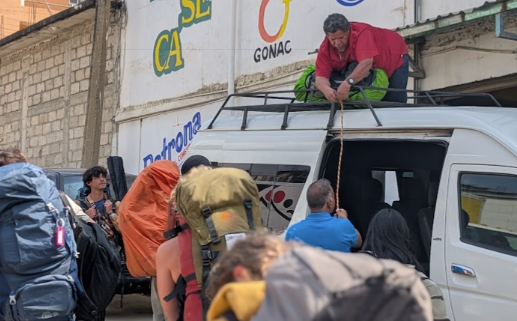
- Colectivo van, Palenque to Frontera Corozal: 130–200 MXN, about 3 hours. Autotransportes Chamoán and similar lines leave roughly hourly, from around 6am to 5pm, from near the ADO station. Take an early one — you want to reach the river with the whole day ahead of you, and you do not want to be arriving in this town after dark.
- Frontera Corozal town fee: 30–40 MXN.
- Lancha across the Usumacinta: about 50–80 MXN per person on a shared boat to La Técnica, or a direct boat to Bethel for about 750 MXN (one or two passengers) that skips the transfer entirely.
- Minibus, border to Santa Elena: about 70–100 quetzales, 4–5 hours.
- Tuk-tuk, Santa Elena to Flores island: 10–15 quetzales.
DIY is the call if you have your own vehicle, want Yaxchilán, or prefer controlling your timing. The shuttle is the call if you are arriving in Palenque late or do not want to gamble on the last Guatemalan bus.
Getting to Frontera Corozal and Stamping Out of Mexico
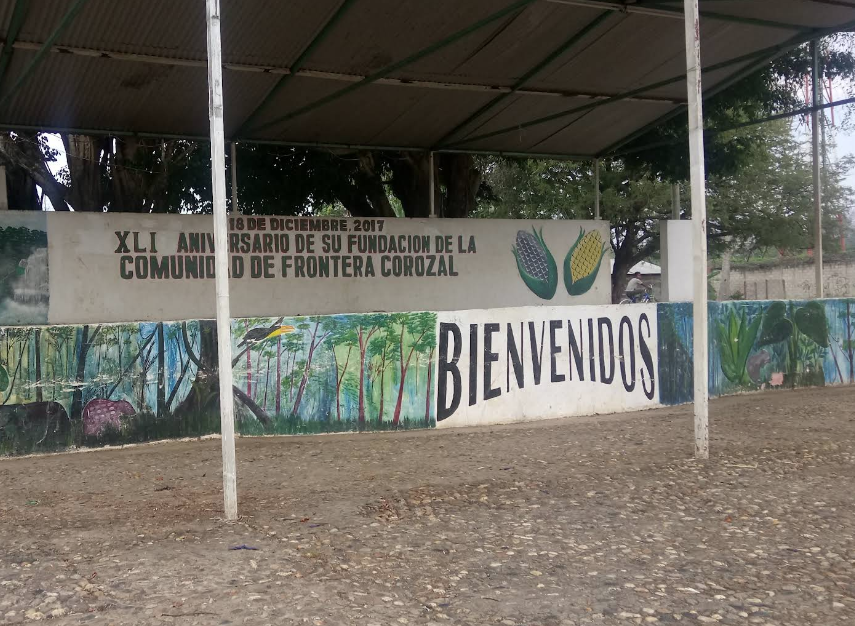
Frontera Corozal sits about 160 km southeast of Palenque along the Carretera Fronteriza. The colectivo ride is about 3 hours on paved but winding road.
At the entrance to town you will be stopped for a road-maintenance fee, about 30–40 MXN. Not a government charge, not optional in practice, and small. Pay it and move on.
Then find the INM immigration office in town and get your exit stamp (open roughly 8am to 4pm — and it has closed entirely during past security flare-ups, so confirm it's operating before you commit to this crossing). People skip this because the boat cooperative is right there and no one forces the issue. It is also the step that goes wrong: land in Guatemala without a Mexican exit stamp and you are travelling illegally, which surfaces later as a fine or a forced trip back.
Mexico does not charge a legitimate exit fee here. If you entered by air the tourist tax was in your airfare; by land you paid it with your entry permit. Travelers at this crossing have still been pressured for invented "exit taxes" of 300–500 MXN. Carry your entry permit or flight receipt, ask for an itemized receipt before paying anything, and offer to pay by card, which they cannot process.
For where this fits into a wider trip, see the Chiapas itinerary guide and the [independent guide to Chiapas.
Crossing the River: The Cheap Way vs the Easy Way
You stamp into Guatemala at Bethel, the migración post about 40 minutes down the Usumacinta. Bethel has been the reliable immigration point here for years; Guatemala has at times also run a post at La Técnica, directly across from Frontera Corozal, but don't count on it. There are two ways to reach Bethel.
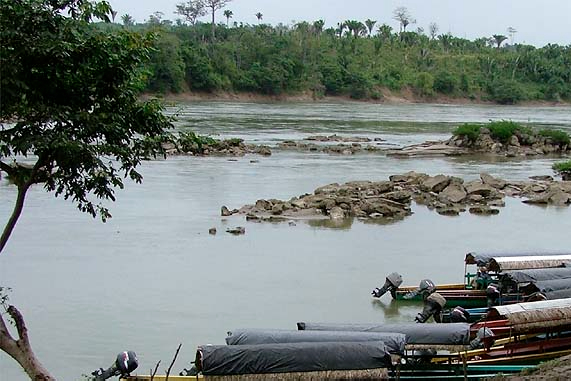
The cheap way: a shared lancha straight across to La Técnica (5–10 minutes), then a colectivo heading toward Santa Elena that stops at Bethel immigration on the way so you can stamp in. The colectivos run frequently, like any Mexican shared van, but you're waiting for the boat to fill and then changing vehicles.
The easy way: hire a direct boat from Frontera Corozal all the way to Bethel — about 750 MXN for one or two passengers, arranged at the cooperative. No getting out at La Técnica, no colectivo, no stops: one ride, straight to Guatemalan immigration. For a couple it works out to barely more per head than the shared boat plus a colectivo, with a lot less friction, which is why it's the one I'd take.
Either way, the rule that protects you is the same: do not let your boat leave until your passport is stamped. One widely shared account describes a shuttle driver who never stopped at Guatemalan immigration, leaving the traveler to pay a $20 fine later.
Guatemala entry: no official fee, and CA-4 rules (Guatemala, El Salvador, Honduras, and Nicaragua share one 90-day allowance) mean most travelers are stamped in for up to 90 days. Officers here sometimes ask for Q10–40 anyway; travelers report both refusing and being waved through, and paying and being told to request a recibo . Ask for the receipt. No receipt, no fee.
From the Border to Flores
Buy water and snacks at the shops by the landing first; everyone changes transport on the Guatemalan side because Guatemalan buses do not cross into Mexico. From La Técnica, minibuses to Santa Elena run roughly hourly from around 5am, last useful departure in the early afternoon, 4–5 hours with about half unpaved. These services pass through Bethel, so if you took the direct boat there you catch them as they come by — they can arrive full, so don't leave your crossing until late in the day.
Santa Elena is the mainland town; Flores is the small island on a causeway, a 10–15 quetzal tuk-tuk away, and where you sleep and book a Tikal trip. Pull quetzales at the ATM your bus stops at in Santa Elena or earlier, because the island's two machines are unreliable. For the rest of the trip, see the one-week Guatemala overland itinerary.
Money, Timing, and Getting Stuck
Change a small amount of pesos to quetzales at the border for the bus fare and first meal, at a poor rate, and carry USD cash as backup; do not count on cards until Flores, and not reliably there. The whole crossing runs on one morning: the Mexican office closes at 4pm and the Guatemalan buses thin out after early afternoon, so leave Palenque by 6am on a DIY run and avoid Sundays and holidays. If you arrive too late or the boats are not running, Frontera Corozal has a few places to stay. The one I'd point you to is Nueva Alianza, close to the dock — a bit pricier than you'd expect for a border town, but genuinely nice, safe, and well run. The Escudo Jaguar hotel by the river, run by the other boat cooperative, is the other solid option.
Combining the Crossing with Yaxchilán
The same boat cooperative runs both the Yaxchilán trips and the crossing, so pairing them is natural but tight in a single day. The realistic version is two days: reach Frontera Corozal in the afternoon, overnight at Nueva Alianza or Escudo Jaguar, visit Yaxchilán first thing, then clear immigration and cross by early afternoon. Full detail is in the Yaxchilán and Bonampak guide; to see the ruins as a round trip from Palenque instead, where to stay in Palenque covers basing there.
Is the Frontera Corozal Crossing Safe?
The formalities are routine — in my experience, and that of everyone I know who has crossed here, the border post itself is calm and low-stress, a world away from the crush of a busy land crossing like Chetumal into Belize at the top of the peninsula. The concern is the corridor, not the paperwork.
Frontera Corozal sits in the Lacandón border zone, affected by cartel conflict over smuggling routes along the Usumacinta. Yaxchilán and Bonampak both closed from October 2023 to March 2024 because of violence in the area, with Chiapas tour operators describing tourism as "drastically disrupted," and the US State Department has since moved Chiapas toward its "reconsider travel" tier. As of 2026 the crossing and the ruins operate normally, but access can pause on short notice.
Practical rules: travel the Carretera Fronteriza by day only, take direct transport rather than stopping along the highway, and do not linger at the border. Ask your accommodation in Palenque what is running that week, and read the is Chiapas safe in 2026 assessment before you commit.
If this sounds like more friction than you want, the alternative is the La Mesilla crossing from San Cristóbal: a busy, sanitized highway border with frequent transport, ATMs, and money changers, dropping you toward Quetzaltenango and Lake Atitlán rather than Flores. Frontera Corozal is quieter, more scenic, and more exposed. Pick the one that matches where you are headed.
The Takeaway
Frontera Corozal is the overland route from Palenque into Guatemala: a colectivo to the river, an exit stamp you must not skip, a ten-minute boat across the Usumacinta, an entry stamp with no legitimate fee, and a long dusty bus to Flores and Tikal. Take a shuttle for about $20–30 or do it yourself for a third of that. Either way, carry cash in three currencies, cross early, get every stamp, and check the border region is calm first. For the town this trip starts from, see the Palenque guide.
Frequently Asked Questions
How do you get from Palenque to Flores, Guatemala?
Either book a through shuttle in Palenque (about 350–500 MXN / $20–30 USD at a local agency, 5–6am pickup, 7–9 hours) or go piece by piece: colectivo to Frontera Corozal (130–200 MXN, about 3 hours), Mexican exit stamp at the town INM office, then either a shared lancha to La Técnica (~50–80 MXN) or a direct boat to Bethel (~750 MXN for 1–2 people), Guatemalan entry stamp at Bethel, then a minibus to Santa Elena next to Flores (~70–100 quetzales, 4–5 hours). Many online shuttles use the El Ceibo land border instead, which is smoother but skips the river and Yaxchilán, so ask which border they use.
Is the Frontera Corozal border crossing safe?
The crossing procedure is routine and calmer than most Mexico–Guatemala borders, but it sits in a flagged border region. Yaxchilán and Bonampak closed from October 2023 to March 2024 due to cartel violence nearby, and the US State Department has moved Chiapas toward its "reconsider travel" tier. As of 2026 it operates normally. Travel the border highway by day, take direct transport, and check current conditions with your accommodation in Palenque first.
How much does the Palenque to Flores shuttle cost?
Roughly 350–500 MXN, about $20–30 USD, for the Frontera Corozal river route booked in person at agencies in Palenque town or El Panchán; international resellers and El Ceibo-routed shuttles run higher, around $50–60. It covers the vehicle on both sides and the boat, but you still pay the town fee and clear immigration yourself.
Do you need an exit stamp leaving Mexico at Frontera Corozal?
Yes. Get stamped out at the INM immigration office in Frontera Corozal town, open roughly 8am to 4pm, before you board the lancha. Entering Guatemala without a Mexican exit stamp means travelling illegally, which becomes a fine or a forced return trip later. There is no legitimate Mexican exit fee here; any charge demanded is unofficial.
Can you visit Yaxchilán and cross to Guatemala the same day?
It is possible but tight: the same boat cooperative runs both trips, and Yaxchilán takes four to five hours round trip, pushing you past the 4pm immigration cutoff and the last practical Flores bus. The realistic plan is two days, overnighting at Nueva Alianza or Escudo Jaguar and doing Yaxchilán the morning before you cross.