
Where to Stay in Palenque: Town vs. El Panchán vs. the Ruins
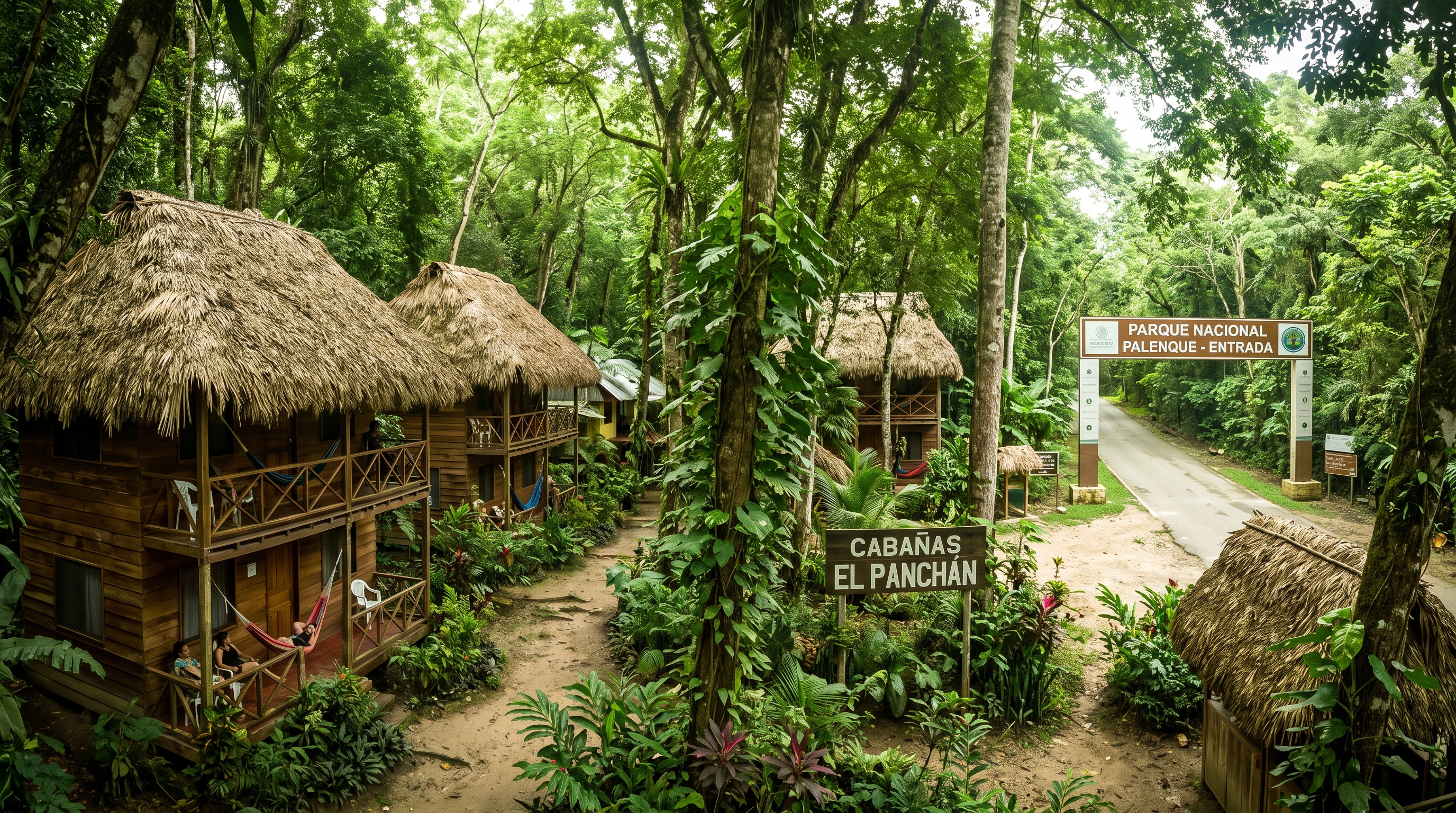
Palenque splits into three places to sleep, and they are nothing alike. Palenque town is a hot, functional grid about 8 km from the ruins with every bus, ATM, and taco stand you need. El Panchán is a cluster of jungle cabañas at the national-park entrance with a backpacker scene and a restaurant that runs live music and fire shows nightly. The Carretera, the 9 km road linking the two, is lined with mid-range jungle hotels and eco-lodges where you wake up to howler monkeys and take a taxi for everything else.
I've ridden into Palenque overland and moved through all three zones. Here is who each one is for, what you'll pay, how you get between town and the site, and the practical stuff nobody warns you about — patchy power, stacked cash-only fees, and mosquitoes everywhere.
Key Takeaways
Stay in town for the cheapest beds, ATMs, and easy bus connections — no atmosphere, but it works, especially for a quick ruins stop.
Stay in El Panchán for the jungle-and-backpackers experience: rustic cabañas, patchy power, nightly music, and cash-only. Where most backpackers end up.
Stay on the Carretera for quiet jungle with a real bed and a pool, if you don't mind taxiing everywhere.
The ruins are about 8–9 km from town, served by shared colectivos every 15–20 minutes for around 20–30 pesos each way.
Two or three nights is plenty — one day at the ruins, one for the waterfalls or a slower look around, done.
All three zones are hot, humid, and buggy. Bring repellent regardless of where you book.
The Short Answer: Which Palenque Zone Should You Pick?
Match the zone to why you're here. Arriving by bus for one focused ruins visit: stay in Palenque town, five minutes from the ADO terminal and the colectivos. Here for the vibe as much as the ruins, on a budget: stay in El Panchán, in the jungle at the park gate within walking distance of the site. Want to slow down with a pool and a real bed: stay on the Carretera, the ruins road, and accept taxiing everywhere. If you can't decide and you've got a vehicle or don't mind colectivos, the Carretera is the no-regrets pick — jungle and a pool without El Panchán's rough edges. Town only really earns its place if you're on an early bus out.
For how Palenque fits a wider route, see the full Palenque guide, how many days to spend in Chiapas, and the unfiltered things-to-do list.
Palenque Town: Best for Logistics, Buses, and Your Wallet
Palenque town is where the infrastructure is. The ADO bus terminal sits on Avenida Juárez in the center, the colectivos to the ruins leave from the same street, and you're never far from a bank, a Chedraui supermarket, an OXXO, a pharmacy, or a cheap comedor. If your plan is "see the ruins, then move on to San Cristóbal or the Guatemala border," town is the logical base.
Who it's for: bus travelers, tight budgets, one-night stops, and anyone who values a working ATM and a 6am taco over jungle ambiance.
The tradeoff: it has almost no charm. Travel writers who like Palenque still call the town "busy, sweaty and commercial". It's loud with traffic, furnace-hot by mid-morning, and there's nothing to do in the evening except eat. You're also 8–9 km from the ruins, so you commute in. I avoid sleeping in town when I can — I find it dirty and noisy, the welcome is thin, and the food isn't worth staying for. Given the choice I'd be out near the ruins, or based somewhere with a bit of jungle around it.
Where people stay, by budget (widely recommended options — I haven't stayed in these rooms myself):
Budget: Hotel Kashlan and Hotel Maya Palenque are long-running cheap-and-central choices; Hostal La Cañada and similar hostels handle dorm travelers. Roughly 400–800 pesos for a basic private room.
Mid-range: Hotel Maya Tulipanes and Hotel Ciudad Real sit in the leafier La Cañada strip on the town's western edge — quieter and greener than the center, walkable to the terminal, with the main restaurant cluster. Figure 900–1,800 pesos. It's the sweet spot for a town base without the full concrete experience.
El Panchán: The Jungle Backpacker Village
El Panchán is a small settlement of family-run cabaña businesses in the jungle, about a kilometer inside the national-park boundary and a 30-minute uphill walk (or a two-minute colectivo hop) below the ruins ticket office. It grew up around a community of artists and musicians and is still the closest thing Palenque has to a scene: forest paths between wooden cabins, a stream, hammocks, and travelers swapping route notes. It's a chill place — nobody's coming here for five-star luxury — and for me the location is what sells it: everything you need is on site, and the ruins are close enough to walk, which I'm a fan of doing.
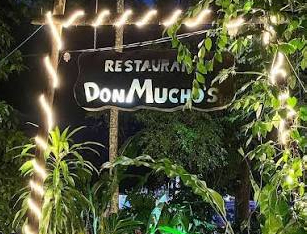
At its center is Don Mucho's, a rustic Italian-Mexican restaurant that draws people from all over Palenque for pizza, a live band most nights, and fire and dance shows — Saturday is the big one
Who it's for: budget travelers who want jungle immersion and company and don't need reliable wifi. Who should skip it: anyone who needs to work online, sleeps badly with noise, wants a proper hotel, or isn't comfortable carrying several days of cash. Opinions on the cabañas are genuinely mixed — many visitors love the setting and shrug at the basics; others find the rooms tired.
The cabaña businesses (each books separately; many don't take reliable online reservations, so people often just show up):
Jungle Palace — the cheapest and most basic: simple wooden cabins, some with shared bathrooms, on the stream. Rooms have run around 250–450 pesos depending on group size
Chatos Cabañas — a step up, with private bathrooms; still rustic, and close to the music.
Margarita & Ed's and Rakshita's — the more maintained end, with sturdier rooms, some with AC and a pool. Book these for El Panchán's location without the roughest edges.
What to expect inside: thin mattresses, screened (not sealed) windows, no mosquito nets, unreliable electricity with real outages in storms, and weak-to-nonexistent wifi and phone signal. There is no ATM. Bring more cash than you think you need, and a headlamp.
For what to do once you're settled in, see Palenque beyond the ruins and the ruins visitor guide.
The Carretera: Jungle Hotels and Eco-Lodges on the Ruins Road
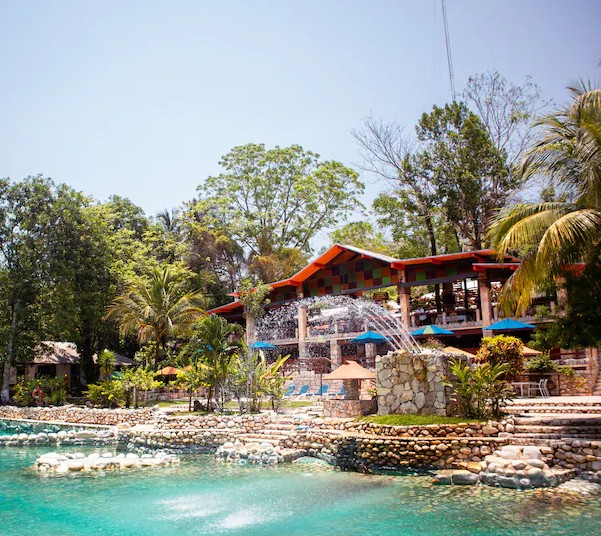
The 9 km road between town and the ruins — the Carretera Palenque–Ruinas — is where the mid-range and upmarket jungle hotels sit. You get thick forest, birdsong, pools, and quiet, without El Panchán's rough edges or town's concrete. The catch is total dependence on wheels: every meal out and every trip to the ruins means a colectivo or a taxi.
Who it's for: couples, families, campers, and anyone who wants nature plus a comfortable bed and doesn't mind being spread out. Most tour operators for Agua Azul and Misol-Há pick up from the Carretera hotels and El Panchán as well as town.
Representative properties (well-reviewed and widely recommended; framed by position and type, not personal stays):
Hotel Maya Bell — right by the lower park entrance, closest of any hotel to the ruins, with rooms, cabañas, a pool, and a campground for tents and overland vehicles. The default for campers and anyone driving in; quieter and more family-oriented than El Panchán.
Chan-Kah Resort Village — a four-star spread of stone cottages on landscaped jungle grounds with the Río Michol running through, about five minutes from the ruins. The best-known comfortable option on the road.
Boutique Quinta Chanabnal — a small design-led luxury hotel with Maya-themed rooms and a pool, for the jungle with a high-end finish.
Cabañas Kin Balam — mid-budget jungle cabañas across the road from El Panchán: the same forest and walk to Don Mucho's, in a calmer, better-kept setting.
Villa Mercedes Nututún — a riverside hotel on the Río Chacamax just south of town (toward Ocosingo, off the ruins road), popular for its natural river swimming spot.
Prices on the Carretera run roughly 1,200–2,500 pesos for the mid-range places, 3,000 and up for Chan-Kah and Quinta Chanabnal.
Palenque Accommodation Zones Compared
Getting Between Town and the Ruins
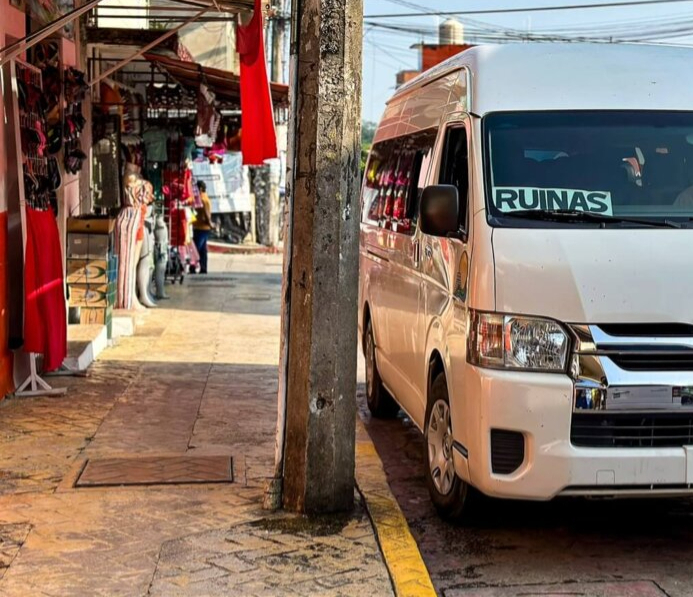
Colectivos are constant and cheap. Shared vans marked "Ruinas" run along the Carretera between Avenida Juárez in town and the ruins ticket office roughly every 15–20 minutes from about 6am to 6pm, for around 20–30 pesos each way. They stop anywhere along the road, so from the Carretera or El Panchán you just wave one down. A taxi from town runs roughly 120–200 pesos — worth it after the colectivos stop, or with luggage.
One more fee: the CONANP national-park charge (around 225 pesos for foreign visitors in 2026, roughly half that for Mexican residents, separate from the ruins ticket) is collected at a booth on the Carretera before you reach El Panchán or the site. It jumped sharply in 2026 along with the INAH site fee — see the full 2026 fee breakdown in my Palenque ruins visitor guide. If you're staying inside that boundary, keep your receipt; the wristband is valid for several days.
Safety, Cash, Power, Noise, and the Jungle Tax
Safety. Palenque town is fine with normal precautions — watch your bag, use ATMs inside banks by day, don't wander unlit edges of town at night. El Panchán feels safe from people, but petty theft from cabañas happens, so lock valuables away or use a reception safe where there is one. The wider concern in this region is the highways, not the accommodation — covered in the Chiapas backpacking and overlanding guide and the Frontera Corozal border guide.
Cash. The ATMs are all in town — and there are plenty of them — while El Panchán and the Carretera have none. However you arrive, off the ADO bus or the colectivo down from San Cristóbal through Ocosingo, draw what you need for the whole stay before you head out to the outskirts. The park fee, colectivos, Don Mucho's, and the ruins ticket add up, and it's all cash.
Power. Outages hit the whole Palenque area — not constantly, but often enough that you notice, and more in the rainy season when storms bring the lines down. The jungle places feel it most. Keep a headlamp and a charged power bank.
Noise. The only real noise problem is in town — traffic, and the occasional 7am loudspeaker. Out on the Carretera it's nothing but the jungle: birds, and howler monkeys at dawn that sound far bigger than they are (and, if you're unlucky, one mosquito doing laps of your head). El Panchán is the exception among the outskirts options — Don Mucho's band runs until around 11pm — so light sleepers should pick a cabaña away from the restaurant, or stay across the road at Kin Balam.
The jungle tax — every zone. Palenque is hot and humid all year, worse in the May–October rains. Mosquitoes are everywhere, heaviest in El Panchán and on the Carretera at dusk. Bring strong repellent and don't count on rooms being sealed or netted, even in town.
The Bottom Line
Pick town if you're passing through, catching a bus, or you just want the ruins done cheaply — charmless but it works. Pick El Panchán if the jungle and the backpacker scene are the point and you can live with rustic cabañas and spotty power. Pick the Carretera if you want to wake up in the forest with a pool and don't mind taxiing everywhere. Two or three nights covers Palenque — a day at the ruins, a day for the waterfalls or a slower look around, and you've seen it; things to do in Palenque beyond the ruins covers what fills the extra day. Whatever you choose, draw your cash in town first and pack repellent.
Frequently Asked Questions
Is it better to stay in Palenque town or near the ruins?
It depends on your trip. Stay in town if you're arriving or leaving by bus, want the cheapest rooms, or you're only here for a quick ruins visit. Stay near the ruins — in El Panchán or a Carretera hotel — if you want jungle surroundings and an early start at the site and don't mind relying on colectivos and taxis. Town is more convenient; the ruins road is more pleasant.
What is El Panchán?
El Panchán is a small jungle settlement of family-run cabaña businesses about a kilometer inside the Palenque national park, near the entrance and walking distance from the ruins. It started as a community of artists and musicians and remains a backpacker hub. Expect rustic wooden cabins, patchy electricity and wifi, no ATM, and the Don Mucho's restaurant running live music and fire shows most nights. Cabañas include Jungle Palace, Chatos Cabañas, Margarita & Ed's, and Rakshita's.
How far is Palenque town from the ruins?
About 8–9 km, roughly a 20-minute ride along the Carretera Palenque–Ruinas. Shared colectivo vans cover the route every 15–20 minutes from around 6am to 6pm for about 20–30 pesos each way, leaving from Avenida Juárez. A taxi is roughly 120–200 pesos. El Panchán and the Carretera hotels sit along that same road, closer to the site.
Is El Panchán safe?
Generally yes. Visitors consistently report feeling safe from other people in El Panchán, and it's a long-established travelers' spot. The main issue is petty theft from the basic cabañas, so lock your valuables away and use a safe where there is one. The bigger safety questions in Chiapas concern the highways, not the accommodation zones around Palenque.
Where do most backpackers stay in Palenque?
Most backpackers stay in El Panchán, for the jungle setting, low cabaña prices, the social scene, and the walk to both the ruins and Don Mucho's. The budget hostels in Palenque town — around La Cañada and near the ADO terminal — are the main alternative, suiting travelers who want reliable wifi, AC, ATMs, and an easy early bus out.