Yaxchilán & Bonampak: Visiting the Usumacinta Jungle Ruins
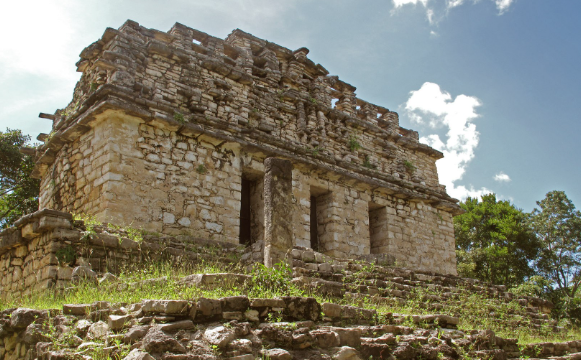
Yaxchilán and Bonampak are two Classic Maya sites buried in the Lacandón jungle on the Mexico–Guatemala border, southeast of Palenque. Yaxchilán sits directly on the Usumacinta River and has no road in at all: you reach it by lancha (a small motorized boat) from the town of Frontera Corozal. Bonampak, about 30 minutes further down the border highway, holds the best-preserved Maya wall paintings anywhere in the world. Almost everyone visits the two together because splitting them into separate trips from Palenque makes no sense.
There are two ways to do it. An organized day tour from Palenque runs roughly $180–280 USD per person in 2026 and covers the boat, the Lacandón shuttle into Bonampak, guides, and both entrance fees. Or you do it yourself: a colectivo van to Frontera Corozal (about 150–200 MXN), then hire the lancha directly at the river cooperative and pay each site's fees at the gate. Either way it's a long day, roughly 5am to 7pm, and dry season (November through April) gives you the best river conditions.
Key Takeaways
Yaxchilán is reachable only by boat, roughly 30–45 minutes down the Usumacinta from Frontera Corozal. Bonampak sits on Lacandón community land and you transfer to a Lacandón-driven shuttle for the final stretch. You cannot drive to either one directly.
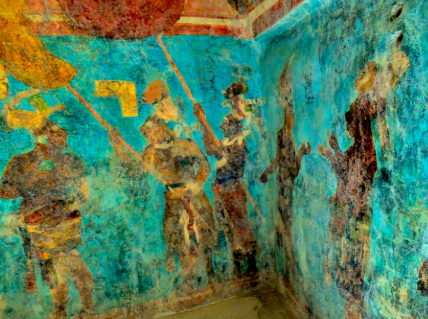
Bonampak's Structure 1 holds the only surviving full-color, room-by-room narrative paintings from the Classic Maya period: a royal presentation, a battle and its aftermath, and a bloodletting ritual.
Yaxchilán's carved lintels are among the finest in the Maya world. The famous bloodletting scenes of Lintels 24 and 25 are now in the British Museum, but carved lintels remain in place across the site, along with the pitch-black Labyrinth building and a steep acropolis climb.
A combined day tour from Palenque runs about $180–280 USD per person in 2026 (boat, shuttle, guide, both entrance fees included). Budget one-day trips can sometimes be found nearer $110–160; two-day trips with an overnight jungle stay sit at the top of the range.
DIY is realistic and cheaper: colectivo to Frontera Corozal (~130–200 MXN), lancha (a tiered rate card by group size — roughly 1,400 MXN for 1–2 people, less per head in a group; a solo traveler still negotiates or waits to share), plus each site's fees in cash — budget ~250 MXN for Yaxchilán and ~450–500 MXN for Bonampak, per foreigner. There is no ATM out here.
This is a flagged border region: the US State Department places Chiapas at Level 3, "Reconsider Travel." Tourism here was "drastically disrupted" in early 2024 and access can pause during flare-ups. Check current status before committing.
What Are Yaxchilán and Bonampak?
Both were Classic Maya cities, occupied roughly 350–800 AD, and both were part of the same political world along the Usumacinta.
Yaxchilán was a major power that controlled a stretch of the river and, for a time, dominated smaller neighbors including Bonampak. Its rulers left behind an unusually rich record in carved stone: lintels (the carved slabs set above doorways), stelae, and hieroglyphic stairways documenting accessions, wars, and rituals in more detail than almost any other Maya site. It sits on a horseshoe bend in the river, jungle on all sides, with Guatemala on the far bank.
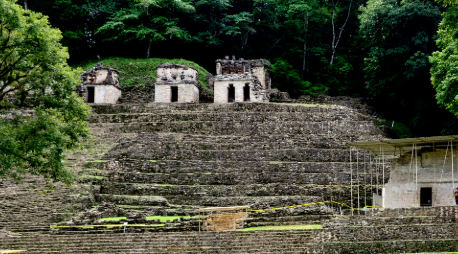
Bonampak was a smaller satellite center, and on most measures it's unremarkable: a modest acropolis, a small plaza, a few stelae. What makes it one of the most important Maya sites anywhere is a single building, Structure 1, whose three rooms are covered floor to vault in painted murals from around 790 AD. Nothing else like them survives. Most "top ruins in Mexico" lists treat Bonampak as a Palenque footnote because it's small and hard to reach, but the murals are arguably more significant than anything standing at Palenque — the only place you can see a complete Classic Maya narrative cycle in full color, still in the room it was painted in.
Why Visit Both Together
Geography, mostly. Frontera Corozal, the launch town for the Yaxchilán boat, is about 2.5–3 hours from Palenque along the Carretera Fronteriza (the border highway). The Bonampak turnoff is another 30 minutes or so back up the same road. Once you've committed the drive out to this corner of Chiapas, seeing only one of the two sites wastes the effort.
They also complement each other. Yaxchilán is about scale, setting, and stonework: a large site you explore on foot for a couple of hours, arriving by river. Bonampak is a quick visit built around one room of paint. Do Yaxchilán in the morning when the river is calm and the light is good, then Bonampak in the early afternoon on the way back.
That's the one-day version. If you'd rather not backtrack to Palenque, do both sites in a day and stay the night at Lacanjá Chansayab, the Lacandón community by the Bonampak turnoff, then continue the next day by colectivo toward Ocosingo and on to San Cristóbal. With your own vehicle or a motorcycle — rented in Palenque or San Cristóbal — you can run it in either direction and at your own pace, which makes the whole thing far easier. If you're driving, it also opens up Cascadas Las Golondrinas, an off-the-beaten-track ejido waterfall near Nueva Palestina on the Carretera Fronteriza — a worthwhile stop that the best waterfalls in Chiapas guide covers in full. For where this fits into a longer trip, see the Chiapas itinerary guide and the full list of things to do in Chiapas.
How to Get to Yaxchilán and Bonampak: The Two Options
Option 1: Organized Day Tour from Palenque (~$180–280 USD)
The path of least resistance. Tour operators all over Palenque town and El Panchán run this trip. A one-day version is a very long day: pickup around 5am, back around 7pm. Two-day versions add an overnight in a jungle cabin near Lacanjá Chansayab and a guided walk in the Lacandón jungle.
Expect the combined tour to cost roughly $180–280 USD per person in 2026, generally including hotel pickup, the round-trip lancha to Yaxchilán, the Lacandón shuttle into Bonampak, a guide, and both entrance fees. Meals and drinks are sometimes extra. Budget one-day group tours can occasionally be booked closer to $110–160 if you shop around in person; the higher end reflects small groups and two-day overnight trips. Confirm exactly what's included before you pay, especially entrance fees and the Bonampak community fees, which are the pieces operators most often leave off.
Option 2: DIY — Colectivo to Frontera Corozal, Then Hire the Lancha
Also completely doable, and how I'd do it again if I had my own time and a bit of patience.
Palenque to Frontera Corozal. Shared vans (colectivos) run from Palenque, typically from a terminal near the ADO station or the Pemex on the highway, for roughly 130–200 MXN one way, about 2.5–3 hours. Leave early: you want to be at the river by 8–9am.
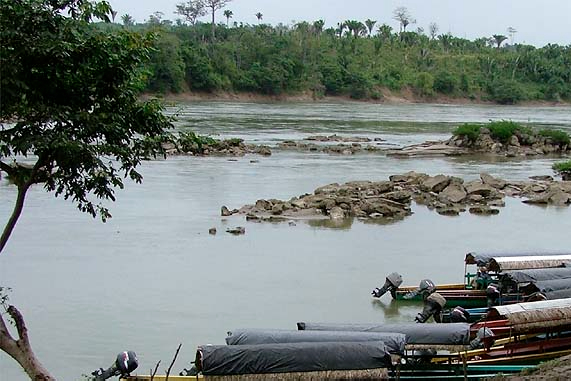
The lancha to Yaxchilán. At the riverfront in Frontera Corozal there's a boat cooperative (usually the Escudo Jaguar or Nueva Alianza cooperatives). They work off a tiered rate card by group size — roughly 1,400 pesos for 1–2 people, ~1,700 for 3–4, ~2,300 for 5–6 — so there's less bargaining than you'd expect, but a solo traveler should still expect to negotiate or wait to share a boat. You pay per boat, not per person, and it waits for you at the ruins — agree how long (two to three hours) before you set off. Teaming up with other travelers is what turns this from an expensive day into a cheap one, so ask around your hostel or hotel in Palenque first. The same cooperative also runs the border crossing — a lancha across to the Guatemalan side for immigration is about 750 pesos (see the Frontera Corozal crossing guide).
Yaxchilán fees. Before you board you pay, in cash, the Frontera Corozal town/road fee (about 30–40 MXN) plus the Yaxchilán access fees — a CONANP protected-area fee of about 120 MXN and a community (Chol civil-association) admission of about 80 MXN, roughly 200 MXN total. Budget 250 MXN per person for the fees alone and expect it to have crept up. Note that the ticket office in Frontera Corozal has been closing around 2–3pm since mid-2024, so be on the river well before midday — aim for the 8–9am boat.
Back to the highway, then Bonampak. From Frontera Corozal, catch a colectivo or flag a passing van back up the Carretera Fronteriza to the San Javier junction (the Bonampak turnoff), about 30 minutes.
Bonampak fees and shuttle. At the checkpoint you pay the INAH entrance fee (about 180 MXN for foreign visitors, 90 for Mexican nationals — INAH now splits the two), a Lacandón community access fee (about 90 MXN), and the mandatory Lacandón shuttle for the last few kilometers, about 150–200 MXN per person — roughly 450–500 MXN per foreigner for Bonampak alone. Outside vehicles are not allowed past the checkpoint; the shuttle is the only way in.
Bring far more cash than you think you need. There is no bank or ATM in Frontera Corozal or at either site, and everything here is cash only.
Doing It DIY vs. Taking the Tour
Run the numbers. Solo or as a pair, DIY roughly pencils out to: 300–400 MXN in colectivos round trip, 700–1,400 MXN each for your share of the lancha, and roughly 700 MXN per foreigner in combined site fees and the Bonampak shuttle. Call it 1,700–2,500 MXN, very roughly $90–140 USD per person, plus a day of logistics and some waiting around for boats and vans to fill.
The tour costs two to three times that, and I'm not a tour person by default — but this is one of the trips where I'd tell most people to take one anyway. The day is long, the connections are tight, and things go wrong out here more than they do elsewhere in Mexico: not dangerous things, just a van that breaks down, a missed connection, a wrong turn, a boat that isn't where it's meant to be. If you don't speak Spanish and you're not relaxed about improvising when a plan falls apart, the tour is worth the extra money. A guide at Yaxchilán also earns their fee — the site's whole point is the carved narrative, and you won't read it on your own. DIY makes sense if you have your own vehicle (drive the highway, pay only for the boat and fees, the cheapest version of all) or if you're the kind of traveler who enjoys the friction.
Yaxchilán: What You'll See
The boat ride is part of it. You run 30–45 minutes downriver, the pilot cuts the engine, and you drift into a muddy landing under the trees. Guatemala is the forest on the opposite bank the entire way; the Usumacinta is the border here.
From the landing, the first building you hit is El Laberinto (the Labyrinth), Structure 19, and you walk through it in the dark. It's a low maze of chambers and passages with bats overhead and, often, spiders; a guide with a flashlight leads you through and out the far side into the Main Plaza. It's a deliberately disorienting way to enter the city and it works.
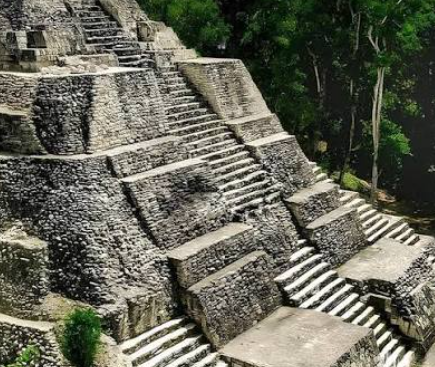
The plaza runs along the river. Above it, a steep staircase climbs through the jungle to Structure 33 on the acropolis, the best-preserved building at the site, with much of its ornate roofcomb still standing and a well-known statue of a seated ruler inside, its head detached (local Lacandón tradition holds that when the head is reunited with the body, the world ends). Keep climbing past it and a rougher path leads to the South Acropolis, higher still, usually empty.
Then the lintels. Yaxchilán's carved doorway slabs are some of the finest sculpture in the Maya world. The most famous, Lintels 24 and 25 from Structure 23, show Lady K'ab'al Xook drawing a thorn-studded rope through her tongue and then conjuring a vision serpent from the smoke; both are now in the British Museum. But carved lintels remain in place across the site, several still legible after more than a thousand years in the open, and the reliefs on Structures 33 and 21 are worth the time.
Howler monkeys are a near-guarantee: you'll hear them roaring somewhere in the canopy the whole visit and usually see a troop. The boatman typically waits two to three hours (confirm which before you land), which covers the plaza, the Labyrinth, and the Structure 33 climb without much room to spare.
There's a basic food stand by the landing, but it's nothing to plan around — bring your own food and plenty of water, especially on a DIY trip, and pack out your trash.
Bonampak: The Best-Preserved Maya Murals Anywhere
Bonampak sits inside the Comunidad Lacandona, land governed by the Lacandón Maya rather than by INAH or the federal park system. That's why you can't drive in: you pay at the checkpoint and ride a Lacandón-driven shuttle the last stretch. The Lacandón guided outsiders to the site in 1946, which is when the wider world learned the murals existed.
Everything worth coming for is inside Structure 1, the Temple of the Murals, a small three-room building at the base of the acropolis. Each room holds one part of one story, painted around 790 AD under the ruler Chan Muwan II:
Room 1: a courtly presentation, probably of an heir, with a procession of musicians, dancers, and lords in ceremonial dress.
Room 2: the scene reproduced in every textbook, a battle followed by its aftermath, captives sprawled on temple steps with blood running from their fingers while the ruler and his court preside.
Room 3: a bloodletting ritual, royal family members piercing their tongues, set against dancers on a stepped platform.
The pigments survived because the rooms stayed sealed, dim, and out of direct sun for over a thousand years. You're looking at the actual paint, which is why conservators limit light and time inside: you get a few minutes per room, no touching, no flash, and the rooms are small.
Beyond Structure 1 there's the small acropolis to climb for a view over the plaza and a few carved stelae, but budget maybe an hour here total. The murals are the reason.
Best Time to Visit
Dry season, November through April. The Usumacinta is lower and calmer, the boat ride is smoother, and the last unpaved stretch into Bonampak doesn't turn to mud. May through October brings heavier rain and higher, faster water; trips still run but conditions are less predictable.
Whenever you go, start early. Heat builds fast on the open river by midday, boats leave when they fill rather than on a schedule, and an early start means you're walking Yaxchilán in the cooler morning hours. This region also pairs naturally with the Palenque ruins and the Palenque waterfalls if you're basing in the area for a few days; see where to stay in Palenque for that.
Is It Safe to Visit Yaxchilán and Bonampak?
This needs a straight answer. Yaxchilán and Bonampak sit in a border region affected by cartel conflict over trafficking routes. In October 2023 both sites closed because of the violence, and boats on the Usumacinta stopped running. INAH's then-director publicly advised tourists not to visit border sites including Yaxchilán and Bonampak during that period, and Chiapas tourism operators described the environment as "drastically disrupted." Yaxchilán reopened in March 2024 after the Frontera Corozal community organized its own patrols and community police; Bonampak's reopening followed.
As of 2026 both sites are operating and tours run daily, but access here can pause again on short notice during flare-ups, and the US State Department places Chiapas at Level 3, "Reconsider Travel" (its wording since 2024). Before you commit money to a tour or a long drive, check the current situation: read the is Chiapas safe in 2026 guide, ask your accommodation in Palenque what tours are actually running that week, and if you're continuing across the border afterward, the Frontera Corozal crossing guide covers that separately. Travel this corridor by day, on the main highway, and don't linger at the border.
The Takeaway
Yaxchilán and Bonampak are a matched pair: one is a large riverside city you reach by boat and read through its carvings, the other is one small building holding the only full-color Maya murals left standing. Seeing both is a single long day out of Palenque. Take the tour if you're without a vehicle and in a small group, do it DIY if you have your own transport and the patience, carry a thick stack of pesos either way, go in dry season, and confirm the region is calm before you set out. For the wider picture, the Palenque guide and the independent guide to Chiapas cover how this fits into a longer trip.
Frequently Asked Questions
Can you visit Yaxchilán without a tour?
Yes. Take a colectivo van from Palenque to Frontera Corozal (about 130–200 MXN, 2.5–3 hours), then hire a lancha at the boat cooperative on the riverfront. The cooperatives work off a tiered rate card by group size (roughly 1,400 MXN for 1–2 people, less per head in a group), so there's less bargaining than you'd expect — though a solo traveler still negotiates or waits to share. Add the town fee and the Yaxchilán access fees (about 200 MXN) in cash. It's cheaper than a tour but a long day, and most people still take the tour because the connections are tight and a guide adds a lot at the site.
How do you get to Yaxchilán?
Only by boat. There is no road to Yaxchilán. You travel to the town of Frontera Corozal on the Usumacinta River, then take a motorized lancha 30–45 minutes downriver to the site. The boatman waits two to three hours — agree the exact time before you land — and brings you back. Frontera Corozal is 2.5–3 hours from Palenque by car or colectivo, and its ticket office has been closing early (around 2–3pm) since mid-2024, so take a morning boat.
How much does the Yaxchilán and Bonampak tour cost?
A combined day tour from Palenque runs roughly $180–280 USD per person in 2026, typically including hotel pickup, the round-trip lancha, the Lacandón shuttle into Bonampak, a guide, and both entrance fees. Budget one-day group tours can sometimes be found nearer $110–160; two-day trips with an overnight jungle cabin stay sit at the top of the range. Doing it independently costs roughly $90–140 per person but takes more coordination.
Is it worth visiting both Yaxchilán and Bonampak?
Yes. The two sites sit close together in a remote corner of Chiapas, so once you've made the trip out, seeing only one wastes the effort. They're also different experiences: Yaxchilán is a large riverside city with world-class carved lintels that you explore on foot, while Bonampak is a short visit centered on one building holding the best-preserved Maya wall paintings anywhere.
Are Yaxchilán and Bonampak safe to visit?
Both are open and running tours as of 2026, but they sit in a border region affected by cartel conflict. Both sites closed from October 2023 to March 2024 due to violence, and access can pause again during flare-ups. The US State Department places Chiapas at Level 3, "Reconsider Travel." Check the current situation before you commit, travel the highway by day, and ask your Palenque accommodation which tours are actually operating that week.