Is Chiapas Safe in 2026? An Honest, Current Assessment
Short answer: Chiapas is not off-limits, but it is not a place you travel on autopilot in 2026 either. The U.S. State Department has the state at Level 3: Reconsider Travel, and the standard tourist corridor — San Cristóbal de las Casas, the Sumidero Canyon and Chiapa de Corzo, Palenque, Agua Azul, Comitán — is still traveled by tourists every single day, mostly without incident. Those two facts sit next to each other and both are true.
I live most of the year in Chiapas and I've ridden every road in this state that a normal person would want to ride. What follows is the honest version: what the advisory actually says, what "reconsider travel" means in practice, where the real risk sits (it is not evenly spread), and the handful of rules that keep you out of the small number of situations that actually go wrong here.
Key Takeaways
The U.S. State Department rates Chiapas Level 3: Reconsider Travel, raised from Level 2 in September 2024, given statewide terrorism language in August 2025, and kept at Level 3 in the department's most recent Mexico advisory reissue on May 29, 2026 (U.S. Department of State). The elevated risk concentrates on the Guatemala border zone, rural jungle roads, and the highland municipalities around Pantelhó and Chenalhó — not the main tourist towns.
Canada tells its citizens to "avoid non-essential travel" to Chiapas but explicitly exempts San Cristóbal, Tuxtla Gutiérrez and Palenque city and their access highways (Government of Canada). The UK goes further on one point: the FCDO advises against all but essential travel on Highway 199 itself, between Rancho Nuevo (just outside San Cristóbal) and the Chancalá junction near Palenque, and within 40 km of the Guatemala border, citing illegal roadblocks and kidnapping risk (UK FCDO).
Highway blockades (*bloqueos*) on Highway 199 and, less often, the Tuxtla–San Cristóbal autopista are the disruption you are most likely to actually experience. Most are protests rather than ambushes, though the FCDO does flag kidnapping risk on 199 specifically.
San Cristóbal itself is safe with normal city precautions. The problem in town is petty theft and the occasional local gang flare-up, not cartel violence aimed at tourists.
Travel insurance that covers trip interruption and medical evacuation is worth buying for a Chiapas trip specifically.
What Does the Chiapas Travel Advisory Actually Say in 2026?
Chiapas has been at Level 3: Reconsider Travel since the State Department reissued its Mexico advisory on September 6, 2024, moving the state up from Level 2 (Journey Mexico's advisory tracker quotes the September 2024 text in full). In August 2025 the department kept Chiapas at Level 3 and added terrorism as a listed risk across almost every Mexican state, after the U.S. government designated six Mexican cartels as foreign terrorist organizations (Mexico News Daily; Newsweek). The State Department reissued the Mexico advisory again on May 29, 2026, leaving Chiapas at Level 3 (overall Mexico remains Level 2) and making no change to the six Level 4 "Do Not Travel" states (WWLP/Nexstar). As of that reissue, Chiapas was one of roughly seven or eight states at Level 3.
The State Department's own reasoning ties the Chiapas rating directly to the frontier: the advisory to reconsider travel is "heavily influenced by the situations affecting the Mexico–Guatemala border" (Journey Mexico). U.S. government employees are barred from traveling to defined areas of southeastern Chiapas, including a stretch along the Guatemala border, and face restrictions on specific highways, while they are allowed to move within Tapachula and on certain named routes. There is no blanket ban on the tourist corridor — U.S. personnel can and do travel to San Cristóbal, Tuxtla and Palenque.
Canada draws the line in almost the same place. The Government of Canada tells travelers to "avoid non-essential travel" to Chiapas but carves out clear exceptions: the city and ruins of Palenque and Highway 186 leading to them, the city of Tuxtla Gutiérrez with its airport and access road, and the city of San Cristóbal de las Casas plus toll Highway 190D between San Cristóbal and Tuxtla (Government of Canada). That is a fairly precise description of the route most visitors actually take.
The UK Foreign Office is stricter on one stretch. The FCDO advises against all but essential travel on Federal Highway 199 itself, from Rancho Nuevo just outside San Cristóbal to the Chancalá junction near Palenque, and within 40 km of the Guatemala border from the Pacific coast to the Gracias a Dios crossing, citing illegal roadblocks, protests and kidnapping risk (UK FCDO). If you plan to drive or shuttle the San Cristóbal–Palenque road, that is the advisory to weigh — most travelers still do the trip by day, but the FCDO does not carve out an exception for it the way Canada does for the toll road to Tuxtla.
What Does "Reconsider Travel" Mean in Practice?
Level 3 is an advisory, not a border closing. Your passport still works, flights still land at Tuxtla and Palenque, hotels are open, and nothing about the rating makes it illegal or impossible to go. What it changes is the math around insurance, assistance and personal judgment.
Practically, a Level 3 rating means three things. Your government's ability to help you if something goes wrong is limited, especially outside the main cities. Some travel insurance policies limit or void coverage for countries or regions under an elevated advisory, so read the fine print before you assume you're covered. And the rating is a signal to plan more conservatively than you would in, say, Yucatán or Mexico City — daytime travel, main roads, no improvising routes through areas you haven't checked on.
If you've driven elsewhere in southern Mexico, the mental model is similar to what I lay out in my honest guide to driving in Oaxaca: the advisory headline is rarely the thing that trips people up. Road conditions, blockades and bad timing are.
For a Chiapas trip specifically, I'd buy a policy that covers trip interruption and delay (blockades strand people for hours), medical treatment, and emergency medical evacuation. Evacuation matters here because a serious medical problem in Ocosingo or the Lacandon means a long transfer to Tuxtla or out of state.
Where Does the Risk in Chiapas Actually Concentrate?
This is the part the advisory level flattens. The danger in Chiapas is not spread evenly across the state — it clusters in a few specific places, and if you know where they are, you can plan a genuinely low-risk trip.
The Guatemala border zone. The Jalisco New Generation Cartel (CJNG) and the Sinaloa Cartel have been fighting for years over the trafficking corridors that run north from Guatemala — drugs, guns, and migrants (InSight Crime); Mexico News Daily). Border municipalities like Frontera Comalapa have seen convoys of armed men, gun battles, and mass displacement — Mexico News Daily has reported thousands of residents driven from their homes and hundreds fleeing across the line into Guatemala. This is the zone the U.S. restricts its own staff from entering. Casual tourists have almost no reason to be there.
The highland conflict around Pantelhó and Chenalhó. Separate from the cartel war, the mountains northeast of San Cristóbal have a long-running armed conflict involving a self-defense group known as "El Machete," a rival group tied to the Herrera family, and shifting alliances that have pulled in former Zapatista communities. Small Wars Journal documented road blockades, village evacuations and army deployments through 2024 into 2025 (Small Wars Journal / Arizona State University), and in July 2026 El Machete threatened to take up arms again after its leader was killed in Chenalhó (Infobae). Pantelhó, Chenalhó and Altamirano are not on standard tourist routes, and there's no reason to route through them.
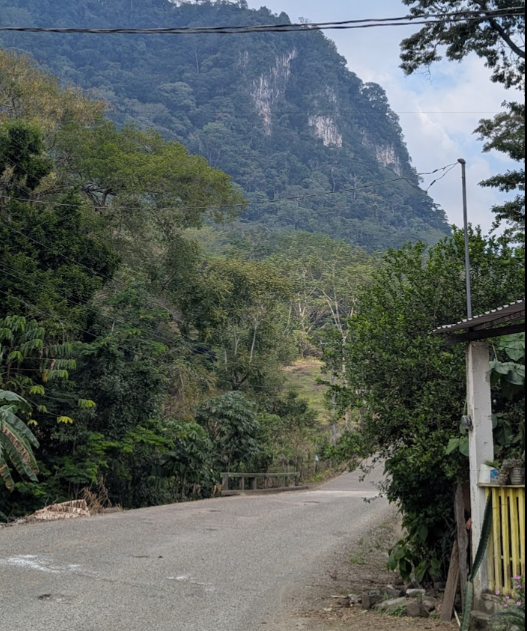
Rural jungle roads and some archaeological sites near the border. In early 2024, tour operators told Mexico News Daily that tourism in the Lacandon Jungle had been "drastically disrupted," and INAH's then-director Diego Prieto said plainly that visitors should not go to the border region of Chiapas "so you don't have an unfortunate experience" (Mexico News Daily). The deep-jungle ruins of Yaxchilán and Bonampak have closed to the public during flare-ups. (Toniná, near Ocosingo, was shut from September 2023 until it reopened on 21 March 2026 — but over a land dispute inside the site, not security.) Check the current status of any of these before building a day around them. If you're crossing to Guatemala this way, read my notes on the Frontera Corozal crossing from Palenque and the more established La Mesilla crossing from San Cristóbal first.
Night driving in the mountains, anywhere. Unlit curves, livestock, fog, potholes and the small but real chance of a nighttime robbery on an isolated stretch. This one is simple: don't.
Highway Blockades: The Thing You'll Probably Actually Deal With
If something disrupts your Chiapas trip, it is far more likely to be a bloqueo than anything violent. Highway 199 between San Cristóbal and Palenque is the classic chokepoint, and the Tuxtla–San Cristóbal autopista (190D) gets blocked occasionally too.
Most blockades are protests rather than crime. Teachers' unions, transport cooperatives, and communities with land disputes shut down a stretch of highway to force attention onto a grievance. They are usually announced or at least known locally in advance, they target the road rather than the people on it, and they typically last hours — though not always. Two caveats: the UK FCDO does cite kidnapping risk on Highway 199 specifically, and there are documented nighttime robberies on isolated stretches. Chiapas's state government has run stepped-up anti-blockade operations since early 2025, and some shuttle operators report fewer incidents through 2026. In April 2022, residents of Ocosingo protesting a decades-old agrarian conflict dug trenches across Highway 199 with heavy machinery and stranded Holy Week tourists, including a tour group of 28 that never made it to Palenque (Mexico News Daily).
The blockades are real and I've sat through them. What works: ask your hotel or shuttle operator about bloqueos the morning you travel, build a buffer day into any San Cristóbal–Palenque plan, carry water and snacks in the vehicle, and if you hit one, wait it out or turn back. Do not try to push a car through a line of people. For the full route breakdown — where blockades happen, which operators track them, and how the road actually rides — see my San Cristóbal to Palenque route and safety guide, which is the companion piece to this one.
Is San Cristóbal de las Casas Safe?
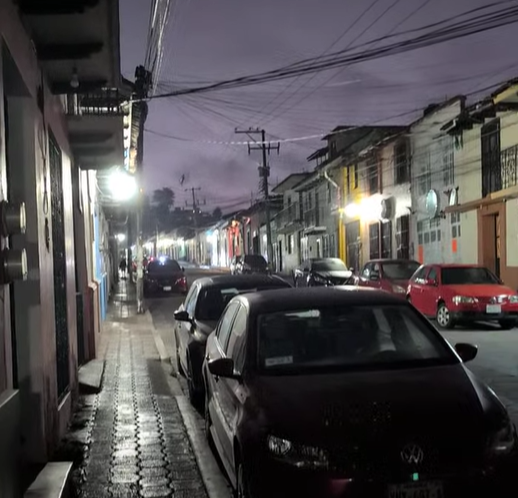
Yes, with the same precautions you'd use in any mid-size Mexican city. The historic center is walkable, heavily touristed, and busy well into the evening. The realistic risks are pickpocketing in the markets, phone snatching, the occasional mugging on a dark street away from the center late at night, and taxi overcharging. Standard stuff.
What San Cristóbal is not is a cartel battleground where foreigners get caught in crossfire. The city has had local security scares — in June 2022 a gang known as Los Motonetos, fighting over control of a market, occupied parts of town for hours, fired weapons in the air and burned vehicles, and a bystander was killed by a stray bullet (Mexico News Daily). Those episodes are about local turf and extortion, they're infrequent, and they're not aimed at visitors. Keep an eye on local news while you're there, avoid the far northern edge of the city, and you'll be fine.
Is Palenque Safe to Visit?
Palenque town and the archaeological site are safe for a normal visit. The ruins are inside a national park with a controlled entrance, the town is a working tourism hub, and Highway 186 in from the north (the Villahermosa/Tabasco side) is the routine way to arrive.
The caution with Palenque is directional. The road south toward Ocosingo and San Cristóbal (Highway 199) is the blockade corridor covered above. And day trips that push southeast toward the Guatemala border — deep Lacandon Jungle, the Usumacinta River, Yaxchilán — enter the zone where operators pulled back and INAH advised against going. Stick to Palenque, Misol-Ha and the near side of Agua Azul, arrive and leave in daylight, and it's a straightforward stop.
Practical Safety Rules for Chiapas
- Main highways, daytime only. The tourist corridor roads are fine by day. Rural roads after dark are the single biggest avoidable risk.
- No overnight buses on rural routes. Daytime first-class buses between the main cities are fine.
- Check the news before any border-area day trip. Situations near the frontier and in the highlands change week to week.
- Ask locally about blockades every travel day. Hotels, shuttle desks and drivers know before you will.
- Respect the rules in indigenous villages. Communities like San Juan Chamula govern themselves and enforce their own customs — photography inside the church is banned, and the etiquette matters. My Chamula guide covers what you need to know before you go.
- Buy travel insurance with trip-interruption and medical-evacuation cover.
- Don't flash valuables on highways or in markets, and split your cash and cards.
For how this fits into an actual route and how many days to give each base, see my Chiapas itinerary guide, and for what's genuinely worth your time once you're here, the unfiltered list of things to do in Chiapas.
The Bottom Line
Chiapas in 2026 is a Level 3 state where the standard tourist trip is still, in practice, a reasonably safe trip — if you make a few deliberate choices. Stay in the corridor. Move by day. Treat the border zone and the Pantelhó highlands as off-limits. Expect a blockade and plan around it. Buy real insurance.
If that sounds like more homework than a beach week in Tulum, it is. But San Cristóbal, the Sumidero, Palenque and the waterfalls are worth it, and thousands of travelers do this route every month without a problem. For the full picture of how to string it together, start with my independent guide to Chiapas, and read the San Cristóbal–Palenque route and safety guide before you book that leg.
Frequently Asked Questions
Is San Cristóbal de las Casas safe?
Yes, for normal city travel. The realistic risks are petty theft, phone snatching and the occasional late-night mugging away from the center — not cartel violence targeting tourists. The city has had infrequent local gang incidents tied to market and extortion turf, most notably a June 2022 episode involving the Los Motonetos group, but these are not aimed at visitors. Use standard precautions and check local news during your stay.
Can you drive in Chiapas?
Yes, on the main highways and in daylight. The Tuxtla–San Cristóbal autopista and the roads to Palenque, Comitán and the Sumidero are routinely driven by tourists. The two things to plan around are highway blockades (ask locally every travel day and keep a buffer day) and a firm no on night driving in the mountains. Avoid rural roads near the Guatemala border and the Pantelhó/Chenalhó highlands entirely.
Is Palenque safe to visit?
Yes. Palenque town and the ruins are safe for a normal visit, and arriving via Highway 186 from the north is routine. Be cautious on Highway 199 south toward Ocosingo (blockade corridor) and skip day trips that push southeast toward the Guatemala border, where tour operators and INAH have advised against travel.
What is the safest way to get around Chiapas?
Daytime first-class buses and pre-arranged tourist shuttles between the main towns, or your own vehicle on toll and federal highways during daylight. Avoid overnight buses on rural routes and don't self-drive isolated back roads. Fly into Tuxtla (or Palenque) rather than driving in from a Level 4 neighboring state.
Has the travel advisory changed?
Yes. The U.S. State Department raised Chiapas from Level 2 to Level 3: Reconsider Travel in September 2024, added terrorism as a listed risk statewide in August 2025, and kept Chiapas at Level 3 in its most recent Mexico advisory reissue on May 29, 2026. Always check the current advisory before you travel, since it is reissued periodically.
Is there a cartel presence in Chiapas?
Yes. The CJNG and the Sinaloa Cartel have fought for years over trafficking routes from Guatemala, with the worst violence and displacement concentrated in border municipalities such as Frontera Comalapa. There is also a separate armed conflict in the highland municipalities around Pantelhó and Chenalhó. Both are away from standard tourist routes, and casual visitors who stay in the main corridor are very unlikely to encounter either.