San Juan Chamula: What Nobody Tells You Before You Go
Every "best of Chiapas" list puts San Juan Chamula near the top, and almost none of them tell you how to actually behave once you're standing inside the church. That gap is the problem. This isn't a ruin or a museum piece where the rules are printed on a laminated sign. It's a living Tzotzil Maya community practicing its own blend of Catholic and pre-Hispanic ritual, in a building where the etiquette matters as much as the sightseeing.
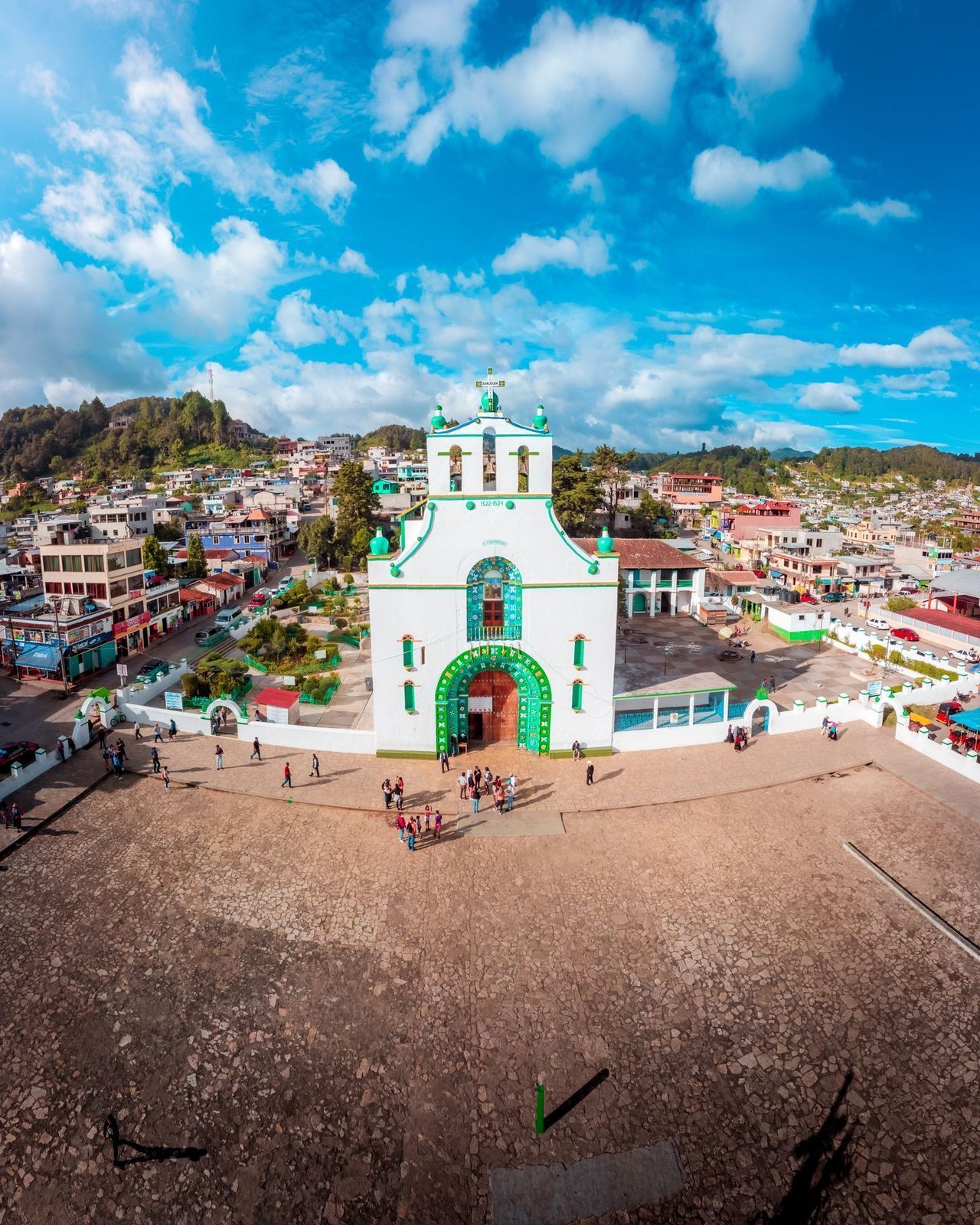
I live in Chiapas and I've been inside the Templo de San Juan Chamula. What follows is what I'd tell a friend before they go, not a recycled packing-list version of the same ten facts every site copies from each other. For the wider context of where Chamula fits into a Chiapas trip, the full Chiapas overlanding guide covers routing and timing if you're building out a longer itinerary.
Key Takeaways
- Photography inside the church is not "discouraged," it's banned, and enforcement is real: confiscated cameras and fines in the $200+ USD range have happened to tourists who ignored it, and The New York Times reported the same camera-seizure policy as far back as 2008.
- Collectivos to Chamula leave constantly from San Cristóbal's market area, take about 30 minutes, and cost only a few dollars round trip.
- There's a small entrance fee, paid at a ticket booth near the church, not at the door itself.
- Sunday is market day and the busiest, most visually overwhelming version of Chamula you'll see.
- Chamula governs itself under its own customary law and isn't policed like a typical Mexican town, which is part of why the church rules get taken so seriously.
- Ten minutes further down the road is Zinacantán, and the two towns pair naturally into one half-day trip.
What Makes the Templo de San Juan Chamula Different
Walk in and there are no pews. The floor is covered in pine needles, hundreds of candles burn at ground level in rows, and the air is thick with copal smoke. Families kneel directly on the floor around their own cluster of candles, chanting in Tzotzil, sometimes with a shaman leading a healing ceremony. Part of that ritual can involve Coca-Cola, believed to induce burping that expels illness from the body, a detail that surprises almost everyone the first time they see it.
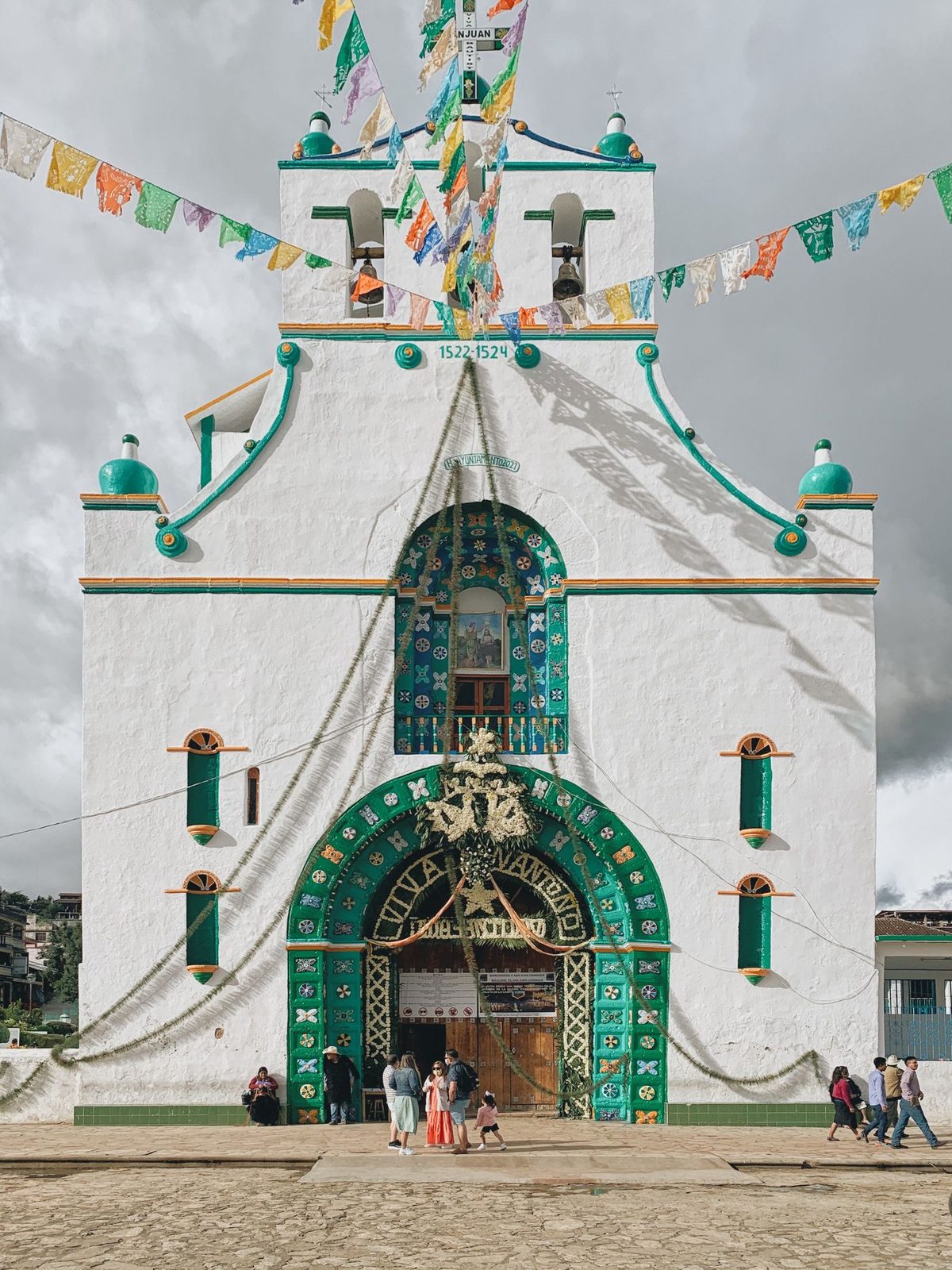
None of this is staged for visitors. It's the actual, ongoing religious practice of the community, which is exactly why the rules inside matter more here than at almost any other church you'll visit in Mexico. If you're weighing Chamula against everything else in the state, the full list of what's worth doing in Chiapas has the wider comparison.
Can You Take Pictures in San Juan Chamula Church?
No. Photography and video inside the Templo de San Juan Chamula is banned, full stop, and this is one rule that actually gets enforced. Locals believe a photograph steals the soul, and visitors who've tried to sneak a shot have had cameras and phones confiscated on the spot, with fines reported in the 3,900 to 4,200 peso range (roughly $200-230 USD) before the situation gets sorted out — accounts of visitors being held locally beyond that also circulate, though those specific claims are harder to independently confirm. This isn't a new or one-off crackdown, either: back in 2008, The New York Times' Frugal Traveler column reported that photography inside the church "was forbidden, punishable by seizure of your camera and, potentially, arrest," describing the same policy nearly two decades before these more recent local reports.
Phones should be off, not just silenced, before you walk in. The same no-photo rule extends outside the church too: never photograph a resident, a ritual, or a shaman without asking first and getting a clear yes. That applies in the plaza, in the market, and anywhere else in town, not just past the church doors.
The Rules That Actually Get Enforced
Beyond the camera ban, Chamula has a short list of rules that locals genuinely hold visitors to, and none of them are negotiable once you're inside.
No hats and no sunglasses inside the church. Both come off before you enter, not after someone tells you to remove them. Walk through the space respectfully: this means moving through at a reasonable pace, not planting yourself in the middle of the floor to gawk at a family mid-ceremony. It's someone's active religious practice, not a tableau set up for foot traffic.
None of this is announced loudly at the entrance. There's no long list of posted rules in English. That's part of why so many visitors get caught off guard, and part of why it's worth reading this before you're standing at the door.
Do You Need a Guide in San Juan Chamula?
You don't need one, but it's worth having one here specifically because the etiquette isn't intuitive. A local guide can tell you what you're actually looking at (which saint's altar this is, why the family lit candles in that particular arrangement, what the shaman is doing) instead of leaving you to guess or, worse, to stand there staring at a ceremony you don't understand.
Guides are easy to arrange in San Cristóbal de las Casas through tour operators running half-day trips to Chamula and Zinacantán, and they'll also handle the etiquette coaching before you ever walk in the door, which takes the guesswork out of the visit.
How Do You Get to San Juan Chamula From San Cristóbal?
Chamula is a straightforward 30-minute collectivo ride from San Cristóbal de las Casas, and you don't need a tour to make the trip. Shared vans (colectivos) run frequently from the market area of San Cristóbal, near the Mercado Municipal, throughout the day. You don't need a set departure time; vans leave once they're full, and on most days that means a short wait at most.
Expect to pay somewhere in the range of 20 to 25 pesos each way, though combi fares creep up over time, so don't be surprised if it's a little more by the time you go. If you're unsure exactly where the vans are staging that day, it's worth asking at your hotel or hostel in San Cristóbal, since informal pickup points shift around the market area from time to time. A taxi is the other option if you'd rather skip the wait, though it costs considerably more for the same 30-minute ride.
What Is the Entrance Fee for San Juan Chamula?
There's a small entrance fee to visit the church, collected at a ticket booth in the plaza rather than at the church door itself, so you'll want to grab your ticket before walking up. It's a modest amount, typically in the neighborhood of 25 to 30 pesos, and it goes toward the upkeep of the church and the community that maintains it. Bring small bills; the booth isn't set up for card payments or large denominations.
When to Go: Market Days and Timing
Sunday is Chamula's main market day, and it's when the town is at its most alive. Vendors fill the plaza, the church sees a steady stream of worshippers, and the whole town has an energy that a weekday visit simply doesn't have. If you want to see Chamula at full volume, color, and crowd, go on a Sunday morning.
That said, a weekday visit has its own upside: fewer visitors, more room to actually observe what's happening inside the church without feeling like you're part of a crowd. Neither is wrong. It depends on whether you want the market spectacle or the quieter version of the same place.
Beyond the Church: What Else Is Worth Seeing in Chamula
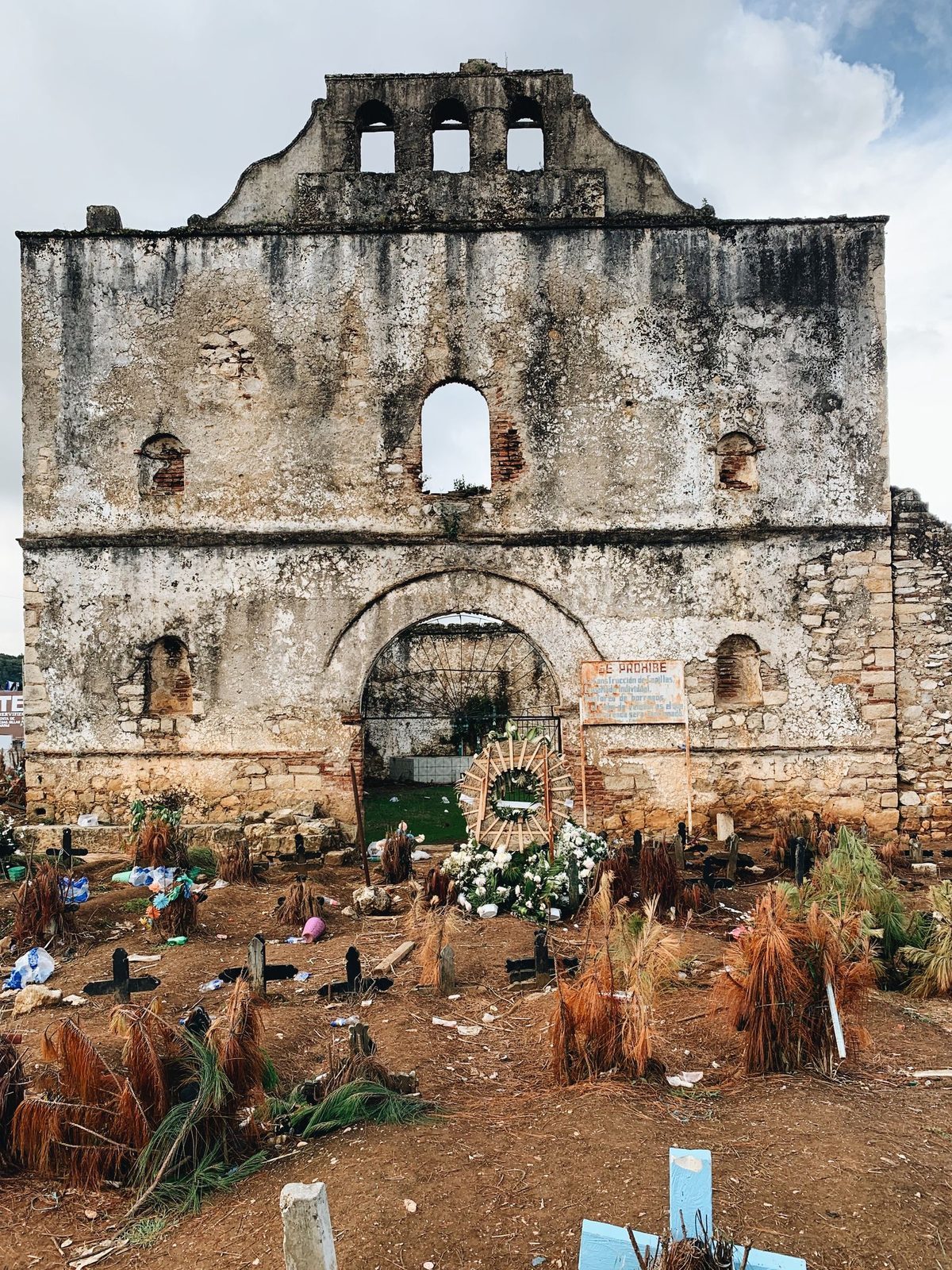
The church is the reason most people show up, but it's not the only thing worth your time in town. The plaza itself is worth slowing down for, especially on market day, when local vendors sell textiles, produce, and pox, a traditional corn liquor that's part of local ceremonial life. The town's cemetery, with its rows of white, green, blue, and black crosses — locals and guides commonly describe the colors as marking the age of the deceased, from infants to elders, though accounts of the exact meaning vary — sits on a hillside just outside the plaza and is a quieter, less crowded stop most tour groups skip entirely.
It's also worth paying attention to Chamula's local government building near the plaza, where you'll often see town authorities in traditional dress carrying out their duties. Chamula operates under its own customary indigenous governance system, and that visible local authority is part of what makes the town feel distinct from anywhere else nearby, not just a backdrop for the church.
Is San Juan Chamula Safe to Visit?
Yes, San Juan Chamula is safe for tourists who follow the rules around photography and respectful behavior inside the church. The real risk here isn't crime in the way you'd think of it elsewhere; it's the consequence of ignoring the no-photo rule or wandering into a ceremony uninvited, which can escalate quickly and involve local authorities rather than state police.
That last point matters and gets glossed over in most guides: Chamula is governed under its own system of customary law, separate from the usual municipal or state policing you'd find in San Cristóbal. Disputes, including ones involving disrespectful tourists, get handled locally, on local terms. That's not a reason to avoid the town. It's a reason to take the etiquette seriously instead of treating it as a suggestion.
Pairing Chamula With Zinacantán
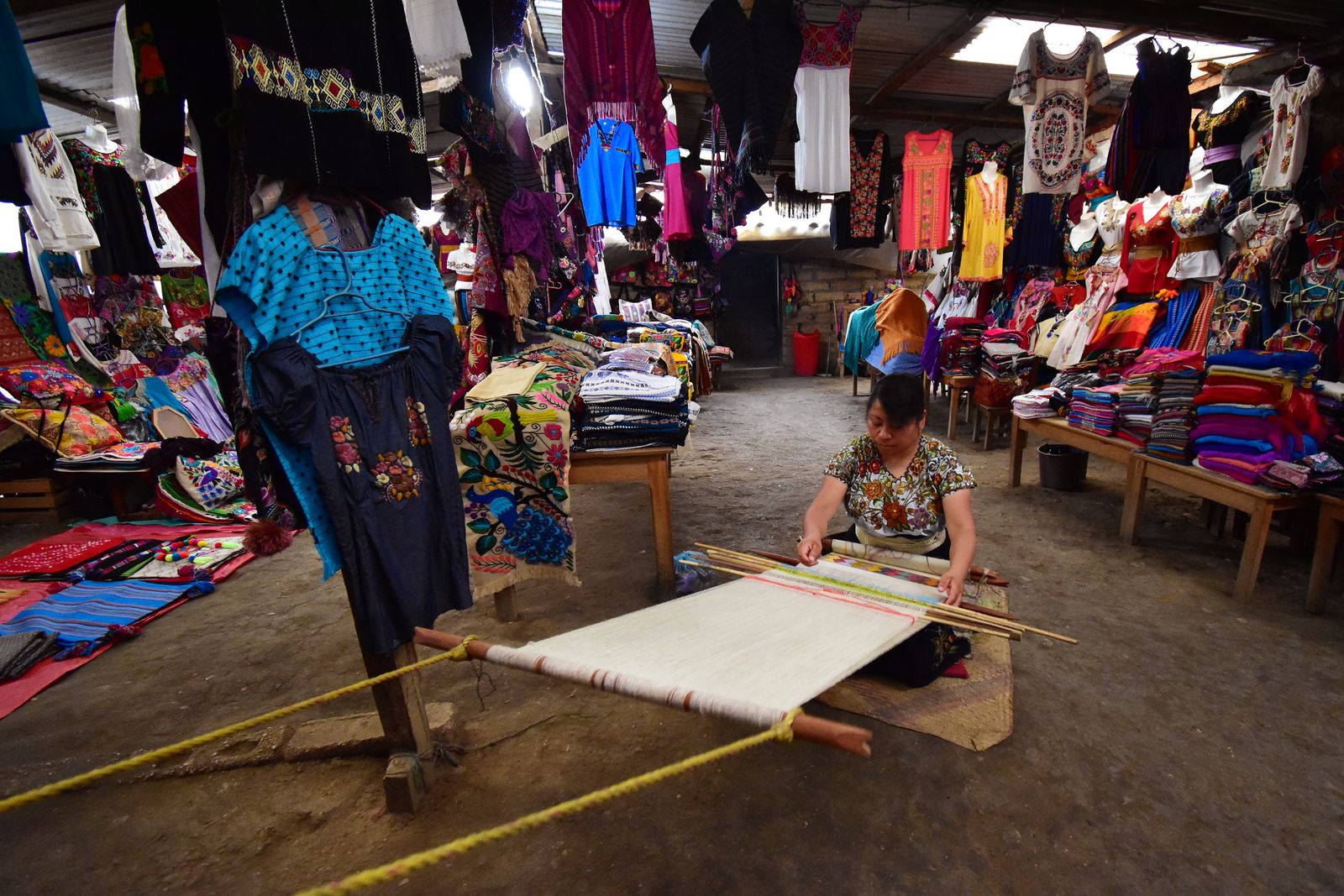
Chamula pairs naturally with Zinacantán, a Tzotzil town about ten minutes further down the road, known for its flower greenhouses and weaving cooperatives rather than a single dramatic church. Together they make a full half-day trip out of San Cristóbal, and most tour operators already run them as a combined route. For a closer look at what to expect once you get there, see the Zinacantán guide; for how the pair fits alongside the Sumidero and the other runs from town, see the best day trips from San Cristóbal.
The Bottom Line
San Juan Chamula rewards visitors who show up prepared and respectful, and it can go sideways fast for anyone who treats it like a normal tourist stop with a camera in hand. Get your ticket at the plaza booth, leave the hat and sunglasses in your bag, keep your phone off, and let the ceremony happen around you instead of trying to document it. Do that, and Chamula is one of the most genuinely different places you'll visit in Chiapas, not a photo op, but a real one.
If you're mapping out the rest of the region around this stop, the full Chiapas overlanding guide is the place to plan from next.