
The Best Waterfalls in Chiapas: A Resident's Ranked Guide
If you only have time for the headliners, visit Agua Azul and Misol-Ha on the same run out of Palenque, and if you're basing yourself in the south, add El Chiflón near Comitán. Roberto Barrios, also near Palenque, is the one that rewards skipping the tour bus. That's the short version.
The longer version matters because "best" depends on where you already are and what you want. Agua Azul is the widest and bluest, and the most crowded. Misol-Ha is a single 35-metre drop you can walk behind. El Chiflón is a 120-metre plume you climb to on a paved trail. Below is every waterfall worth planning around, with the fee, the drive, whether you can actually swim, and how bad the crowds get.
I live in Chiapas and have been to all of these. For how the waterfalls fit into a wider route, see the independent Chiapas overlanding guide.
Key Takeaways
Agua Azul and Misol-Ha are both on the Palenque–Ocosingo road and are almost always visited together, by tour or by colectivo, in one half-day.
Every waterfall here is run by a local ejido or community that collects a cash entrance fee, roughly 20 to 80 pesos per person depending on the site, with prices changing year to year and no card machines.
The water is bluest from November through April. November is the sweet spot: the rivers are still full from the wet season but the sediment has dropped out, so the pools run turquoise instead of brown.
Get to any of them at opening. Agua Azul in particular turns into a parking-lot scene by late morning.
People drown at Chiapas waterfalls. Currents near the drops are stronger than they look, the rock is slick, and swimming is unsafe or banned during and right after heavy rain. Stay in the marked areas and don't dive.
Quick Pick: Which Chiapas Waterfall Is Right for You
The Palenque Waterfalls
Palenque is the waterfall capital of Chiapas. Four are within a 90-minute drive of town, and the full Palenque town guide covers where to sleep and eat between visits.
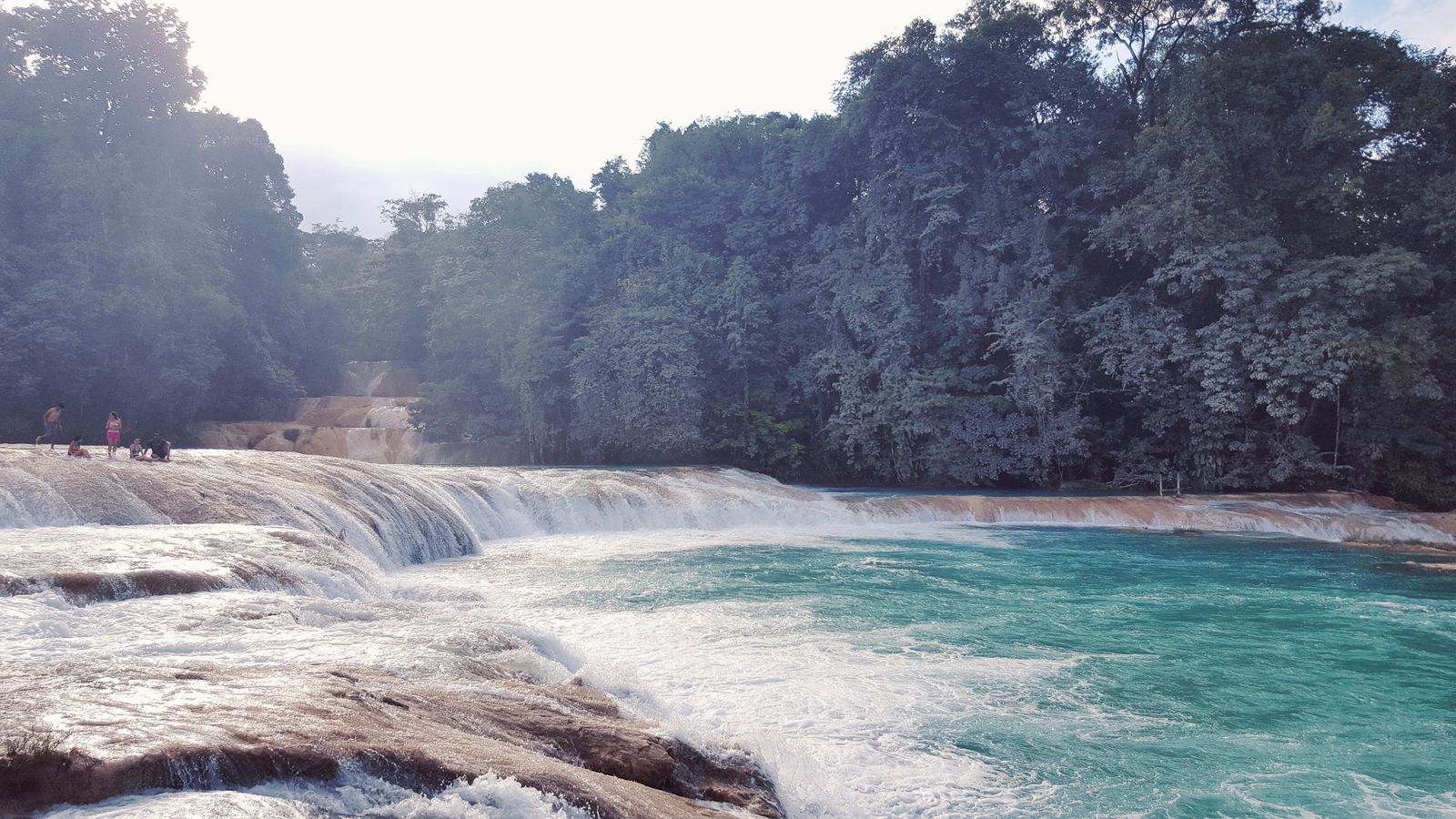
Agua Azul
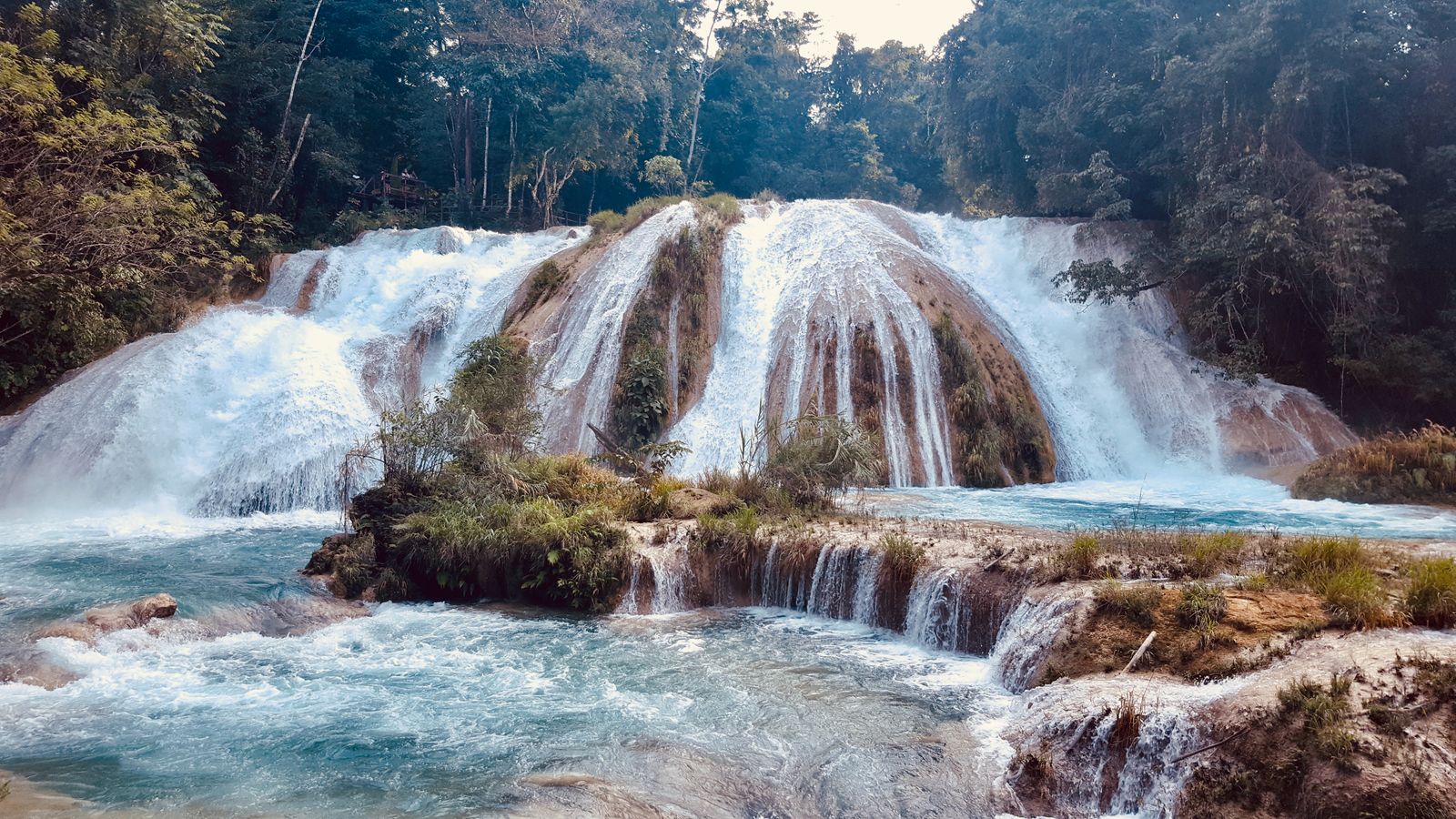
Location and base town: Municipality of Tumbalá, about 65 to 70 km southwest of Palenque on the road toward Ocosingo. Palenque is the obvious base; from San Cristóbal it's roughly 135 km and 2.5 to 3 hours.
Height: There is no single tall drop. Agua Azul is a chain of limestone shelves running for several kilometres, with the longest individual fall around 6 metres. The appeal is width and colour, not height.
Entrance fee: Around 80 pesos per person total, cash, usually collected in two parts at two booths — a community fee at the crucero (junction) on the way in and the main ejido fee at the site. You may also be asked for an informal road toll on the access road. Bring small bills. Full breakdown in the Agua Azul & Misol-Ha guide.
How to get there: Most people take a tour from Palenque that bundles Agua Azul and Misol-Ha for a few hundred pesos. Independently, colectivos and vans run from Palenque toward Agua Azul; you can also drive yourself. The site sits within a CONANP protected area but is managed day to day by the ejido.
Best time: Arrive at opening, around 8am. Visit in the November-to-April dry season, ideally on a sunny day, when lower sediment lets the pools run turquoise; heavy rain turns the whole river brown
Swimmable: Yes, but only in the marked areas near the bottom. Currents in the upper pools are dangerous and drownings have happened here; locals point to spots with strong undertow, and warning signs are there for a reason.
Crowd level: The highest in the state. By 11am the lower boardwalk is shoulder-to-shoulder with tour groups and vendors. Early is the only way to see it calm.
For the detailed logistics on doing Agua Azul and Misol-Ha yourself without a tour, see the full Agua Azul and Misol-Ha guide.
Misol-Ha
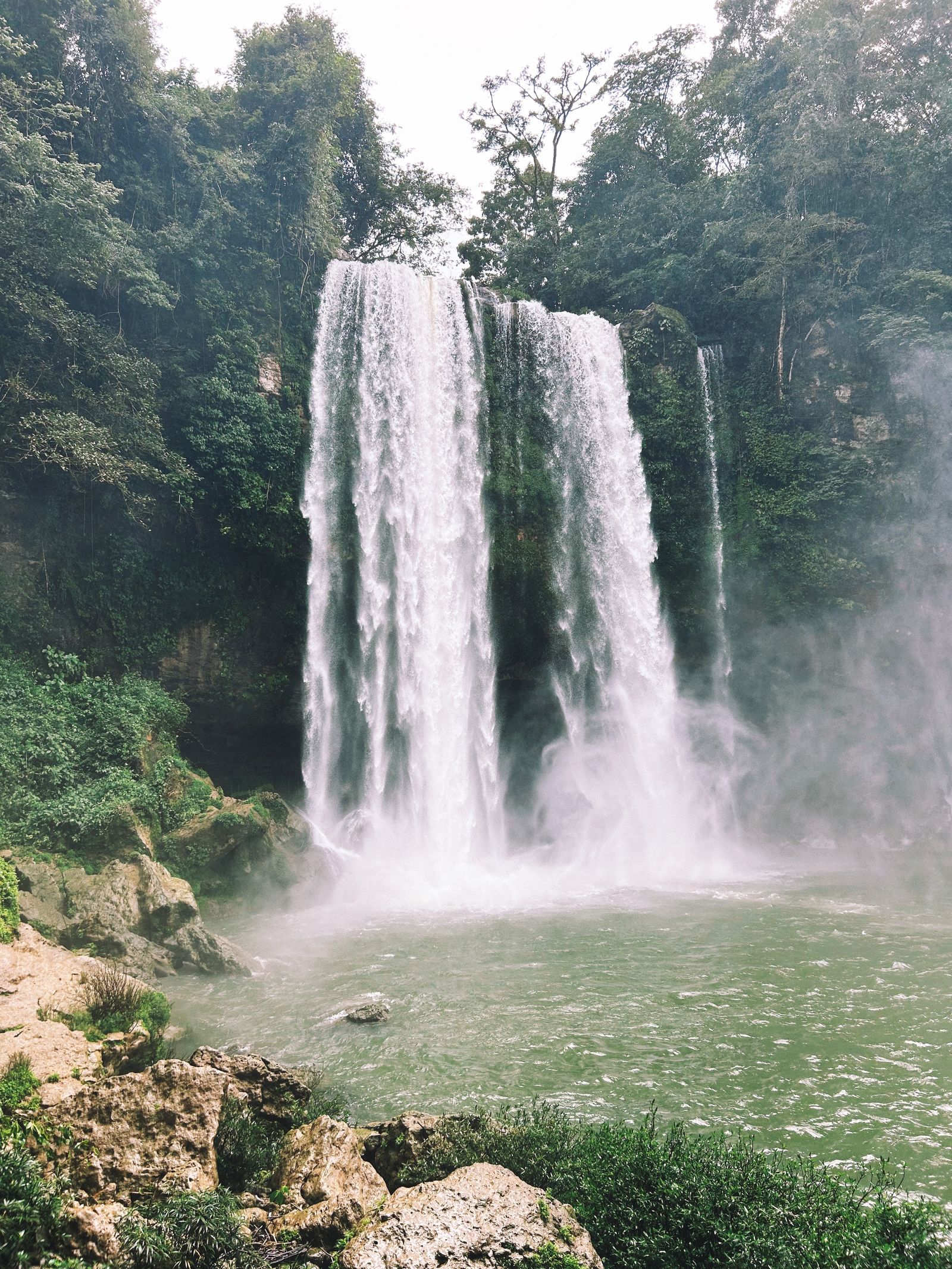
Location and base town: About 20 km south of Palenque, right off the main road, roughly 30 minutes by car.
Height: A single 35-metre drop into a wide plunge pool (Misol Ha, Wikipedia)
Entrance fee: Around 30 to 50 pesos per person, cash (roughly double in the Christmas and Semana Santa peaks), plus a few pesos more to take a vehicle in (Mexico Travel & Leisure).
How to get there: Same tours that run to Agua Azul stop here, usually first. Colectivos from Palenque toward Ocosingo can drop you at the turnoff, leaving a short walk in. Driving yourself is easy; there's a parking area.
Best time: Morning, both for light and to beat the Agua Azul tour groups that arrive here afterward. Any dry-season month works; the single drop stays impressive even when the water is high.
Swimmable: Yes. You can swim in the pool at the base, and a slippery path leads behind the curtain of water to a small cave. Go slow on that rock.
Crowd level: Moderate. It fills up mid-morning when the tour circuit hits it, then empties out.
Roberto Barrios
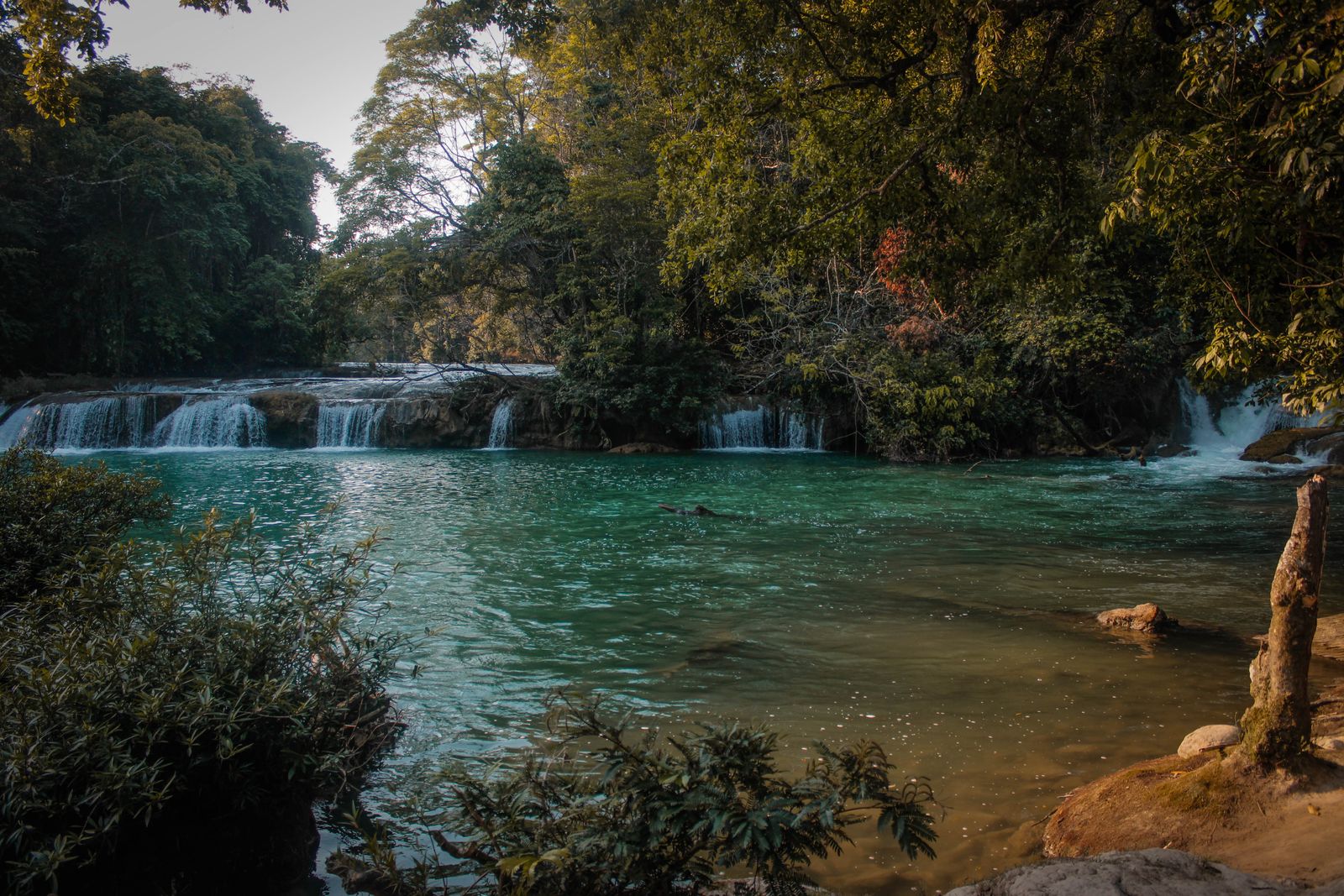
Location and base town: About an hour northwest of Palenque, near the town of Roberto Barrios.
Height: No big single drop. It's a long series of low travertine cascades, pools, natural water slides, and small caves spread through the jungle.
Entrance fee: Around 20 to 40 pesos per person, cash, collected by the community.
How to get there: Colectivos leave Palenque from the corner of 5a Avenida Norte and 4a Poniente Norte, cost around 50 pesos each way, and take 45 to 60 minutes; the last one back to Palenque leaves around 4pm, so watch the clock. Tours exist but this is the easiest DIY waterfall near Palenque.
Best time: Any dry-season morning. It's shaded and green year-round; avoid it right after storms when the flow gets pushy.
Swimmable: Yes, and this is the one you go for the swimming. Multiple pools, gentle slides, small jumps. Water shoes help.
Crowd level: Low. It's off the Agua Azul–Misol-Ha bus circuit, so on a weekday you may have whole sections to yourself. Weekends bring local families.
Roberto Barrios delivers the swimming experience most people wrongly expect from Agua Azul, at a fraction of the crowd, because the tour buses never route there.
Welib-Já
Welib-Já is the bonus stop, not a destination. It's a cluster of short, wide cascades and calm pools on the Río Chancalá, about 40 minutes from Palenque on the Carretera Fronteriza toward Bonampak, with a roughly 25 to 30 peso cash fee, a zipline, and camping. Swimming is fine and the crowds are thin. Only worth it if you're already driving out this way for Bonampak, Yaxchilán, or the Frontera Corozal border.
Cascadas Las Golondrinas (Nueva Palestina)
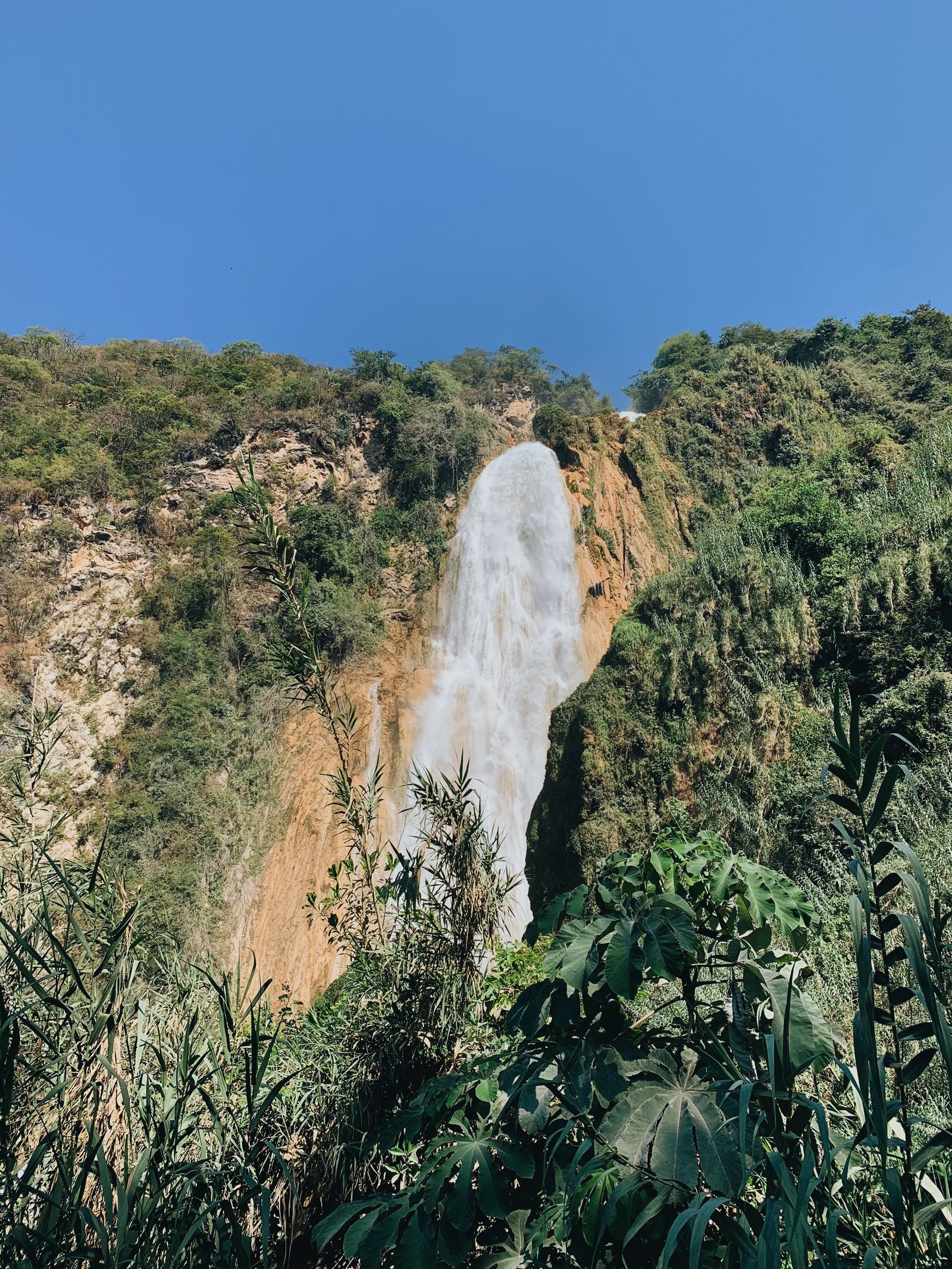
Location and base town: A community-run centre ("Ch'en Ulich") in the sub-community of Nueva Palestina, municipality of Ocosingo, deep in the Lacandón jungle — about 2 hours down the Carretera Fronteriza from Palenque, roughly 10 km before the San Javier junction for Bonampak. This is not the Ya Toch Kusam / Las Golondrinas falls near Lacanjá Chansayab; different waterfall, same name.
Height: Two main drops of about 8 to 10 metres (some sources describe up to four cascades, 10 to 15 metres), feeding clear green pools, with jungle trails and small caves where the swallows the falls are named for nest.
Entrance fee: About 15 pesos per person, cash, collected by the Nueva Palestina community; life-jacket or hammock rental around 10 pesos an hour.
How to get there: From Palenque, a combi toward Nueva Palestina (about 2 hours, roughly 80 pesos) to the signed turnoff, then a local taxi about 150 pesos each way. The access road is paved — 9 km off the Fronteriza plus a short spur. Your own vehicle is by far the easiest way, and this is one Mason would only do with a motorcycle or car.
Best time: Dry-season mornings. Weekends draw local families.
Swimmable: Yes, in the pools — standard slick-rock and current cautions apply.
Crowd level: Very low. The distance and the location filter almost everyone out.
Safety note: This sits past the point where the is Chiapas safe guide and tour operators advise checking conditions before heading southeast toward the border, and Nueva Palestina saw criminal-group displacement pressure in 2023. Ask in Palenque or Ocosingo about the Carretera Fronteriza and any bloqueos before you commit the day, and travel in daylight.
The Comitán Waterfalls
If your trip runs through the southern highlands instead of the jungle, Comitán is the base. The Comitán town guide and the best day trips from Comitán. cover the wider loop, which also takes in Lagos de Montebello.
El Chiflón / Velo de Novia
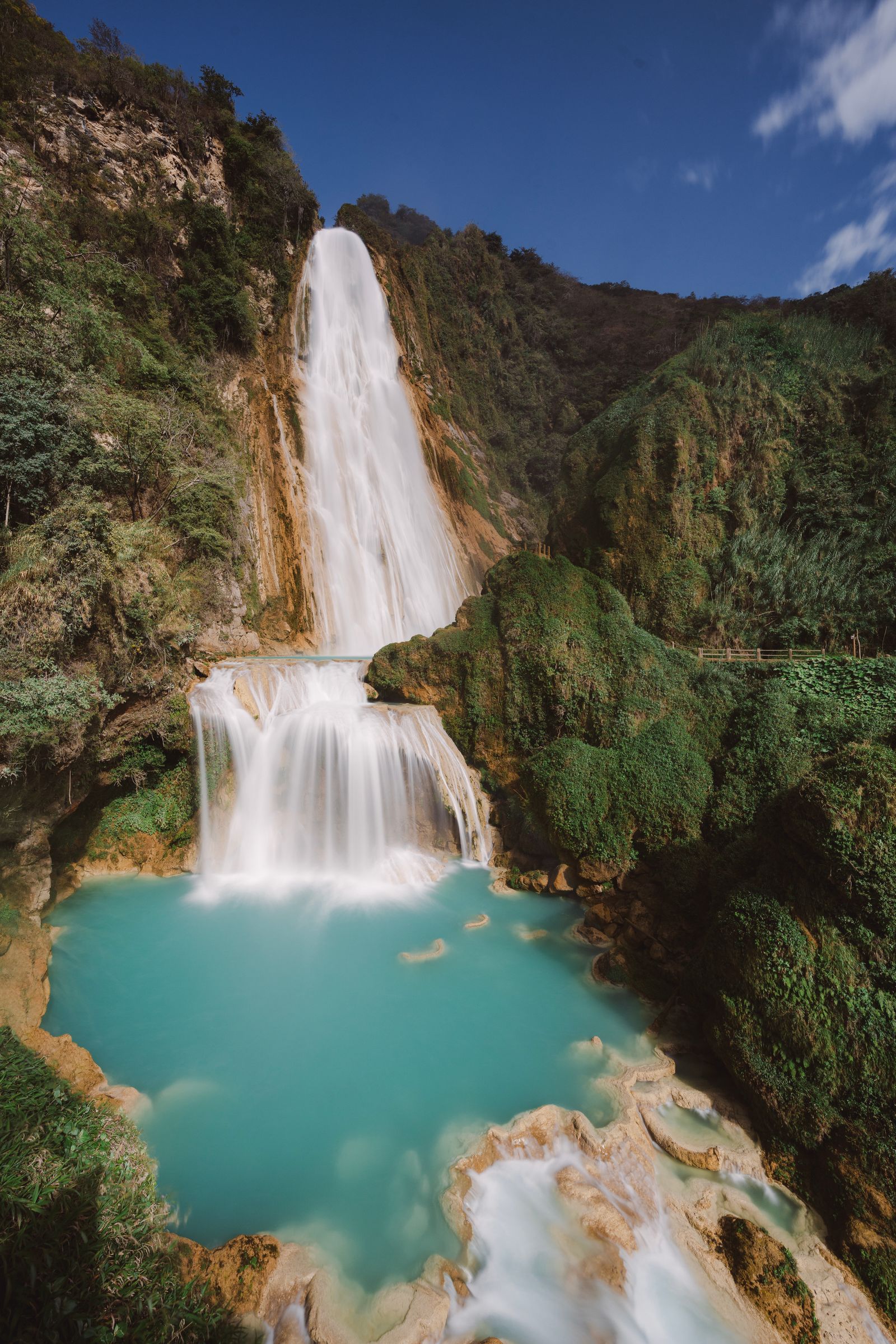
Location and base town: On the San Vicente River near the village of San Cristobalito, about 45 minutes from Comitán and roughly 100 km (2.5 to 3 hours) from San Cristóbal de las Casas — it sits about 40 km beyond Comitán
Height: Five waterfalls step up the river. The big one, Velo de Novia (Bride's Veil), drops around 120 metres — sources differ on whether that's the single fall or the full chain
Entrance fee: Around 80 pesos per person, cash, at either of the two ejido-run entrances.
How to get there: From Comitán, shared vans marked for Tzimol or El Chiflón leave from Highway 190 near the main bus terminal, cost around 35 pesos per person, and drop you about a kilometre short of the gate in roughly 45 minutes. Tours run from San Cristóbal, usually paired with Lagos de Montebello, but that makes for a long day of driving. Full logistics in the El Chiflón guide.
Best time: Open around 7:30am to 5pm. Go early on a weekday; Mexican families pack it on weekends and holidays. Dry-season water still runs hard here because it's a real river, not a sediment-fed cascade, so it photographs well most of the year.
Swimmable: Yes at the lower falls, where there are roped-off pools and a beach area. Swimming is banned at Velo de Novia itself because the current and spray at the base are genuinely dangerous. The paved trail to the top gains real elevation; it's a sweaty 30 to 45 minutes each way.
Crowd level: Moderate. Busy but never Agua Azul bad, and the crowd thins the higher you climb.
For the full breakdown of visiting El Chiflón from Comitán, see the dedicated El Chiflón guide.
Las Nubes
Location and base town: In Maravilla Tenejapa, on the Santo Domingo River at the edge of the Montes Azules Biosphere Reserve, about 80 km and 2 hours from Comitán, or a full 4 hours from San Cristóbal.
Height: A run of wide, powerful rapids and low falls rather than one tall drop. The signature view is from a suspension footbridge over the turquoise river, with a short walk up to a mirador.
Entrance fee: Around 30 to 50 pesos per person, cash, collected by the local Indigenous community that runs the ecotourism center.
How to get there: Realistically you need your own vehicle or an organized trip. Colectivo connections from Comitán exist but are slow and involve changes. Many people stay the night in the on-site cabañas and make it an overnighter.
Best time: Dry-season, and give yourself the buffer of staying over rather than driving 4 hours each way in a day.
Swimmable: Yes, in the calmer pools, but the main channel moves fast and this is not a casual splash-around spot. Respect the ropes.
Crowd level: Low. The distance filters almost everyone out.
The Tuxtla and Chiapa de Corzo Waterfall
El Chorreadero
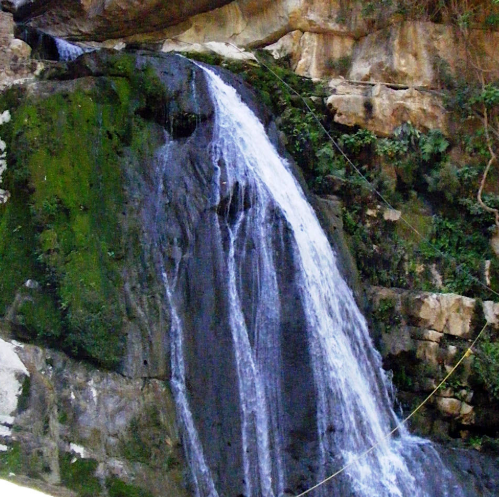
Location and base town: Just off Highway 190 between Chiapa de Corzo and the San Cristóbal turnoff, about 15 minutes from Chiapa de Corzo and 25 minutes from Tuxtla Gutiérrez airport.
Height: A subterranean river bursts out of a cave mouth and drops about 25 metres into a series of pools below.
Entrance fee: Around 20 to 30 pesos per person, cash. Open roughly 8am to 5pm.
How to get there: Any colectivo running the Tuxtla–Chiapa de Corzo–San Cristóbal road passes the signed turnoff; it's a short walk down from the highway. Easy to fold into a Chiapa de Corzo day. See things to do in Chiapa de Corzo and the Chiapa de Corzo town guide
Best time: Weekday mornings. Weekends it becomes a local picnic spot with music and food stalls, which is fun but not tranquil.
Swimmable: Yes, in the lower pools. The uppermost pool right under the cascade is cold and the rock is slick.
Crowd level: Low to moderate, and almost entirely local rather than international.
When to Go: Dry Season and Time of Day
Best months: November through April. The rains taper off in October, and by November the rivers are still full but the runoff has cleared, so the mineral-rich water reads turquoise instead of mud brown (Mexico Travel & Leisure, "Best Time to Visit Chiapas 2026"). November is the single best month for that reason. By March and April the flow is thinner but the colour is still good.
Worst months: September and October are the wettest. Heavy afternoon rain swells the rivers, browns out Agua Azul, and makes swimming unsafe or off-limits at most sites (Mexico Travel & Leisure). You can still see the waterfalls in rainy season, they just run muddy and fast.
Time of day: Get there when the gate opens. This is the one rule that matters most. Agua Azul goes from serene to circus by late morning; El Chiflón and El Chorreadero fill up with weekend crowds by midday. Early light is also better for the colour.
How to Visit Without Getting Ripped Off or Hurt
Bring cash in small bills. Every waterfall here is run by a local ejido or community that collects the fee at a gate. There are no card machines. Fees change year to year without notice, so treat the numbers above as ballpark and expect the odd extra charge for parking or a community road toll.
Tour vs. DIY. A tour makes sense for Agua Azul and Misol-Ha together out of Palenque, because it's cheap, it handles the driving, and those two are a natural pair. It also makes sense for Las Nubes, which is genuinely far. For Misol-Ha alone, Roberto Barrios, El Chiflón from Comitán, and El Chorreadero, colectivos or your own vehicle are faster, cheaper, and let you arrive before the groups. My overland bias is DIY wherever the roads and colectivos cooperate.
Safety, plainly. Drownings have happened at several of these waterfalls. The currents near the drops are stronger than the surface suggests, submerged rocks and logs are common, and the wet rock around every one of these is slick enough to break a wrist. Swim only in the marked or roped areas, never during or right after heavy rain, and don't dive anywhere. If a local tells you a pool is dangerous, believe them.
For where the waterfalls sit in a full route, see how many days to spend in Chiapas and the unfiltered list of the best things to do in Chiapas
Frequently Asked Questions
What is the most famous waterfall in Chiapas?
Cascadas de Agua Azul, near Palenque. It's the widest and most photographed cascade in the state, a kilometres-long chain of turquoise limestone pools, and it appears on nearly every Chiapas tour itinerary. Misol-Ha, a single 35-metre drop nearby, is a close second and is usually visited on the same trip.
Can you swim at Agua Azul?
Yes, but only in the designated areas near the lower end of the site. The upper pools have dangerous currents and drownings have occurred there. Swimming is unsafe or prohibited during and immediately after heavy rain, when the river runs high and brown. Stay inside the marked zones and don't dive.
Are the Chiapas waterfalls worth it in rainy season?
They're still worth seeing, but manage expectations. From June through October the rivers run fast and muddy, so Agua Azul loses its turquoise colour and swimming is often closed. River-fed falls like El Chiflón and El Chorreadero hold up better because they're not sediment-dependent. If colour and swimming matter to you, come between November and April instead.
How much does it cost to visit Agua Azul?
The entrance fee is roughly 80 pesos per person total, paid in cash, usually split between a community booth at the crucero on the access road and the main ejido booth at the site. A full-day tour from Palenque covering both Agua Azul and Misol-Ha typically runs $45 to $75 USD per person. Prices change year to year, so carry small bills — full breakdown in the Agua Azul & Misol-Ha guide.
Which waterfall is closest to San Cristóbal?
El Chorreadero, near Chiapa de Corzo, is the closest at about an hour by road. El Chiflón is roughly 2.5 hours away, past Comitán. Agua Azul and Misol-Ha are much farther from San Cristóbal, about 2.5 to 3 hours each way, which is why most people visit those two from Palenque instead.
The Bottom Line
For most trips, the answer is Agua Azul plus Misol-Ha from Palenque, done early, plus Roberto Barrios if you actually want to swim without a crowd. If your route runs south, El Chiflón is the standout, with Las Nubes as the reward for having your own wheels and a spare night. El Chorreadero is the easy win near the Tuxtla airport. Whichever you pick, go in the dry season, arrive at opening, bring cash, and treat the water with more respect than it seems to ask for.