
Agua Azul & Misol-Ha: How to Visit the Palenque Waterfalls (With or Without a Tour)
The two waterfalls everyone photographs between Palenque and San Cristóbal are Agua Azul and Misol-Ha. Agua Azul is a long staircase of turquoise limestone terraces stretching for kilometers; Misol-Ha is a single \~35-meter curtain with a path that runs behind the water into a cave. Both sit on the Highway 199 corridor south of Palenque, both are run by local ejido (communal land) communities, and both are completely visitable without booking a tour.
I've done this stretch by motorcycle, and the DIY version is cheaper, more flexible, and gets you to the water before the tour buses roll in around mid-morning. This is the same no-tour logic I lay out in my no tour guide to Sumidero. Here is exactly how to visit either way: the colectivo route, the tour option, what each costs, how long you need, and when the water is actually blue.
Key Takeaways
Two ways in: an organized day tour from Palenque (roughly $45–75 USD per person, about 6 hours, entrance fees usually included) or DIY by colectivo (roughly 350–450 pesos / $19–25 per person round trip including fees).
Agua Azul is about 64 km / 1.5–2 hours south of Palenque; Misol-Ha is about 20 km / 30–45 minutes. You can see both in a half to full day.
Each ejido charges its own cash entrance fee in pesos — roughly 50–60 at Agua Azul, 40–60 plus a small cave fee at Misol-Ha, sometimes collected in two parts — and the amounts change without notice.
Swim freely at Misol-Ha; at Agua Azul only in the marked calm pools. People have drowned in the current here, so respect the ropes and warning signs.
Best water: dry season, December–April, with February–March the clearest. In peak rains Agua Azul turns brown. Arrive before 10–11am to beat the tour buses.
The Short Answer: How Do You Visit Agua Azul and Misol-Ha?
You have two realistic options from Palenque.
Take a tour. A combined half-day trip to both waterfalls runs about $45–75 USD per person, lasts roughly 6 hours, and usually bundles the entrance fees and sometimes lunch. GetYourGuide and Viator both list multiple 2026 departures in that range. It's zero-effort and fine if you're short on time.
Do it yourself. Take a colectivo (shared van) from Palenque toward Ocosingo, get off at the Misol-Ha turnoff and then the Agua Azul crucero (junction), and use short shared-taxi hops to reach each falls. Total cost lands around 350–450 pesos per person including all fees — well under half the tour price — and you set your own clock.
Both waterfalls fit in one outing. Most people do Misol-Ha first (it's closer and quicker), then Agua Azul, then head back. Give yourself 30–45 minutes at Misol-Ha and at least 1.5–2 hours at Agua Azul.
What Are Agua Azul and Misol-Ha?
Agua Azul
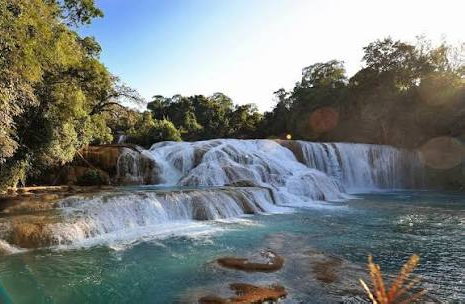
Agua Azul is not one waterfall. It's a long series of wide, low limestone terraces — travertine shelves built up by mineral-rich water — that the river pours over for several kilometers. A paved path with food stalls and swimming spots follows the lower section. The turquoise color comes from dissolved calcium carbonate. When the water is low and clear it reads as a bright milky blue; when the river is high and muddy it goes brown. That swing is entirely seasonal, which is why timing matters more here than at almost any other site in Chiapas.
Misol-Ha
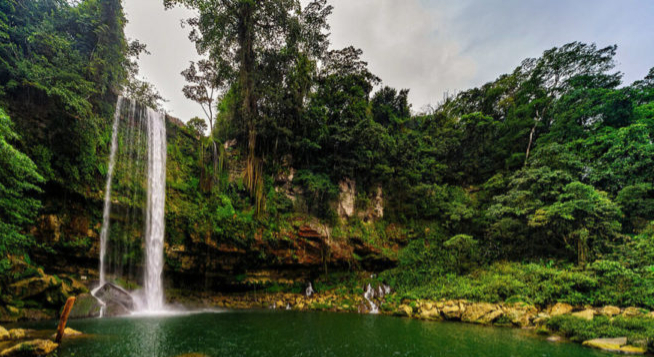
Misol-Ha is the opposite: one clean \~35-meter drop into a round pool, framed by jungle. A short, often slippery path leads behind the falling water and into a shallow cave, for a small extra cash fee. It's smaller, quieter, and takes less time. The walk-behind-the-curtain angle is what makes it worth the stop. If Agua Azul is the spectacle, Misol-Ha is the easy 30-minute warm-up.
How to Visit Agua Azul and Misol-Ha Without a Tour
This is the route I'd take, and the one that keeps costs down. Colectivos are the backbone of travel in this part of Mexico — they run constantly because the locals depend on them, so you're never waiting long. If you're up for a bit of an adventure and don't mind being packed in shoulder to shoulder with other people, it's the easy, cheap way to do this.
1. Find the colectivo. Colectivos and passenger vans toward Ocosingo and San Cristóbal leave from the transport offices in Palenque town, clustered along Calle 5a Poniente Sur and the nearby side streets a couple of blocks from the ADO terminal. You want anything heading south on Highway 199. Tell the driver you're getting off at "Misol-Ha" or "el crucero de Agua Azul" so they know to stop.
2. Misol-Ha first. The turnoff is about 20 km out, 30–45 minutes. From the highway it's roughly a 1.5 km walk downhill to the falls, or you can wait for a passing pickup or shared taxi. Pay the ejido entrance at the booth, see the falls and the cave, then walk back up to the highway and flag the next southbound colectivo.
3. Agua Azul crucero. Another 40 km or so south, around an hour more depending on the road. At the junction you pay a small community "cooperación" (cash), then take a shared taxi or camioneta the remaining \~4 km down to the falls. Pay the Agua Azul entrance at the gate.
4. Getting back. You'll usually walk over to the other side of the road to catch the northbound van — the same one the people who work at the falls ride home to Palenque at the end of the day, so it's a reliable flow of traffic. There are often taxis waiting at the crucero as a backup, but the colectivos are dependable and frequent enough that you rarely need one. They can be full late in the afternoon, so don't leave it until dark, and budget an hour or more for the return.
Optional stop: Agua Clara. On the same road, signed a few kilometres before the Agua Azul crucero, Agua Clara is a calm, clear stretch of the Río Xanil that the local ejido runs as a low-key swimming and picnic spot — a suspension footbridge over green water, and hardly any foreigners. It isn't a waterfall, but if you're not rushing it's a pleasant hour between the two falls.
Here's roughly what the DIY version costs per person, round trip. Treat every number as a ballpark to confirm on the day — these are set locally and drift upward every year.
Colectivo fares in this corridor have historically run about 40 pesos to Misol-Ha and 50 to Agua Azul, with a higher return fare, plus the crucero fee and shared-taxi hop on top.
Bring more small-denomination pesos than you think you need. There are no card machines, no ATMs, and every payment point is a separate hand.
The Organized Tour Option
If you'd rather not juggle colectivos, the tour is straightforward.
From Palenque: a combined Agua Azul + Misol-Ha half-day tour picks you up mid-morning, does Misol-Ha first for about 30–45 minutes, then Agua Azul for around two hours including a lunch stop, and has you back by early afternoon. Around $45–75 USD per person, typically with entrance fees included. Confirm whether lunch and fees are in the price before you book — that's the main variable between operators. Most operators pick up from hotels in Palenque town and El Panchán, so it's worth knowing where to stay in Palenque before you book.
From San Cristóbal: there's a one-day mega-tour that hits Misol-Ha, Agua Azul, and the Palenque ruins in a single 12–14 hour push. It's popular because it looks efficient on paper. In practice it's brutal: a 5am start, two hours-plus each way on a winding road, maybe 30 minutes at Misol-Ha, an hour at Agua Azul, and a rushed hour or so at one of the greatest archaeological sites in the Americas before the long drive back. If you care about Palenque itself, don't see it this way — read the full Palenque guide, work through my Palenque ruins visitor guide, and give the site its own morning.
Entrance Fees: What You Actually Pay
There is no single ticket. Agua Azul and Misol-Ha are managed by different ejido communities, and each collects its own fee, in cash, in pesos, at its own booth.
As of 2026, expect roughly 50–60 pesos at Agua Azul and 40–60 pesos at Misol-Ha (sometimes split into two payments), plus about 10–15 pesos for the cave path at Misol-Ha. On the DIY route you'll also pay the small community fee at the Agua Azul crucero before you even reach the gate.
These figures change without announcement, sometimes mid-season, and foreign visitors are occasionally quoted more than the posted local rate. Carry small bills and don't argue over 20 pesos — it goes to the community that maintains the site.
Can You Swim at Agua Azul and Misol-Ha?
Misol-Ha: yes. The plunge pool is calm and deep enough to swim in. It's cool, it's shaded, and outside tour-bus hours you might have it nearly to yourself.
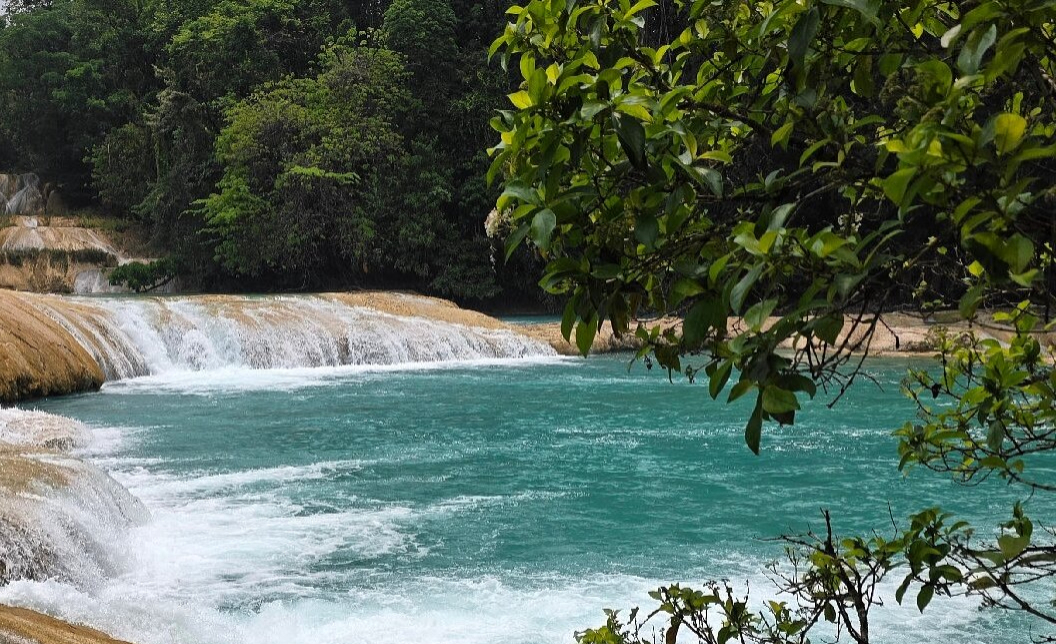
Agua Azul: only in the designated calm pools. The current across those terraces is far stronger than it looks, the limestone shelves are slick, and there are undercut ledges and sinkholes. After drowning incidents, swimming is restricted to marked sections at the bottom and top of the main run, roped off and signed. Stay inside the ropes, never swim near where water pours over an edge, and skip swimming entirely if the river is high or the water is brown. This isn't a place to test yourself.
Roberto Barrios: The Crowd-Free Alternative
Roberto Barrios is the closer alternative — a set of low, wide limestone cascades about 30 minutes from Palenque in the other direction, with swimmable pools and a small restaurant. It's every bit as nice as Agua Azul and Misol-Ha, and because it's near town it slots easily into a busy few days based in Palenque. Crowds are far smaller than Agua Azul's: no coach parties, and often just a scattering of other people. It sits near communities with a complicated recent history, so ask at your guesthouse about current conditions before you go, take a colectivo or taxi rather than wandering in, and don't linger past late afternoon. When it's calm, it's the better swim. It's also one of several falls covered in my roundup of the best waterfalls in Chiapas if you're deciding which ones are worth your days.
Road Conditions and the Rope Tolls
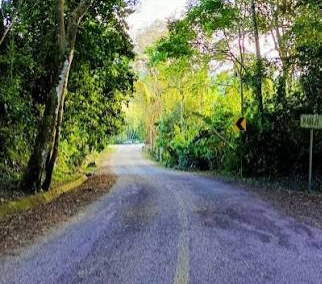
Highway 199 between Palenque and Ocosingo is paved but slow — tight curves, topes, trucks, and long stretches through communal land. The informal "rope tolls" you'll read about — locals, often kids, stringing a rope across the road for a small payment, usually 20–100 pesos — are real, but they cluster on the section south of the Agua Azul crucero toward Ocosingo and San Cristóbal (Mexico News Daily)and my own Route 199 safety guide. On the stretch a Palenque-based visitor actually drives — town to the crucero and back — you're unlikely to hit one at all.
On a colectivo none of it is your problem anyway. The drivers run this road every day, they know the communities and the people working the ropes, and they've been driving these curves for ten or twenty years — through the washouts and mud that heavy rain brings, they know the road better than you know your own street. If you're self-driving or riding, keep small coins in the door pocket for the southern section, hand over the toll without drama, and move on; it's an annoyance, not a threat. The separate risk is an organized political blockade (teachers' union, land disputes), which can shut the road for hours — check locally the morning you travel.
For the wider safety picture, see is Chiapas safe in 2026.
Best Time to Visit: Day and Year
Time of day: be at Misol-Ha or Agua Azul before 10–11am. Tour buses from Palenque and San Cristóbal converge mid-morning to early afternoon; get ahead of them and you'll have clean water, parking, and photos without a crowd in the frame.
Time of year: the dry season, roughly December through April, is when Agua Azul lives up to its name. February and March usually deliver the best combination of strong flow and clear turquoise water. From about June to October, heavy rain routinely turns the river brown and muddy for days at a time, and the swimming areas close. Misol-Ha, being a single hard drop, actually looks more dramatic with high water — but the pool gets murkier. If Agua Azul's color is the whole reason you're going, plan around the dry months and check recent photos or reviews before you commit. For the month-by-month breakdown across the whole state, see the best time to visit Chiapas.
For how this fits a wider Chiapas trip, the independent Chiapas guide covers the overland route, and the unfiltered things to do list puts the waterfalls in context with everything else.
The Bottom Line
Agua Azul and Misol-Ha are worth the trip, but they don't need a tour. If your time is tight or you just want it handled, a $45–75 half-day tour from Palenque is a fair deal and includes the fees. If you'd rather spend a third of that and move at your own pace, take a southbound colectivo, hop off at Misol-Ha and the Agua Azul crucero, carry a fistful of small pesos for the stacked cash fees, and be at the water before the buses. Either way: go in the dry season, swim only where you're allowed at Agua Azul, and give Roberto Barrios a look if you want the same limestone pools without the circus.
Frequently Asked Questions
Can you visit Agua Azul without a tour?
Yes. Take a colectivo or van from Palenque heading toward Ocosingo or San Cristóbal, tell the driver you want the Agua Azul crucero, pay the small community fee at the junction, and take a shared taxi the last 4 km down to the falls. Round trip with all fees runs about 350–450 pesos per person, roughly half to a third of a tour price. The same trip covers Misol-Ha on the way.
How much is the entrance fee to Agua Azul?
As of 2026, roughly 50–60 pesos per person, paid in cash at the ejido gate, plus a separate small community "cooperación" collected at the highway junction on the DIY route. Misol-Ha charges its own fee of about 40–60 pesos, plus 10–15 pesos for the cave path. All of these are set locally and change without notice, so bring more small bills than you expect to need.
Can you swim at Agua Azul and Misol-Ha?
You can swim freely in the calm plunge pool at Misol-Ha. At Agua Azul, swimming is restricted to marked, roped-off calm pools at the bottom and top of the main run — the current across the terraces is dangerously strong and there have been drownings. Never swim near where water pours over an edge, and don't swim at all when the river is high or brown.
How far is Agua Azul from Palenque?
About 64 km, which takes 1.5 to 2 hours by road depending on conditions, topes, and any rope tolls or blockades on Highway 199. Misol-Ha is much closer — about 20 km, or 30–45 minutes — and sits on the same road, so most visitors combine the two in one outing.
Is Agua Azul worth it in the rainy season?
Often not, if the turquoise color is your reason for going. From roughly June to October, heavy rain regularly turns Agua Azul brown and muddy for days at a time and the swimming areas close. Misol-Ha holds up better in the rain because it's a single tall drop, though its pool gets cloudier. If you're visiting in the wet months, check recent photos or reviews first, or prioritize Misol-Ha and Roberto Barrios.