
How Many Days in the Yucatán? 1, 2 & 3-Week Itineraries
A week in the Yucatán is enough to do one corner of the peninsula properly. Two weeks is enough to do the classic loop — coast, ruins, colonial interior — without rushing any single stop. Three weeks lets you add the places most visitors skip entirely: Campeche and Holbox. This guide breaks down what to actually do with each length, by base, by route, and by how you're getting around, so you can build a Yucatán itinerary that matches the time you actually have instead of trying to cram a three-week trip into ten days.
I've personally built and re-built versions of this loop myself, arriving from my base in San Cristóbal, Chiapas, after riding a motorcycle roughly 25,000km from Tennessee. I like to experiment and take new routes whenever I have the time. I've done it on motorcycle, in a car and the traditional way with public transportation.
Key Takeaways
One week: pick a single base — Valladolid or Tulum — and day-trip from it. Don't try to see the whole peninsula.
Ten days: add a second base. Valladolid plus Mérida, or Valladolid plus Bacalar, both work well.
Two weeks: the classic loop — coast, Tulum, Bacalar, Valladolid/Chichén Itzá, Mérida, back to Cancún — covers the whole peninsula at a reasonable pace.
Three weeks: add Campeche (colonial, quiet, on the Maya Train) and Holbox (car-free island, whale sharks in season) without cutting anything from the two-week loop.
If you're short on time, cut Cancún itself first, then Campeche, then choose Bacalar or Tulum rather than both — don't cut Mérida.
Mérida and Bacalar are the two places worth slowing down for; both reward an extra night more than most other stops do.
By transport mode: a rental car is the most flexible, ADO buses plus colectivos cover the same ground more slowly and cheaply, and the Maya Train is a strong option for the longer inter-city hops.
How Many Days Do You Actually Need in the Yucatán?
It depends on whether you want depth or breadth, and the honest answer is that both are legitimate ways to do this trip. A week spent entirely around Valladolid — Chichén Itzá, Ek Balam, three or four cenotes, the flamingos at Río Lagartos — is a better trip than a week that tries to also touch Tulum, Mérida, and Bacalar and ends up rushing all four.
As a rule of thumb: one week covers one region (the interior around Valladolid, or a stretch of the coast). Ten days links two regions. Two weeks covers the whole peninsula at a comfortable pace. Three weeks covers the whole peninsula plus the two places most visitors never reach. None of these are wrong — they're just different trips, and the wider planning picture, including when to go and how the three states differ, is in the Yucatán Peninsula travel guide.
One Week: Pick a Single Base and Day-Trip From It
One week in the Yucatán works best as a single-base trip, not a moving itinerary. Trying to hit Cancún, Tulum, Valladolid, and Mérida in seven days means a travel day for every day or two of actual sightseeing, and you'll remember the buses more than the places. Pick one base and let it anchor the whole week.
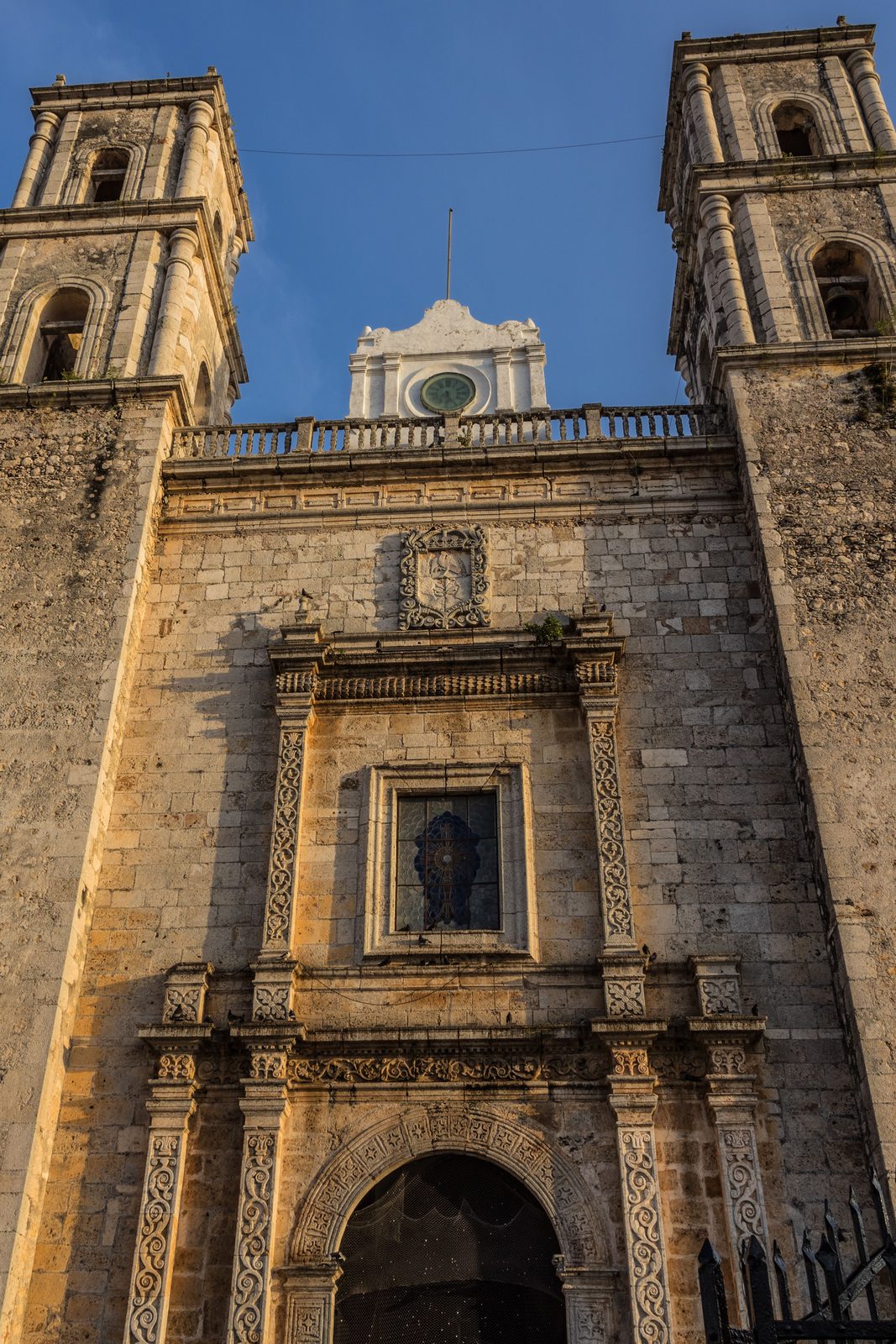
Valladolid, for the interior version. This is the stronger pick for a first trip, in line with the Valladolid travel guide: central, cheap, walkable, and close to more headline sights than anywhere else on the peninsula.
- Days 1–2: Fly into Cancún, bus straight to Valladolid — skip Cancún itself unless your flight timing forces an overnight. Settle in, walk the plaza and the Calzada de los Frailes.
- Day 3: Chichén Itzá at opening, before the tour buses arrive; the Chichén Itzá visitor guide covers tickets, timing, and which entrance to use. Pair it with Ik Kil or Cenote Yokdzonot on the way back.
- Day 4: Ek Balam — still climbable, unlike Chichén Itzá — plus Cenote X'Canché nearby.
- Day 5: Río Lagartos and Las Coloradas for the flamingos and pink lakes, a full-day trip from Valladolid.
- Day 6: A quiet cenote day, or a long day trip into Mérida for the city and its food.
- Day 7: Bus back to Cancún for the flight home.
For the full menu of day-trip options from this base, see day trips from Valladolid
Tulum, for the coast version. If the beach and cenote-diving scene are the point of your trip rather than the ruins-and-colonial-towns interior, base in Tulum instead — the live Tulum travel guide covers the town in depth. Split the week between the ruins and cenotes near Tulum itself, a day trip to Cobá (still climbable), and a couple of beach days — keeping in mind that Tulum's open coast gets the worst of the region's sargassum in summer, which the best time to visit the Yucatán guide covers month by month.
Ten Days: Add a Second Base
Ten days is enough to link the interior and either the west or the coast without feeling rushed, and it's the shortest trip length where a second base genuinely pays off rather than just adding a travel day.
Interior plus west (recommended first-timer version):
- Days 1–4: Valladolid — the same core as the one-week version above (Chichén Itzá, Ek Balam, Las Coloradas, cenotes).
- Days 5–7: Mérida — the city itself, plus a day out to Uxmal and the Puuc ruins. The Mérida travel guide covers the city in full, and Mérida vs Valladolid is worth reading if you're deciding how to split your nights between the two.
- Days 8–10: Back to Cancún via Valladolid, or fly out of Mérida directly if your return flight allows it.
Interior plus coast: Take the same four days in Valladolid, then instead of continuing to Mérida, head to Bacalar for three nights on the lagoon — either by bus or the Maya Train — and fly out of Cancún or Chetumal.
Two Weeks: The Classic Loop
Two weeks is the itinerary length that actually covers the whole peninsula — coast, ruins, lagoon, colonial interior — without turning into a series of one-night stands in each town. This is the route most dedicated Yucatán guides describe, and it works:
- Cancún or Playa del Carmen (0–2 nights): Arrive, adjust, maybe do nothing more than a beach day. Cancún's airport has no rideshare pickups — use the official ADO buses or a pre-booked shuttle — a detail the getting around the Yucatán guide explains in full.
- Tulum (3 nights): Ruins at opening, a cenote or two, a beach day if sargassum timing allows.
- Bacalar (3 nights): The lagoon, Cenote Azul, a dawn kayak before the wind picks up. Go on a weekday if your schedule allows it — Bacalar is dramatically calmer midweek than on a weekend, and Bacalar vs Tulum is worth reading if you're trying to choose between the two rather than doing both. The live Bacalar travel guide has the full rundown.
- Valladolid and Chichén Itzá (3 nights): The interior core — Chichén Itzá, Ek Balam, cenotes — reached from Bacalar by bus or the Maya Train.
- Mérida (3 nights): The cultural anchor of the trip, plus Uxmal and the Puuc route as a day trip.
- Back to Cancún (0–1 night): Bus or Maya Train back for the flight out.

That's roughly fourteen nights. Shift a night or two toward whichever leg interests you most — beach people add a Tulum night, ruins-and-cenotes people add a Valladolid night — and the loop still holds together.
Three Weeks: Add Campeche and Holbox
Three weeks is the two-week loop above with two additions folded in, not a different trip. Both are worth the extra days precisely because almost nobody else makes time for them.
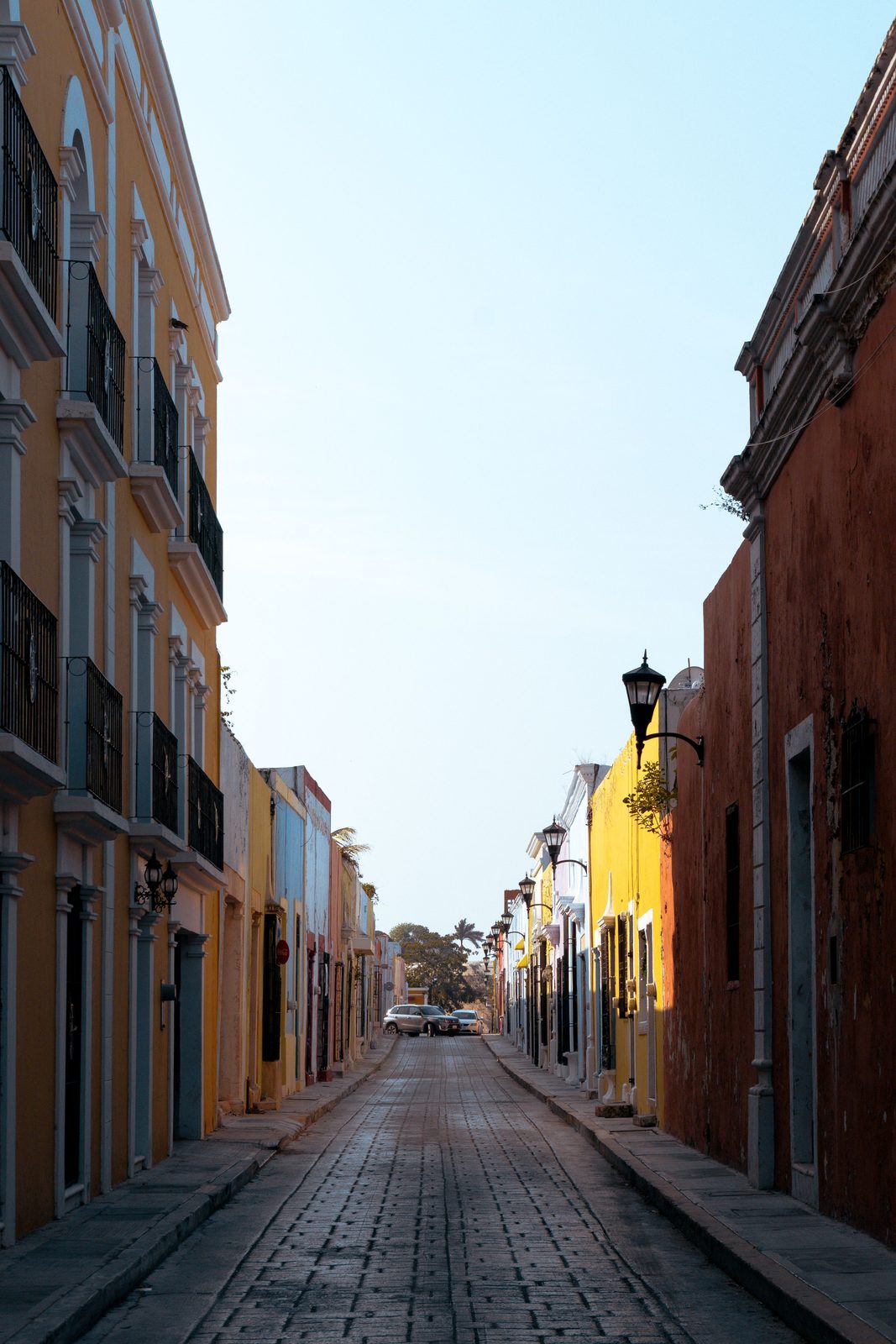
Campeche (2–3 nights): Insert it between Mérida and the return leg. The walled colonial capital sits on the Maya Train line between Mérida and Palenque, so it's a straightforward add if you're already using the train for the Mérida leg. Quiet streets, sea walls, and — if you have an extra day and don't mind a long trip into the jungle — Calakmul, a Maya site that rivals Chichén Itzá for scale with a fraction of the visitors.
Holbox (3 nights): Add it before or after the Cancún legs, since Chiquilá — the ferry departure point — is only a couple of hours from Cancún. Holbox is car-free, built around golf carts and sandy streets, and the Isla Holbox travel guide covers logistics in full, including the ferry crossing itself in the Holbox–Chiquilá ferry guide. If your trip falls between mid-June and mid-September, this is also whale shark season, and Holbox is one of the departure points for it.
Three weeks at this pace is unhurried rather than packed — you'll have slower mornings in most stops instead of a checklist to clear before the next bus.
Which Stops to Cut If You're Short on Time
If your trip is shorter than the itinerary you were hoping to build, cut in this order rather than shortening everything evenly, which tends to leave you rushing through all of it instead of properly seeing most of it.
1. Cancún itself first. Most visitors only need it as an airport, not a destination — the getting around the Yucatán guide covers getting straight from the airport to your first real stop.
2. Campeche and Holbox second. Both are genuinely worth the trip, but they're additions to the core loop, not part of it — save them for when you have three weeks rather than two.
3. Choose Bacalar or Tulum, not both, if you're under ten days. They're on the same corridor, roughly three to four hours apart by road, so doing both on a short trip usually means shortchanging one.
4. Don't cut Mérida. It's the piece most short itineraries drop first because it's inland and less photogenic on Instagram than the coast, and it's consistently the piece people wish they'd kept once they've been.
Whatever you cut, keep Valladolid and Chichén Itzá as the backbone — they're the most efficient single stop on the peninsula for the effort involved.
When Not to Rush: Mérida and Bacalar
Most of the Yucatán rewards moving efficiently — Chichén Itzá is a half-day, Ek Balam is a half-day, a cenote is an hour or two. Two places don't follow that pattern, and shortchanging either one is the most common mistake in a rushed itinerary.
Mérida is a city, not a checklist of sights, and it runs on its own rhythm: free nightly music and dance in the plazas on a rotating weekly schedule, a market that takes a slow morning to properly work through, and a food scene — cochinita pibil, sopa de lima, marquesitas — that's worth eating your way through rather than sampling once. Two nights covers the highlights; three or four lets the city actually register instead of feeling like a stopover on the way to Uxmal.
Bacalar is the opposite problem: it looks like a one-day stop on a map — see the lagoon, take a boat tour, move on — and that's exactly the version of Bacalar that disappoints people. The lagoon changes completely between a weekday morning and a weekend afternoon, and the difference between a rushed afternoon visit and two full mornings on the water is the difference between "nice lake" and one of the best stops on the trip. I personally prefer Bacalar to any of the other more popular beach towns in the Riviera Maya.
Building Your Itinerary by Transport Mode
How you get between stops changes how much ground you can cover in a given number of days, and it's worth deciding this before you fix your route.
Rental Car
A rental car is the most flexible option and the only realistic way to do certain legs — Las Coloradas, the Puuc route sites beyond Uxmal, and stringing together several cenotes in one day all go faster with your own wheels. Watch for the mandatory-insurance upsell at the rental counter, which the getting around the Yucatán guide explains in detail. A car adds real time flexibility to the ten-day and two-week itineraries above, though it isn't necessary for any of them.
ADO Buses Plus Colectivos
ADO's first-class buses connect every town on this route on a reliable schedule, and colectivos (shared vans) fill in the short hops a first-class bus doesn't serve directly — Valladolid to Ek Balam, for instance. This is the cheapest way to do the whole loop and the one most backpackers default to. It's slower than driving, since you're on a fixed schedule and a bus doesn't stop wherever you want, but every itinerary in this guide works fine without a car.
The Maya Train

The Maya Train now connects Cancún, Tulum, Valladolid (via the Chichén Itzá station), Mérida, and Campeche, which makes it a strong option for the longer inter-city legs in the ten-day, two-week, and three-week itineraries above (Gobierno de México). It's scenic and comfortable, but boarding takes longer than a bus and several stations sit well outside the town centers they serve, so it doesn't automatically save time on shorter hops — it's best used for the legs where you'd otherwise spend four or more hours on a bus anyway.
Frequently Asked Questions
How many days is enough for the Yucatán?
A week is enough if you pick a single base — Valladolid or Tulum — and day-trip from it. If you want to see the coast and the interior both, plan for ten days at minimum, and two weeks if you want to do it at a comfortable pace rather than a rushed one.
Is two weeks enough for the Yucatán Peninsula?
Yes. Two weeks covers the classic loop — the coast, Tulum, Bacalar, Valladolid and Chichén Itzá, and Mérida — without needing to cut a major stop. It's the itinerary length where you stop having to choose between depth and breadth.
Should I rent a car for a Yucatán road trip?
It's not necessary for any of the itineraries in this guide, since ADO buses and the Maya Train cover the whole route, but a car adds real flexibility for cenote-hopping and reaching sites like Las Coloradas and the Puuc ruins that public transport serves less directly.
Can you do the Yucatán without visiting Cancún?
Yes. Most visitors only need Cancún as the airport, not a destination. You can bus or train straight from the airport to Valladolid, Tulum, or Playa del Carmen without spending a night in Cancún itself.
Should I do Bacalar or Tulum if I only have time for one?
Bacalar if you want calm water, no sargassum, and a slower pace. Tulum if the beach scene, the ruins, and the wider range of cenotes and restaurants matter more to you than quiet. Bacalar vs Tulum breaks down the full comparison.
The Bottom Line
Match the itinerary to the time you have rather than shortening the two-week loop to fit a shorter trip. One week means one base. Ten days means two. Two weeks does the whole loop properly. Three weeks adds Campeche and Holbox on top of it. Whatever length you land on, keep Valladolid, Chichén Itzá, and Mérida as the backbone, and don't rush Mérida or Bacalar just because they look smaller on the map than they are in person. For the wider regional picture — when to go, how the three states differ, and how safety breaks down — start with the Yucatán Peninsula travel guide