
Mérida, Mexico: The Complete Travel Guide
Mérida is the capital of Yucatán state and the largest city on the peninsula, and it works as a base for the western half of the region the way Valladolid works for the east. It is calm, walkable in the center, inexpensive by Mexican-city standards, and it carries a food tradition and a nightly calendar of free public events that most cities its size do not. This guide covers why the city earns your time, how the center is laid out, what to eat, when to come, how many days to give it, and how to arrive by plane, bus, or the Maya Train. For the wider region, start with the Yucatán Peninsula travel guide; this page is the hub for everything Mérida.
Key Takeaways
Mérida is the safest large city in Mexico by the U.S. advisory system: Yucatán state sits at Level 1, the lowest tier, alongside only Campeche.
The historic center is a flat, walkable grid around the Plaza Grande. Paseo de Montejo, a tree-lined boulevard of old mansions, runs northeast from it.
Yucatecan food is its own cuisine — cochinita pibil, sopa de lima, papadzules, panuchos, marquesitas — and the Mercado Lucas de Gálvez is the cheapest place to try it.
Something free and public happens most nights: the Santa Lucía serenade on Thursdays, Pok Ta Pok ballgame reenactments, Noche Mexicana on Saturdays, and the Mérida en Domingo street closure on Sundays.
Go November to March. April to June is brutally hot; late October brings Hanal Pixán, the Maya Day of the Dead, and the city's biggest cultural week.
Two to three days covers the city itself. Use it as a base and five or more nights is easy, with Uxmal, the cenote route, and the Gulf coast all reachable as day trips.
Mérida has its own airport (MID), a first-class ADO bus hub, and a Maya Train station at Teya on the city's eastern edge.
Why Visit Mérida?
Mérida is worth visiting for three things it does better than anywhere else on the peninsula: personal safety, regional food, and free public culture. If your image of the Yucatán is Cancún's hotel zone or Tulum's beach clubs, Mérida is the opposite end of the spectrum — a working colonial capital of roughly a million people where daily life, not tourism, sets the tone.
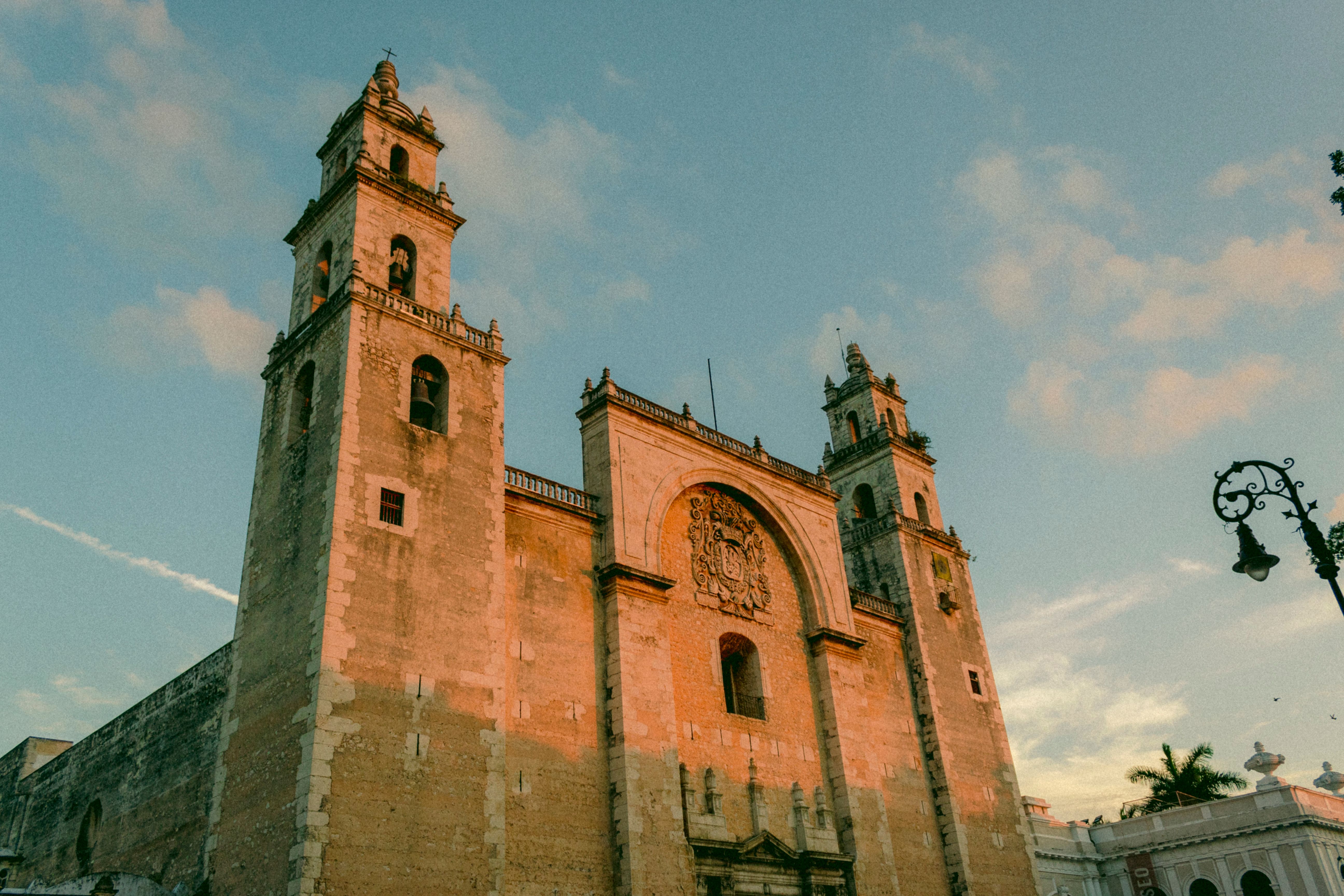
The colonial core is dense with architecture. The Catedral de San Ildefonso on the Plaza Grande is one of the oldest cathedrals on the North American mainland, finished in the late 1500s with stones taken from the Maya city that stood here first. Across the square, the Casa de Montejo carries a carved Spanish Renaissance facade from the 1540s. Northeast along Paseo de Montejo, the mansions were built a few centuries later with fortunes made from henequen, the sisal-agave fiber that made Yucatán briefly one of the wealthiest regions in Mexico.
Mérida is also a transport hub. It sits on the Maya Train line between Campeche and Palenque to the west and Valladolid, Chichén Itzá, and Cancún to the east, and it has the busiest first-class bus station on the peninsula. That makes it a natural place to slow down for a few days mid-trip. Once you have a base, the region opens up: see things to do in Mérida for the city itself and the best day trips from Mérida for everything within a couple of hours.
Is Mérida Safe?
Yes. Mérida is routinely described as one of the safest cities in Mexico, and the advisory data supports the reputation. As of 2026, the U.S. State Department rates the state of Yucatán at Level 1, "exercise normal precautions" — the lowest of its four categories, and a tier shared by only one other Mexican state, Campeche (U.S. Department of State: Mexico Travel Advisory). For comparison, neighboring Quintana Roo (Cancún, Playa del Carmen, Tulum) sits at Level 2, "exercise increased caution."
The practical risks in Mérida are minor and ordinary: pickpocketing in the crowded aisles of the Mercado Lucas de Gálvez, taxi drivers quoting inflated fares to obvious tourists (agree on a price before getting in, or use a rideshare app), and the occasional ATM-skimming report. The bigger day-to-day hazard is the heat, covered below. Standard precautions apply — watch your bag in the market, take a registered taxi or Uber late at night rather than walking empty streets — but nothing about Mérida calls for more caution than that.
How Is Mérida Laid Out?
Mérida's historic center is a numbered grid, which makes it easy to navigate once you know the trick: even-numbered streets run roughly north–south, odd-numbered streets run east–west, and addresses are given as one street "by" (por, or "x") the two cross streets, like "Calle 60 x 55." The Plaza Grande — also called the Zócalo — is bounded by Calles 60, 62, 61, and 63, with the cathedral, the Palacio de Gobierno, the Palacio Municipal, and the Casa de Montejo around its edges.
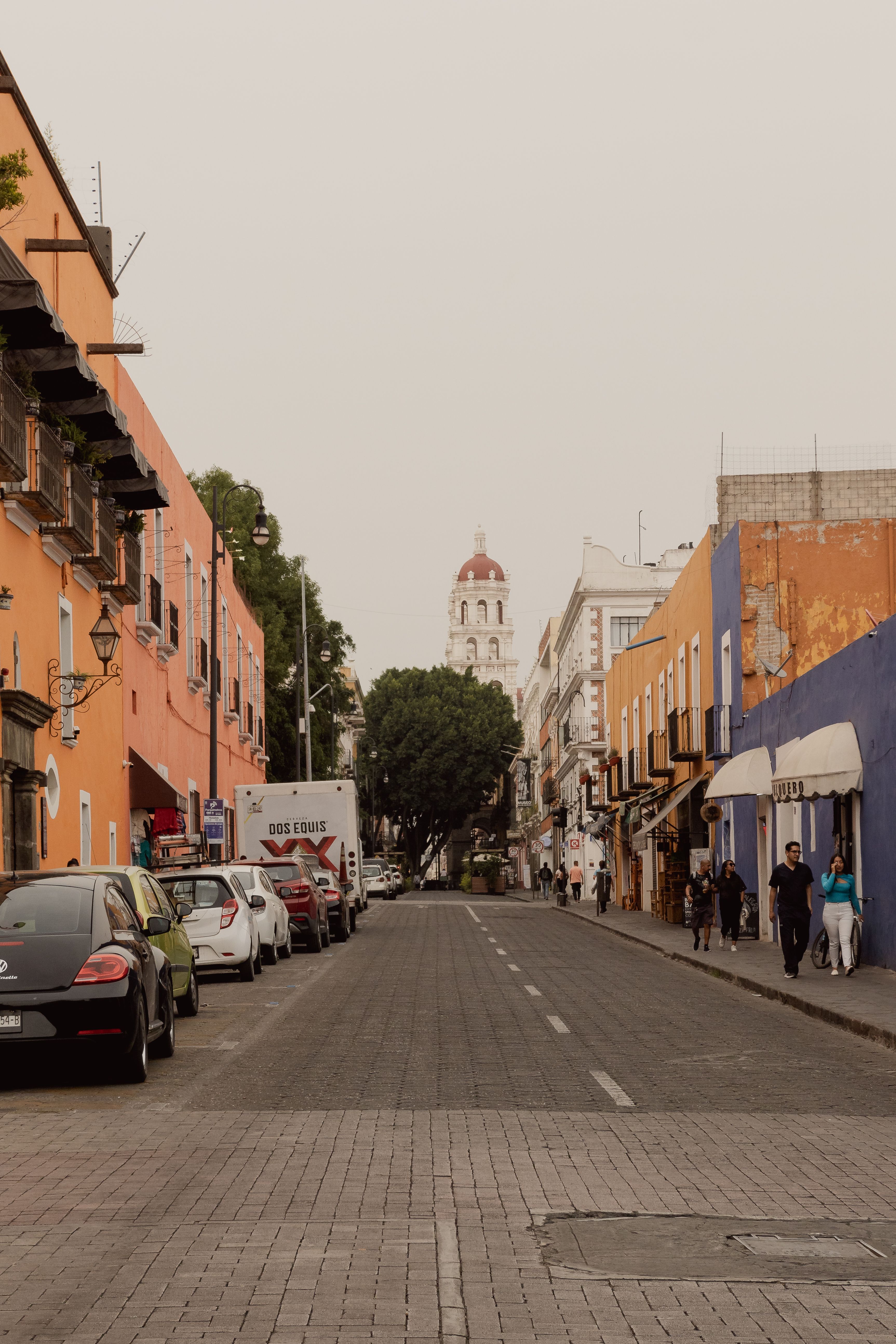
The center is flat and walkable, but sidewalks are narrow and uneven, and the midday sun is punishing, so most visitors walk in the morning and evening and take a taxi or short ride in the heat of the afternoon. Radiating out from the core are the old barrios — Santiago, Santa Ana, Santa Lucía, La Mejorada — each built around its own small church and plaza, most within a 10-to-15-minute walk of the square. Paseo de Montejo runs northeast from the center past the Monumento a la Patria and the Palacio Cantón; it is the city's café-and-restaurant strip and the spine of the Sunday bike route. Further out, neighborhoods like Itzimná and García Ginerés are leafy and residential, popular with longer-stay visitors. For a full breakdown, see where to stay in Mérida, and if you are working remotely, the Mérida digital nomad guide.
What Should You Eat in Mérida?
Yucatecan cuisine is distinct from central Mexican cooking — a blend of Maya, Spanish, and Lebanese influences with its own staple ingredients: achiote (annatto), sour orange, habanero, banana leaf, and pumpkin seed. The dishes to try first are cochinita pibil (pork marinated in achiote and sour orange, wrapped in banana leaf, traditionally cooked in an underground pit called a pib), sopa de lima (turkey or chicken broth with lime and crisp tortilla strips), papadzules (egg tacos in a pumpkin-seed sauce), panuchos and salbutes (fried tortillas with toppings), and poc chuc (thin grilled pork with pickled onion). For something sweet and portable, the marquesita is a Yucatán invention: a crispy rolled crepe filled with shredded Dutch-style Edam cheese and, usually, cajeta or Nutella.
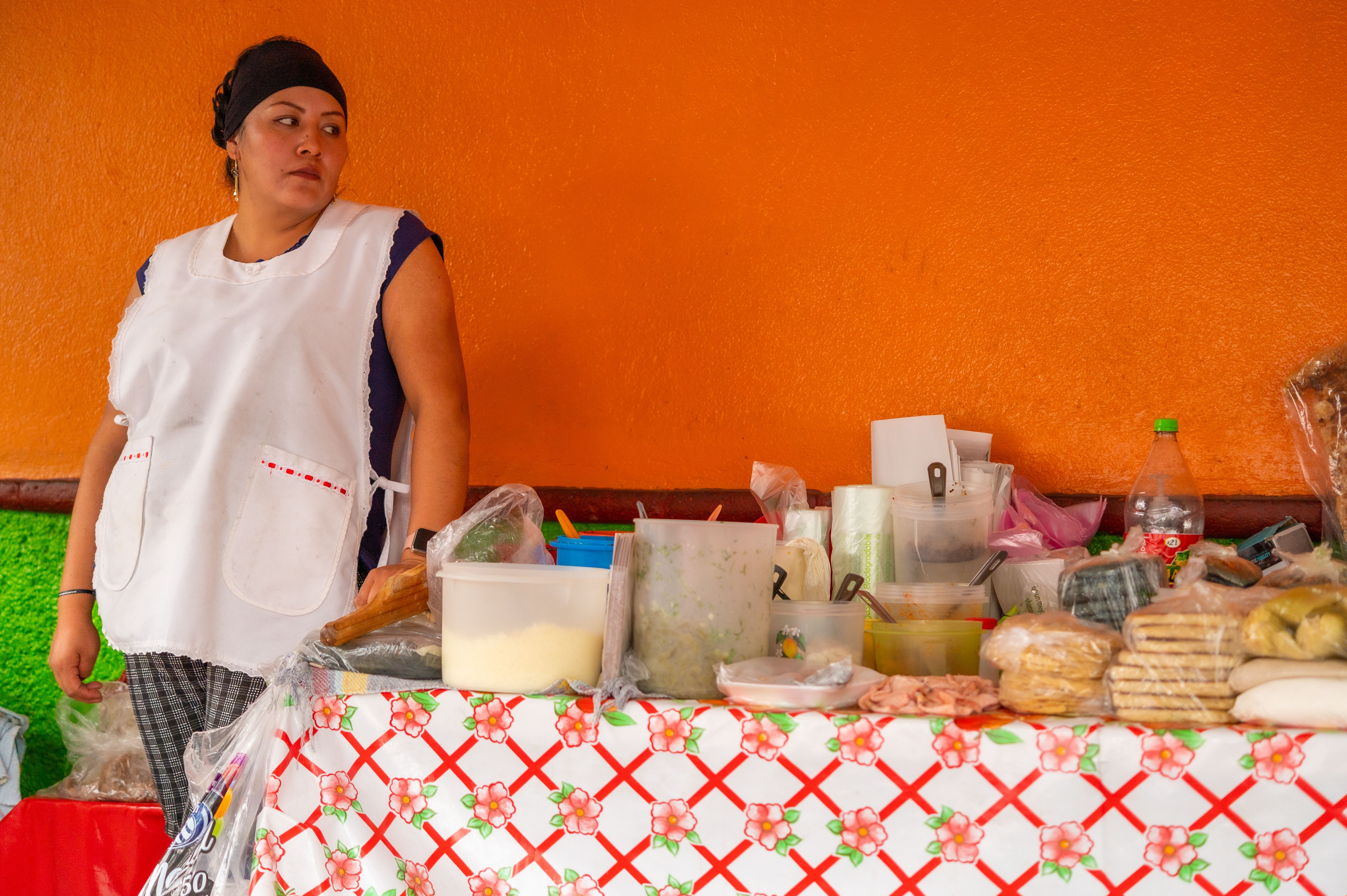
The cheapest and most authentic place to eat is a market. The Mercado Lucas de Gálvez, southeast of the plaza, is the largest in the city, with a warren of loncherías and cocinas económicas serving full meals for a few dollars. The smaller markets in Santiago and Santa Ana are calmer and also worth a breakfast or lunch. Cochinita is traditionally a morning dish — many places sell out by early afternoon — so eat it early.
What Free Culture Does Mérida Put On?
The Mérida city government runs a standing weekly program of free public events, and it is one of the real reasons to time a stay around certain nights. The schedule has held steady for years, though start times and venues can shift, so confirm the current listing on the city's culture calendar (Ayuntamiento de Mérida: cultura).
The regulars: Thursday is the Serenata de Santa Lucía, trova music and folk dance in Parque de Santa Lucía from around 9 p.m. Friday and Saturday nights bring a Pok Ta Pok performance — a costumed reenactment of the Maya ballgame, played with a flaming ball, outside the Palacio Municipal. Saturday evening is Noche Mexicana at the Remate de Paseo de Montejo, with food stalls and live music, alongside the "Corazón de Mérida" street closure in the center. And on Sundays, Mérida en Domingo shuts Calle 60 and the streets around the Plaza Grande to traffic all day for markets, música, dancing, and a cycling route down Paseo de Montejo. None of it costs anything.
When Should You Visit Mérida?
The comfortable window is November through March, when highs sit in the low 30s Celsius (upper 80s to low 90s Fahrenheit) and humidity eases. April, May, and June are the hard months: Mérida regularly reaches 38–40 °C (100–104 °F) and higher, with little wind because the city sits about 35 km inland from the Gulf (Climates to Travel: Yucatán). July through October is the rainy season, with heavy late-afternoon storms and a real, if usually indirect, hurricane risk on the peninsula.
The single best cultural week to target is late October into early November, when Mérida marks Hanal Pixán, the Maya version of Day of the Dead. The city's Festival de las Ánimas runs roughly October 25 to November 2 in 2026, built around the Paseo de las Ánimas, a candlelit procession in which participants dress as their ancestors and walk from the Cementerio General to the Barrio de San Juan (Yucatán Magazine). Accommodation books out well ahead for those dates.
Carnaval, in February or early March, is the other big event, though it now takes place mostly at the Xmatkuil fairgrounds south of the city rather than in the center.
How Many Days Do You Need in Mérida?
For the city itself, two to three days is enough. A workable version: day one for the Plaza Grande, the cathedral, the Casa de Montejo, a market lunch, and a serenata in the evening; day two for Paseo de Montejo, the Palacio Cantón, and the Gran Museo del Mundo Maya out toward the north; a third day for a first day trip.
If you treat Mérida as a base — which is the better use of it — plan four to six nights. The list of half- and full-day trips is long: Uxmal and the Ruta Puuc to the south, the Homún and Cuzamá cenote routes to the southeast, Celestún's flamingo lagoon to the west, the beach town of Progreso to the north, and the yellow colonial town of Izamal between Mérida and Valladolid. A full menu is in the day trips from Mérida guide.
Is Mérida Worth It, or Should You Just Base in Valladolid?
If you can, do both — they cover different halves of the peninsula. But if you have to pick one base, the honest answer depends on what you came for.
Valladolid is smaller, cheaper (roughly 20 to 40 percent less for food and lodging), and about 40 minutes from Chichén Itzá and the best-known cenotes. It suits a first trip focused on the classic Maya sites and swimming holes, and it is an easy, low-friction town to walk. Mérida is bigger and busier, with far more range in food, music, museums, and architecture, and it is the better launch point for Uxmal, the Puuc sites, Celestún, and the Gulf coast. It also has the airport and the bigger bus hub.
A rough rule: two or three days and a checklist of ruins and cenotes, base in Valladolid; a week, an interest in food and colonial cities, or a Puuc-and-coast plan, base in Mérida. The full comparison, including cost and pace, is in Mérida vs Valladolid, and the eastern base is covered in the Valladolid travel guide.
How Do You Get to Mérida?
By air. Mérida's Manuel Crescencio Rejón International Airport (code MID) sits southwest of the center and has grown its schedule in recent years, with direct U.S. flights alongside domestic connections through Mexico City, Monterrey, and Cancún. From the terminal, an ADO bus runs to the downtown CAME bus station for a low fixed fare in about 30 to 40 minutes; there is also a prepaid taxi booth in arrivals, and Uber works if you walk just off airport property.
By bus. Mérida is the ADO first-class hub for the peninsula. Approximate first-class travel times: Valladolid about 2.5 hours, Cancún about 4 to 4.5 hours, Playa del Carmen about 5 hours, Campeche about 2.5 hours, and Palenque roughly 8 hours, usually as an overnight. For how buses, colectivos, and car rental compare across the region, see getting around the Yucatán once it is live.
By Maya Train. Mérida is served by the Teya station, on the eastern edge of the city about 15 km from the center, so you will need a taxi or the local ie-tram to reach it. The line links Palenque, Campeche, Mérida, Izamal, Chichén Itzá, Valladolid, and Cancún, with a branch continuing down the coast to Tulum. Boarding is slower than a bus and the stations sit outside town centers, but the Mérida–Cancún and Palenque–Campeche legs are the ones travelers rate most highly. Fares, booking, and a station-by-station breakdown are in the Maya Train guide.
Where to Go Next in the Yucatán
Mérida is the hub for a cluster of more detailed guides on this site. For the city: things to do in Mérida and where to stay in Mérida. For getting out of town: day trips from Mérida and Uxmal and the Ruta Puuc. For planning: Mérida vs Valladolid if you are choosing a base, and the Mérida digital nomad guide if you are staying to work. And for the whole region, the Yucatán Peninsula travel guide ties it all together.
Frequently Asked Questions
Is Mérida worth visiting?
Yes, especially if you want a calm, safe colonial city with a strong food culture rather than a beach. Mérida rewards a few slow days of walking, market meals, and free evening events, and it works as a base for Uxmal, the cenote routes, and the Gulf coast. Travelers who only want Caribbean beaches and nightlife are better served elsewhere on the peninsula.
How many days do you need in Mérida?
Two to three days for the city itself, and four to six nights if you are using it as a base for day trips. A short stop still lets you see the Plaza Grande, a market, Paseo de Montejo, and one nightly cultural event.
Is Mérida walkable?
The historic center is flat and laid out on a numbered grid, so it is easy to navigate on foot in the morning and evening. Sidewalks are narrow and the midday heat is intense, so most visitors take a taxi or rideshare during the hottest hours and for trips out to Paseo de Montejo or the northern museums.
What is Mérida known for?
Mérida is known for being one of the safest cities in Mexico, for Yucatecan cuisine (cochinita pibil, sopa de lima, marquesitas), for its colonial architecture and the henequen-era mansions of Paseo de Montejo, and for a full weekly calendar of free public music, dance, and street events.
Is Mérida too hot to visit?
From April to June it is genuinely difficult, with highs around 38–40 °C (100–104 °F) and little breeze. November to March is much more comfortable. If you visit in the hot season, plan indoor or water-based activities for the afternoons and save walking for early and late in the day.