
Zinacantán, Chiapas: Weaving Co-op Visit Guide
Zinacantán is the Tzotzil village ten minutes down the road from San Juan Chamula, and it's where you go to watch backstrap-loom weaving up close, not just look at the finished embroidery hanging in a market stall. If you're already planning the Chamula church visit, Zinacantán is the natural second stop on the same half-day trip out of San Cristóbal de las Casas.
This is a straightforward how-to: how to get there, what actually happens at the women's weaving cooperative, whether you can buy the textiles, and what else is worth seeing in the village before you head back.
Key Takeaways
- Zinacantán is a Tzotzil village about 10 minutes from San Juan Chamula and roughly 20 minutes from San Cristóbal de las Casas, known for floral embroidery and backstrap-loom weaving.
- The women's cooperative Mujeres Sembrando la Vida ("Women Sowing Life"), led by Yolanda Hernández Gómez, runs weaving demonstrations with fresh tortillas, coffee, and pox included. Expect a 15 MXN per-person tourist tax.
- Colectivo vans run from San Cristóbal's municipal market area to Zinacantán for a small fare, and you can combine the trip with Chamula in one outing.
- Yes, you can buy the woven and embroidered pieces directly from the weavers, and it's the most direct way to make sure your money reaches the people who made them.
- Zinacantán is also Chiapas's flower-growing hub, so greenhouses line the road into town, and the church of San Lorenzo is worth a walk-through if you're respectful about photos.
What Is Zinacantán Known For?
Zinacantán is known for two things: flowers and weaving. The town sits in a valley thick with greenhouses, growing much of the cut flowers sold in markets across southern Mexico, and that agricultural wealth shows in how the village looks compared to its neighbors, more paved streets, sturdier houses, visible money. The other identity, the one that brings travelers here, is textile work. Zinacantec women weave and embroider in a distinctive style built around bright florals, heavy on pinks, purples, and greens, worked into huipiles, shawls, and men's ponchos on a pre-Columbian backstrap loom that predates the Spanish by centuries.
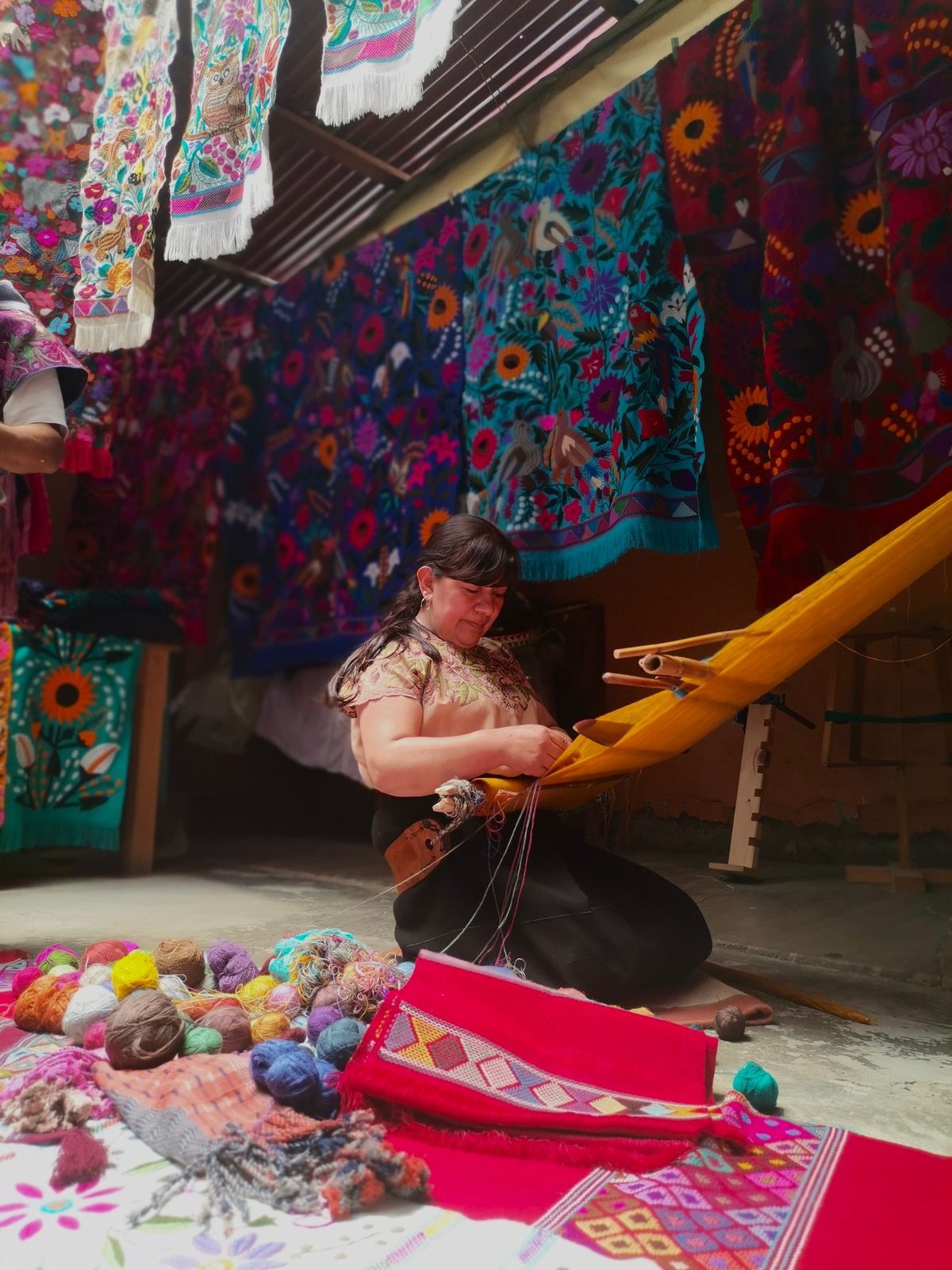
That loom is the whole point of visiting. It ties one end to a post or tree and the other to a strap around the weaver's lower back, and she leans forward and back to control the tension while working the pattern by hand, thread by thread. No machine does this. It's slow, it's exact, and watching someone do it who learned from her mother and grandmother is a different experience than admiring a finished piece on a hanger.
How to Get to Zinacantán from San Cristóbal
The most common way to reach Zinacantán is a shared colectivo van from San Cristóbal de las Casas, and it's cheap and frequent enough that you don't need to book anything in advance. Colectivos to both Chamula and Zinacantán leave from the streets around the Mercado Municipal (the main market, near Calle Utrilla and Honduras) on the north side of the city center. Fares run in the neighborhood of 15 to 25 MXN per person each way, and the ride to Zinacantán takes about 20 to 25 minutes.
Because Zinacantán and Chamula sit only about ten minutes apart by road, most travelers do both in a single half-day trip. You can go independently, hopping colectivos between the two villages and San Cristóbal on your own schedule, or take a guided van tour that packages both stops with a driver who knows the etiquette rules going in. If this is your first time in either village, a guide is genuinely useful, less for the transport and more for the cultural context, especially around Chamula's stricter photography rules. Read the full Chiapas overlanding guide for how this fits into a longer Chiapas route.
If you'd rather skip the colectivo shuffle, taxis from San Cristóbal to Zinacantán are easy to arrange and worth it if you're short on time or traveling with a small group splitting the fare.
Inside the Weaving Co-op: What Actually Happens
The weaving demonstration happens inside a house that's been converted into a showroom, run by the women's cooperative Mujeres Sembrando la Vida, "Women Sowing Life," led as of recent reporting by Yolanda Hernández Gómez. This isn't a staged tourist show in a purpose-built venue. It's a real working household space, and that's part of what makes it worth the stop.
You'll pay a 15 MXN tourist tax per person at the door, which goes toward supporting the cooperative and the village. Once inside, a weaver demonstrates the backstrap loom technique from start to finish, explaining the process and the meaning behind the floral patterns as she works. The demonstration is typically followed by an offering of fresh tortillas made on the spot, coffee, and pox, a traditional distilled corn liquor pronounced "posh" that carries ceremonial weight in Tzotzil communities well beyond its role as a drink. Trying it is optional, but it's offered as part of the hospitality, not as a sales gimmick.
Can You Buy Textiles in Zinacantán?
Yes, and buying directly from the weavers at the cooperative is the most reliable way to know your money is going to the people who actually made the piece, rather than a middleman reselling it in San Cristóbal. The showroom displays finished work for sale alongside the demonstration, and there's no pressure to buy just because you watched the loom in action.
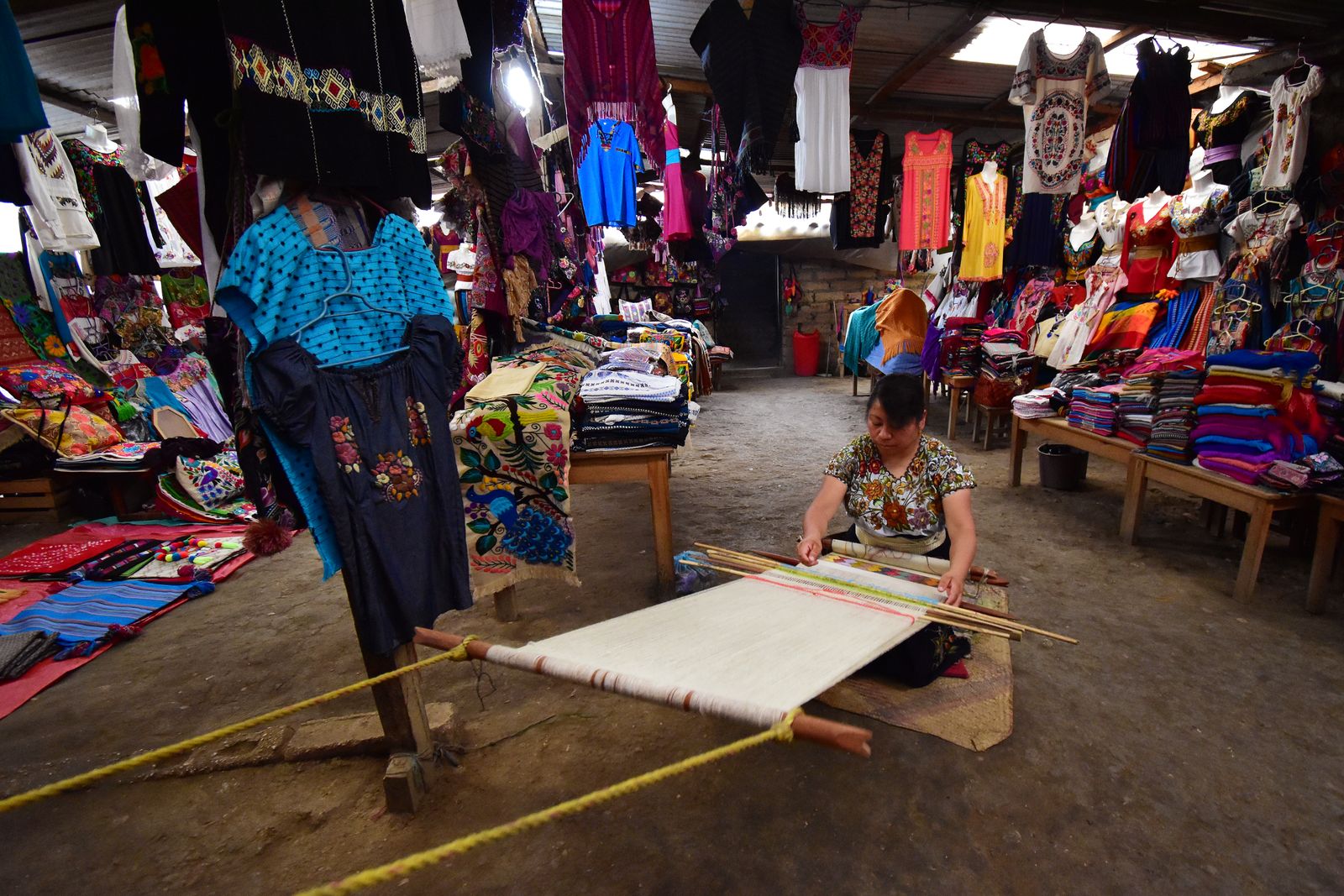
Prices vary a lot depending on size and how much embroidery detail is involved. Small items like coin purses or simple woven bands tend to run cheap, often under a few hundred pesos, though even smaller pieces like table runners can run well into the thousands once the embroidery work is dense. Embroidered blouses and huipiles with dense floral work take considerably more labor and price up accordingly, and a full poncho or an elaborately embroidered piece can run into the higher hundreds or low thousands of pesos. None of this is fixed-menu pricing, so ask, and don't expect the aggressive haggling culture you'll find in some Mexican markets. These women set prices based on the actual hours of hand labor in a piece, and that's worth respecting rather than negotiating down hard.
Other Things to See in Zinacantán
Beyond the co-op, Zinacantán rewards a slow walk through the village center. The church of San Lorenzo sits at the heart of town and is generally more relaxed about visitors than Chamula's Templo de San Juan, though the same baseline rule applies everywhere in these Tzotzil communities: ask before photographing people, and never photograph inside a church or during a ceremony without clear permission. Locals have real, well-founded reasons for guarding this, and ignoring it is the fastest way to have a bad interaction in either village.
Sunday is the main market and gathering day in Zinacantán, same as in Chamula, so if your schedule allows it, a Sunday visit means more stalls, more foot traffic, and a better sense of the town at full activity. On quieter weekdays, the village is calmer but the co-op demonstration still runs, so it's not a dealbreaker if Sunday doesn't fit your route.
The flower greenhouses along the approach roads are also worth a glance if you're driving in rather than taking the colectivo straight to the center. Zinacantán's flower economy isn't set up as a tourist attraction, but it explains a lot about why this village looks different from its neighbors, and it's a reminder that weaving is a cultural identity here, not the town's only income.
Is Zinacantán Worth Visiting?
Zinacantán is worth visiting if you want to understand Chiapas textile culture beyond what's hanging in a market stall in San Cristóbal, and it pairs naturally with a Chamula visit rather than standing in for one. The two villages are close enough geographically that skipping one to save time barely saves you anything, maybe ten minutes of driving, so there's little reason to do one without the other on the same trip.
Where Chamula gives you the more intense, unusual religious experience inside the church, Zinacantán gives you the more approachable, explainable cultural experience: a real demonstration, a chance to ask questions, and a direct way to support the women doing the work. If you only have time for one village and want people-facing interaction over spectacle, pick Zinacantán. If you can do both, as most travelers do, pair it with the Chamula church visit and treat it as a single half-day loop out of San Cristóbal — the best day trips from San Cristóbal and the Chiapas itinerary guide show where it slots into a longer trip.
Getting There: Quick Reference
- Base yourself in: San Cristóbal de las Casas
- Distance from San Cristóbal: roughly 20 to 25 minutes by colectivo or taxi
- Distance from Chamula: about 10 minutes
- Colectivo pickup: streets near the Mercado Municipal, Calle Utrilla/Honduras area
- Cost: roughly 15 to 25 MXN per person, one way
- Tourist tax at the co-op: 15 MXN per person
- Best day to visit: Sunday, for the market and full village activity, though the weaving demonstration runs on weekdays too
A Practical Next Step
Zinacantán isn't a full-day destination on its own, and it isn't trying to be. It's a focused, worthwhile stop that makes the most sense as half of a combined trip with Chamula, run out of San Cristóbal in a single morning or afternoon. Book the transport loosely, bring small bills for the tax and any textiles you want to buy, and go in ready to watch, ask questions, and buy directly if something catches your eye. For the rest of the region and how this stop fits into a longer route, the full Chiapas overlanding guide covers where Zinacantán and Chamula sit in a broader Chiapas itinerary.