
Where to Stay in Tulum: Pueblo vs the Beach Zone
Tulum splits into three places to book a room: Tulum Pueblo, the town proper, where prices are lower and the food is real; the Zona Hotelera, the roughly 10-km beach road lined with eco-villas that most people picture when they picture Tulum; and Aldea Zama with La Veleta next door, the newer middle ground that splits the difference on price and walkability. None puts you next to everything, so the right call depends on what you're willing to trade — and how you'll move between them once you've picked. For what to do once you've booked, see things to do in Tulum; for the beach-by-beach breakdown and the sargassum picture, see the best beaches in Tulum; and for the rest of the trip's logistics, start with the full Tulum travel guide or the broader Yucatán Peninsula travel guide.
Key Takeaways
- Tulum Pueblo is the budget base — real local food, lower prices, and closer to several cenotes — but the beach itself is roughly 3 km away, so you need a bike, taxi, or colectivo to reach it.
- The Zona Hotelera is the roughly 10-km stretch of coastal road holding Tulum's eco-chic hotels, typically $200–600 USD/night, but it comes with real tradeoffs: sargassum on the open coast in peak months, hotel-run generator or solar power rather than a dependable grid, and jungle-adjacent mosquitoes.
- Aldea Zama, a master-planned area roughly halfway between the Pueblo and the beach entrance, is walkable within itself and about a 10-minute bike ride to Playa Paraíso; La Veleta next door has less infrastructure but more local character, and sits a bit farther from the beach.
- Uber technically operates in Quintana Roo on paper, but taxi-union resistance means it functions unreliably to not at all in Tulum in practice — budget for unmetered taxis instead, and agree the fare before you get in.
- There's no dependable public bus or colectivo connecting the Pueblo to the beach road for tourists; bikes, taxis, and rental cars carry almost all of that traffic.
- Whichever zone you pick, the road between the Pueblo and the beach is narrow with no sidewalk and limited lighting — fine to bike in daylight, not something to walk or bike after dark.
Who Should Stay in Tulum Pueblo?
Tulum Pueblo is the town grid a few kilometers inland from the coast, and it's the right call if budget and food matter more than falling out of bed onto sand. Rooms here run well below Zona Hotelera rates at every tier, and the restaurant scene — covered in more depth in things to do in Tulum — runs from simple taquerías to the design-forward spots that built Tulum's food reputation. It's also the most practical base for cenote-focused days: several sit close enough to reach by bike or a short taxi without going near the beach road at all.
The tradeoff is the beach itself. The connector road between the Pueblo and the coast runs a few kilometers of two-lane highway with no sidewalk, so reaching the sand isn't a walk — it's a bike ride, a taxi, or a rental car every time. For travelers prioritizing food, price, and cenote access, that's a fair trade; for anyone who wants the ocean outside their door, it's the main reason to look elsewhere.
What Is the Zona Hotelera Actually Like?
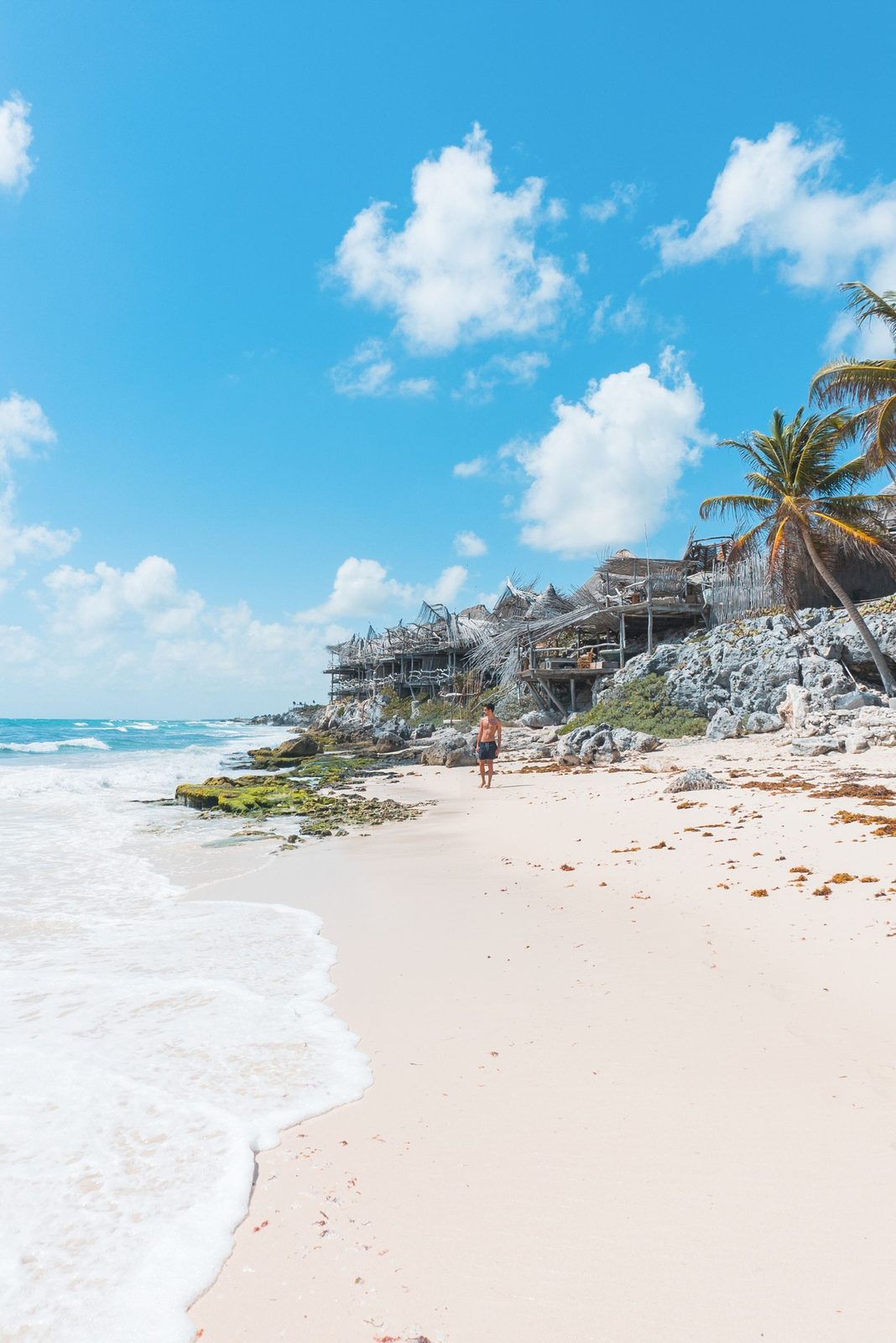
The Zona Hotelera is the roughly 10-km stretch of coastal road — sometimes called Boca Paila Road — that holds the eco-chic, palapa-roofed hotels most people mean when they say "Tulum." Rates typically run $200–600 USD a night, and the setting is the whole point: direct beach access, design-forward architecture, and the postcard version of Tulum that built the town's reputation in the first place.
It's also the zone where the tradeoffs are steepest, worth naming plainly:
- Sargassum. Beaches here face the open Caribbean, and the brown seaweed piles up heaviest roughly May through August, clearing out November through April. See the best beaches in Tulum for the month-by-month picture.
- Power. Much of the Zona Hotelera sits off the most reliable grid infrastructure, and many properties run partly or fully on their own generators or solar rather than a dependable municipal supply. That independence is also a buffer: a March 2026 outage tied to maintenance on the region's high-voltage transmission lines knocked out power to more than 2 million users across the Yucatán, Quintana Roo, and Campeche, and hotels with their own generation kept running while grid-dependent businesses didn't. Don't expect flawless power at a smaller, budget-leaning eco-lodge.
- Mosquitoes. The jungle and mangrove backdrop also breeds mosquitoes, more noticeably in rainy season (roughly June–October). Pack repellent, and ask before booking whether a property has screens or relies on open-air palapa design.
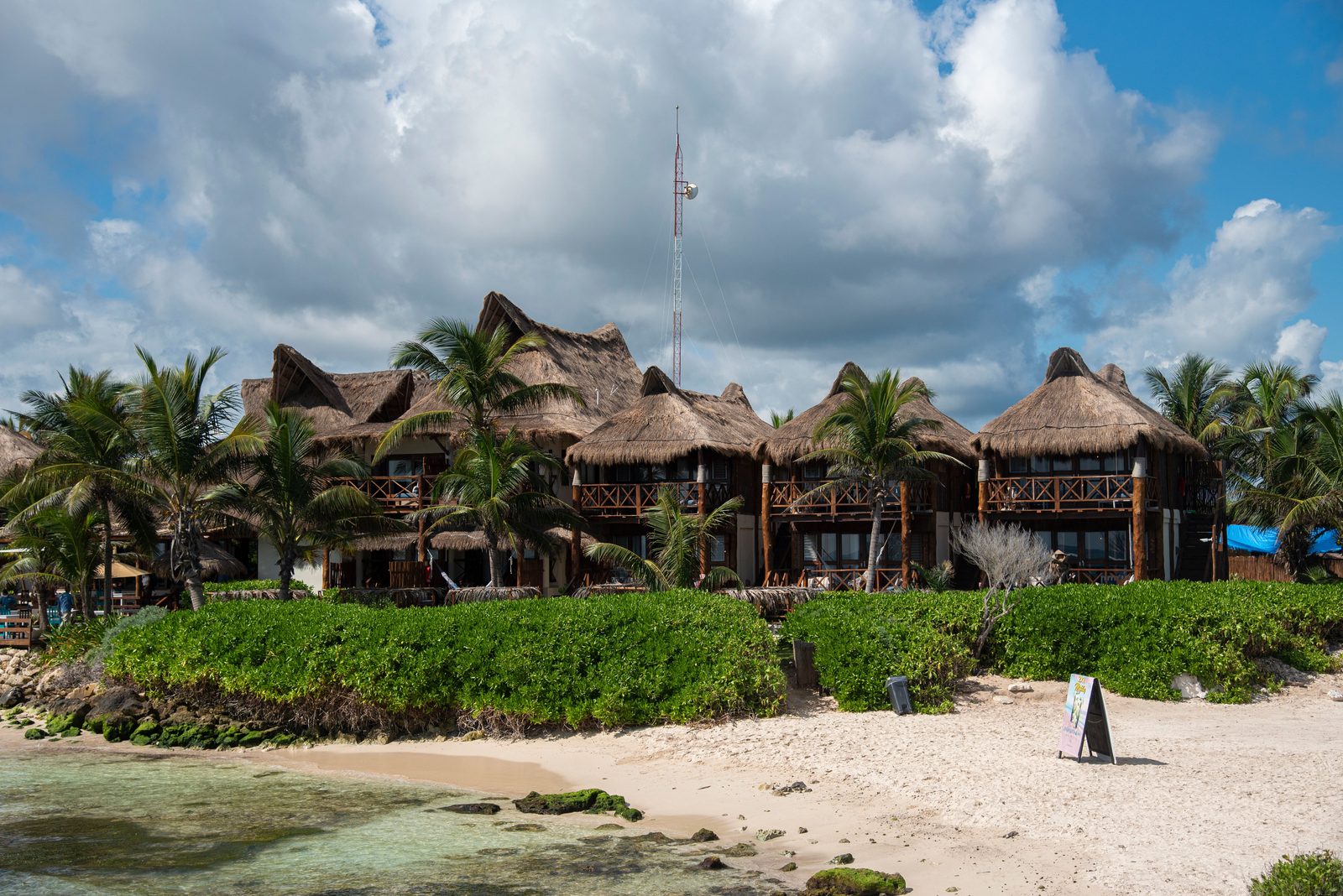
None of this makes the Zona Hotelera a bad choice — it's still the only place on this list that puts the ocean at your door — but it suits travelers who've budgeted for the premium and who go in with realistic expectations rather than the fully polished version sold in photos.
What About Aldea Zama and La Veleta?
Aldea Zama and La Veleta are the newer, more residential answer to the Pueblo-versus-beach tradeoff, sitting roughly halfway between the two. Aldea Zama is the more developed of the pair: a master-planned area with paved roads, underground utilities, and a growing base of mid-range hotels and cafés, about a 10-minute bike ride to Playa Paraíso, the nearest Zona Hotelera beach, a bit under 5 km away. La Veleta, just southwest, came later and has less of a master plan — more local, less polished, its own smaller restaurant scene — and sits farther out, closer to 10–15 minutes by car or considerably longer by bike.
The pitch for both is walkability without Zona Hotelera prices. It suits travelers who want a quieter, residential stay, longer visits where a short daily bike to the beach is fine, and anyone splitting time between cenotes, the Pueblo's food scene, and the coast without booking two hotels.
How Do You Get Between Tulum's Neighborhoods?
However you pick a base, you'll need a plan for getting between it and the parts of Tulum that aren't within walking distance — and the honest starting point is that Uber does not work reliably here, despite what the app itself suggests.
Rideshare apps. Quintana Roo's 2023 mobility-law reforms technically opened the door for platforms like Uber to operate statewide, and the app will let you request a ride in Tulum. In practice, taxi-union resistance keeps ride-hailing functionally unavailable outside central Cancún: unions representing over 40,000 drivers across Cancún, Playa del Carmen, Tulum, and Chetumal have protested the platforms for years, with confrontations between taxi drivers and suspected rideshare vehicles continuing into 2025 (Mexico News Daily; Riviera Maya News). Assume it won't work and budget for taxis instead.
Taxis. Tulum's taxis are unmetered and fares are effectively fixed by the local union rather than freely negotiated, so confirm the price in pesos before you get in, not after. Short hops between the Pueblo and the near end of the beach road run in the low hundreds of pesos, climbing for destinations farther down the Zona Hotelera and again after dark.
Bikes. A bike is the most common way to cover short distances within the Pueblo, Aldea Zama, or the flatter stretches of the beach road, and daily rentals are inexpensive. The connector road is fine in daylight, when cyclist traffic is heavy, but it's a narrow, unlit two-lane highway at night — treat after-dark trips as taxi-only.
Colectivos. Shared vans run the highway routes between towns, but the colectivo along the Pueblo-to-beach connector functions more as worker transport than a tourist shuttle, and isn't a service to plan a trip around.
Rental car. For plans beyond Tulum itself — Cobá, the cenote circuit, or elsewhere on the peninsula — a rental car is the only option that doesn't depend on any of the above. See getting around the Yucatán for the rental-counter insurance angle and how driving compares to buses and the Maya Train regionally.
Where to Stay in Tulum: Quick Comparison
| Area | Typical Price | Distance to Beach | Best For | Getting Around |
|---|---|---|---|---|
| Tulum Pueblo | Lowest of the three; budget to mid-range | ~3 km / a bike ride or short taxi | Budget travelers, cenote-focused trips, food | Walkable within town; bike/taxi to the beach |
| Zona Hotelera | $200–600 USD/night | On the beach | The postcard beach experience, couples | Bike or taxi between hotels; no sidewalk on the connector road |
| Aldea Zama / La Veleta | Mid-range | ~10 min bike (Aldea Zama) to ~15 min by car (La Veleta) | Longer stays, quieter residential base | Walkable within the area; short bike or taxi to the beach |
Some travelers split a trip across two of these — a few nights in the Pueblo near the cenotes, then a splurge stretch on the beach road — rather than committing one hotel to the whole visit. The Tulum ruins sit at the north end of the Zona Hotelera, which makes a beach-road stay marginally more convenient for an early opening-time visit than a Pueblo base.
Frequently Asked Questions
Is it better to stay in Tulum Pueblo or the beach zone?
Depends what you're optimizing for. Pueblo wins on price, food, and cenote access; the Zona Hotelera wins on beach access but costs more and carries sargassum, power, and mosquito tradeoffs. Aldea Zama and La Veleta split the difference.
Is there Uber in Tulum?
Not reliably. The app technically allows requests in Quintana Roo, but taxi-union resistance keeps ride-hailing functionally unavailable in Tulum in practice. Plan on taxis, confirm the fare before getting in, and don't count on rideshare.
How do you get from Tulum Pueblo to the beach?
Bike, taxi, or rental car — there's no dependable tourist bus service on that connector road. Biking is fine in daylight; after dark, take a taxi rather than biking or walking the unlit highway.
Is Aldea Zama walkable?
Within itself, yes — a master-planned area with paved sidewalks and a growing café scene. Reaching the beach still means a roughly 10-minute bike ride or a short taxi, since it isn't beachfront.
Is staying in the Zona Hotelera worth the higher price?
For direct beach access and Tulum's eco-chic aesthetic, yes — but go in aware of the sargassum calendar, the generator/solar power reliance at many properties, and the mosquitoes that come with a jungle-adjacent setting. See the best beaches in Tulum for current seasonal conditions before committing to a beach-road hotel.
The Bottom Line
There's no single correct base in Tulum, only a tradeoff you pick knowingly. Stay in the Pueblo for the price and the food and accept a short trip to reach the sand; stay in the Zona Hotelera for the beach and accept the sargassum, power, and mosquito reality along with the bill; or split the difference in Aldea Zama or La Veleta. Whichever you choose, plan logistics around taxis and bikes rather than rideshare, and treat the connector road as daylight-only. For the rest of the trip, things to do in Tulum and the full Tulum travel guide cover what to build around whichever base you pick.