
Oaxaca's Artisan Villages: Alebrijes, Pottery & Weaving Day Trips
If you've already worked through the basics in the Oaxaca travel guide and blocked out a Monte Albán and Mitla day trip, set aside one more day for the valley's craft villages. San Martín Tilcajete, San Antonio Arrazola, Santa María Atzompa, and Teotitlán del Valle sit within roughly 30 to 45 minutes of Oaxaca City, and each one centers on a different handmade tradition: carved and painted alebrijes, green-glazed pottery, and hand-woven wool textiles. You can string them into a single loop the same way people combine mezcal village tours with a distillery stop, and come home with something you watched someone actually make.

Key Takeaways
San Martín Tilcajete and San Antonio Arrazola both have strong claims to the alebrijes tradition, and workshops in each village welcome visitors to watch carving and painting.
Santa María Atzompa specializes in barro verde, green-glazed pottery, sold both at individual workshops and a dedicated crafts market.
Teotitlán del Valle is known for hand-woven wool rugs, with some weavers using natural dyes, including cochineal red. Workshops such as Fe y Lola and the Gutiérrez family studio demonstrate natural dyeing to visitors, though roughly half of rugs sold in town still use synthetic/aniline dye, so ask which specific pieces are naturally dyed.
All three villages sit within a compact radius of Oaxaca City and can be combined into one loop, often paired with Monte Albán or Mitla.
Self-driving gives the most flexibility for stopping where you want; a guided tour simplifies logistics and usually includes a workshop introduction.
Bargaining is normal but should stay respectful. Prices at family workshops are often already close to fair for the labor involved.
Many workshops can arrange shipping for larger pieces, either themselves or through a local shipping service, though cost, packing quality, and delivery timelines vary by vendor and aren't standardized across villages, get specifics in writing before you commit.
Where Do Alebrijes Really Come From: San Martín Tilcajete or San Antonio Arrazola?
Both villages will tell you the craft is theirs, and there's some real history behind each claim. Alebrijes as a concept originated with Mexico City artisan Pedro Linares, who began making papier-mâché fantastical creatures in the 1930s. The wood-carved Oaxacan version is generally credited to Manuel Jiménez Ramírez of San Antonio Arrazola (1919-2005), who began carving copal wood in a similar style starting in the 1950s; his family's workshops still operate in Arrazola today. San Martín Tilcajete developed its own strong tradition not long after, led by carvers like Margarito Melchor Fuentes, and today has arguably the higher concentration of workshops open to visitors. Alebrijes are carved from copal wood, then sanded and painted with intricate patterns, usually depicting fantastical or hybrid animals like winged jaguars or multi-headed lizards.
San Martín Tilcajete tends to have a higher concentration of workshops open to walk-in visitors, with some families running multi-generation operations you can tour room by room, from raw copal blocks to finished pieces on display. San Antonio Arrazola sits closer to Oaxaca City and is often the easier stop if you're short on time or combining the visit with Monte Albán, since Arrazola sits roughly 14 km (8 miles) from Oaxaca City, at the foothills of Monte Albán, only a short additional drive from the ruins.
A typical workshop visit runs 20 to 40 minutes. Someone will usually walk you through the carving process, show you the natural pigments some workshops still use alongside acrylic paint, and let you browse finished pieces ranging from palm-sized figures to large sculptures. There's rarely an entry fee. The expectation is that you'll browse and, if something catches your eye, buy directly from the maker rather than treat the stop as a free museum tour.
What Makes Santa María Atzompa's Green Pottery Different?
Atzompa is built around barro verde, pottery finished with a distinctive green lead-glaze that gives finished pieces their signature shine. Potters here have worked in clay for generations, producing everything from decorative pieces and cookware to large garden planters. The green glaze sets Atzompa apart from Oaxaca's other major pottery tradition, the black clay (barro negro) associated with San Bartolo Coyotepec, another village worth knowing about if pottery is a priority on your trip.
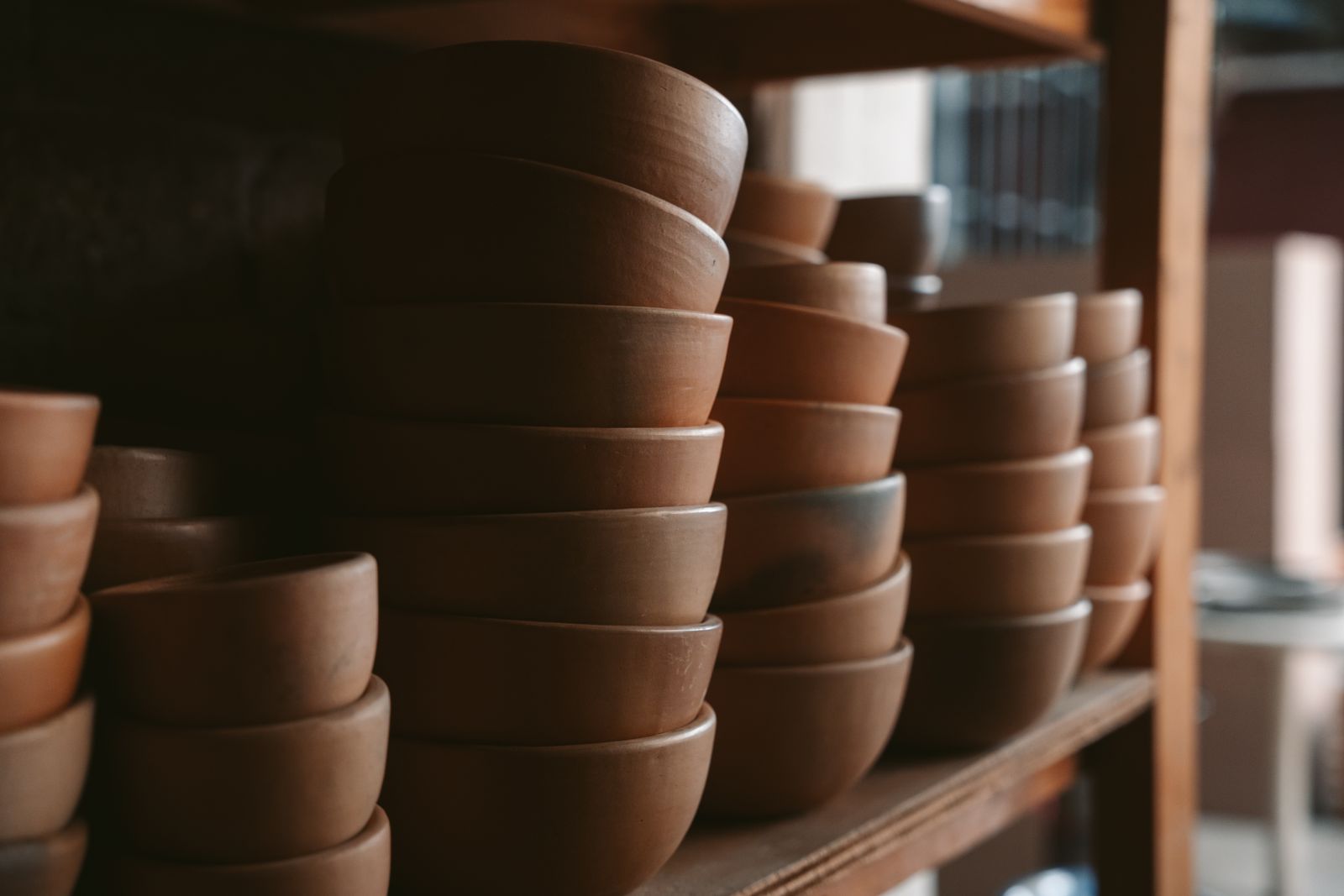
Beyond individual family workshops, Atzompa has a dedicated crafts market, the Mercado de Artesanías de Santa María Atzompa on Av. Libertad, open daily roughly 9am to 8pm, where multiple potters sell under one roof, which is useful if you want to compare styles and prices without driving between stops.
If you plan to buy cookware or dishware intended for food use, ask specifically about the glaze. Traditional green glazes here are lead-based, and lead exposure has been a documented health concern in Atzompa both for potters and for buyers of food-contact pieces; many workshops have shifted to lead-free glazing for anything meant for the table since Mexico's government pushed lead-free alternatives in the 1990s. It's a reasonable question to ask directly rather than assume.
Why Is Teotitlán del Valle Known for Its Woven Wool Rugs?
Teotitlán del Valle is a Zapotec weaving town where families have produced wool textiles for generations, using foot looms and techniques passed down within workshops. Rugs and wall hangings here range from simple geometric patterns to detailed reproductions of pre-Hispanic designs, and prices scale with size, complexity, and the dye process used.
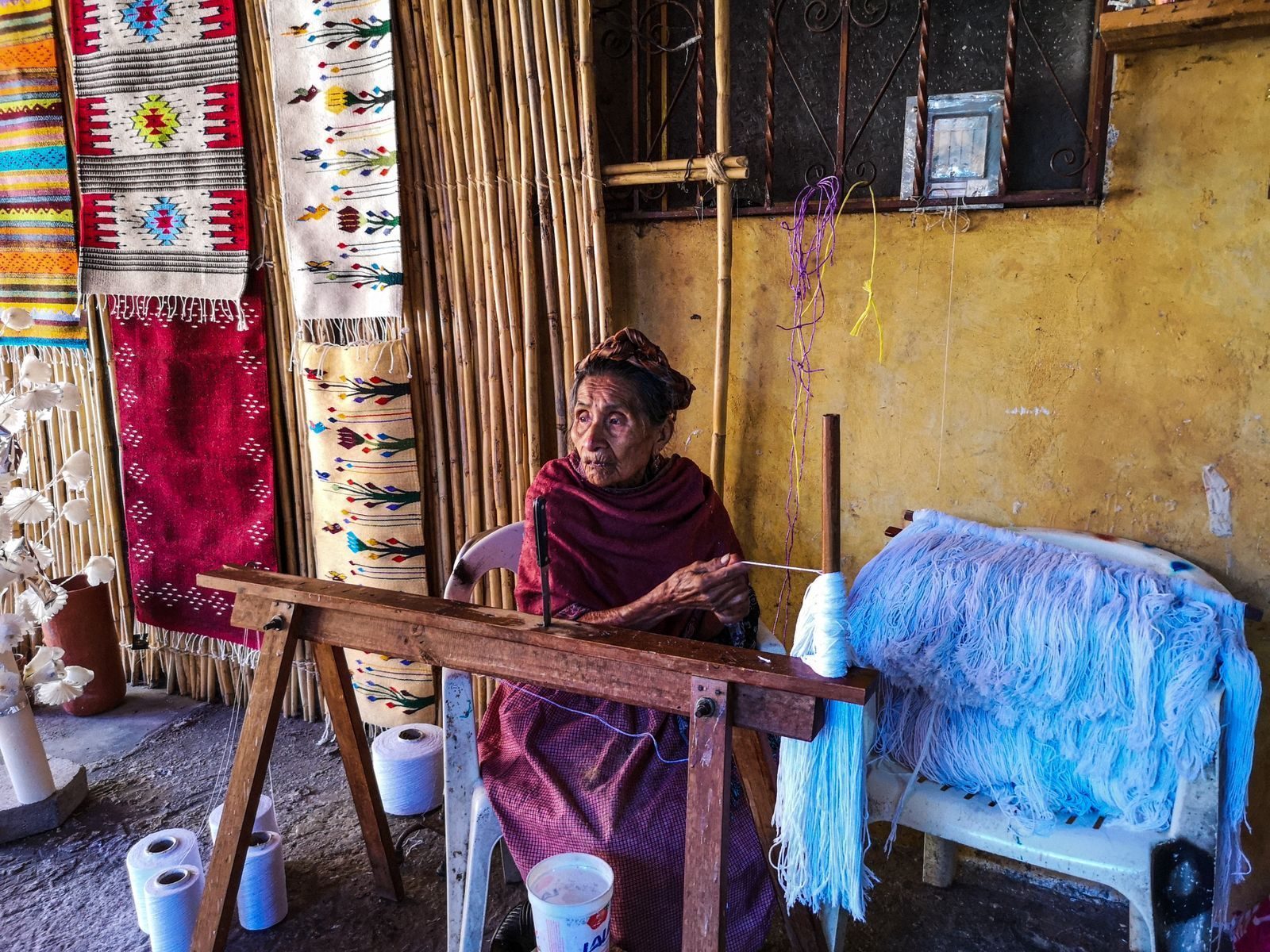
The detail that comes up most in weaving demonstrations is natural dye. Some workshops use cochineal, a small insect that lives on prickly pear cactus and produces a deep red dye when crushed and processed, a technique with pre-Hispanic roots in the region. Fe y Lola and the Gutiérrez family studio are among the workshops known for showing this dyeing process to visitors. Other natural colors come from indigo, pomegranate skin, and various local plants, though not every workshop dyes exclusively with natural materials, and roughly half of rugs sold in town still use synthetic/aniline dye, which even within one workshop can vary piece to piece. If the natural-dye process matters to you, ask the weaver directly which pieces use it rather than assuming based on color alone.
Most weaving workshops offer a short demonstration showing raw wool, the carding and spinning process, and the loom itself, before you move into the showroom. It's a slower stop than a pottery or carving workshop, often 30 to 45 minutes, and worth the extra time if you're interested in the process rather than just the finished rug.
How Do You Visit All Three Villages in One Trip?
The three villages sit in different directions from Oaxaca City but close enough together that a full-day loop works without excessive driving. A common order is San Antonio Arrazola or San Martín Tilcajete first, since they're southwest of the city, followed by Santa María Atzompa, then Teotitlán del Valle to the east. Total driving time between stops, not counting time in each village, typically runs from roughly two to three hours depending on order, traffic, and which alebrijes village you start from, since the four villages sit in different directions from the city center.
Self-driving or hiring a private driver gives you the most control over how long you spend at each stop, which matters if you know pottery interests you more than weaving, or vice versa. Renting a car in Oaxaca City is straightforward, and the roads connecting these villages are paved and well-marked, though signage inside the villages themselves can be minimal.
Guided day tours are the simpler option if you'd rather not navigate or negotiate directly. Most group and private tours booked out of Oaxaca City combine two or three of these villages, and some pair a craft village with Monte Albán or Mitla in the same day, similar to how a Monte Albán and Mitla day trip can be extended to include a weaving or pottery stop if you build in extra time. Ask your tour operator in advance which villages and workshops are included, since not every itinerary covers all three crafts.
What Should You Know About Buying and Shipping Pieces Home?
Bargaining happens at all three types of workshops, but it's a different dynamic than a souvenir market. You're usually negotiating directly with the person who made the piece, or a close family member, and prices already reflect real labor time, sometimes weeks for a detailed weaving or a large alebrija. Hand-woven rugs from Teotitlán, for example, range from roughly 800 MXN for a small synthetic-dye wall hanging up to 25,000+ MXN for a large natural-dye custom piece, with natural-dye pieces running two to three times the price of synthetic ones; alebrijes and pottery scale similarly with size and detail, though no comparably current published price data exists for those crafts, so treat this as general orientation, not a quote.
Rug Type | Approx. Price Range (MXN) |
|---|---|
Small, synthetic-dye wall hanging | ~800 MXN |
Large, natural-dye custom piece | 25,000+ MXN |
A modest, respectful counteroffer is normal. Aggressive haggling over a few dollars on a piece that took someone days to finish tends to land poorly and isn't necessary given how reasonably most work is already priced.
Cash is the safer default at smaller family workshops, since card readers aren't universal, especially outside the larger market buildings. Pesos are preferred, though some vendors in tourist-heavy shops will accept dollars at an informal exchange rate that usually favors the seller.
For shipping, ask directly at the workshop whether they handle it themselves or work with a local shipping service. Buying directly from the workshop rather than a tour typically means the shop can pack larger pieces for shipment, particularly for larger rugs and sculptures that aren't practical to carry home in a suitcase, but neither providers nor typical costs are standardized across these villages. Get a clear understanding of cost, estimated delivery time, and whether the piece will be insured before you commit, since quality and reliability vary between vendors.
Putting the Day Together
These three villages cover a wide range of Oaxaca's craft traditions in a single day: carved and painted alebrijes in Tilcajete or Arrazola, green-glazed pottery in Atzompa, and hand-woven wool textiles in Teotitlán del Valle. Whether you self-drive, hire a driver, or book a guided tour, the loop is manageable and pairs naturally with a Monte Albán or Mitla stop if you're already building out that route.
If you haven't finalized the rest of your itinerary, start with the Oaxaca travel guide for the broader planning picture, then work these craft villages into whichever day makes sense alongside your ruins and mezcal stops.
If you haven't picked a neighborhood to base yourself in yet, our where to stay in Oaxaca City guide covers that groundwork before you head out on day trips.